Senators News & Notes

It is hot and humid in Ottawa and the news is slow.  That said, there are always a few things to comment on, so here we go:

Binghamton_Senators_svg

Back in April I talked about the rumours that the Sens might move their AHL-affiliate from Binghamton to Belleville.  Nichols and Ross A both talk about an Ottawa Citizen story where Debbie Preston (Broome County Executive) confirms it–the comments don’t seem that radically different from what was said in May, but it’s added confirmation of the move.  All signs point to the affiliate playing in Belleville for the 2017-18 season, leaving this upcoming year as quite bittersweet for BSens fans.

prospects

Randy Lee talked about the Development Camp, but it’s hard to take him seriously when he praises dead weight like Vincent Dunn and Chris Leblanc–“works hard” doesn’t make up for a lack of skill (for those of you who think I’m engaging in hyperbole, I watched Dunn‘s entire season in the ECHL and it wasn’t pretty).  Nichols (whose transcript I’ve linked) talks about Lee trying to light a fire under Thomas Chabot without referencing how badly that gambit turned out with Nick Paul (I don’t think him being named Hardest Worker is a coincidence)–admittedly Nichols doesn’t pay much attention to Binghamton, but some players don’t respond well to the cliched “kick in the butt” the Sens reserve for their skilled players (whereas they bend over backwards to forgive the foibles of their “character” players–as illustrated above).

Speaking of prospects, Callum Fraser writes about Logan Brown–it’s more of a human interest piece than an analytical look at him, but it does bring up how talented his teammates in Windsor are and that’s always something to keep in mind about his numbers (how much is generated by him and how much is due to circumstances).

In the midst of fan questions Ary M compares Fredrik Claesson to Mark Borowiecki, which is the kind of thing that makes you ask: do we need either at the NHL-level?  Hopefully Freddy is better this year and I can get back on board with him, but if his peak performance is ala Borocop it’s not a good sign.

Via the same link NKB tries to explore the struggles of Curtis Lazar, but rather than look at the analytics and compare his to similar players, he looks at draft history based on where he was picked–I’m not sure there’s anything to glean from that route of inquiry (although as a matter of draft trivia it’s fun to do).  Lazar was never a prospect I was excited about and the projections for him (responsible third or fourth liner with no hands) seem on-target (not the sort of thing you need from a first-round pick).  Does he have time to show us more and develop?  Of course, but I wouldn’t hold up much hope for an offensive explosion.

Analysis

Analysis

So what do you do in mid-July when not much is happening?  Read whatever happens to be available and occasionally see something that raises an eyebrow:

There is no reason to think he [Chris Kelly] won’t fill the role … At 35, Chris Kelly is certainly not a spring chicken anymore. He only played 11 games last season

I’ve deliberately switched around Michaela Schreiter’s response to a reader question because to me she refutes herself–both facts she opens with are reasons to think he might not fulfill his role.  It doesn’t mean that he won’t, but there’s certainly reason for skepticism.

Speaking of free agent signings, Trevor Shackles bemoans the Sens not landing better bargain players without speculating on the relative appeal of signing in Ottawa.  The Sens are both a small market team and suffer from an internal budget, making winning all the more difficult–it’s the sort of situation that appeals most to older players with nothing left to achieve (ahem, Kelly, along with the laundry list of players Murray saddled the team with over the years).

I want to emphasize something Ross A said in passing:

possession metrics aren’t widely used

Sad but true.  When normally sensible people like Elliotte Friedman are still unsure of them you know the league (and its aging fanbase) are a long way away from embracing it.

Andrew writes a long piece about the dumb decision-making by GM’s in free agency.  There’s nothing new here, but he includes some funny lines.  I do think if NHL GM’s were more progressive and believed/embraced analytics most of the silly signings would stop, but we’re a long way from that ever happening.

I don’t usually read comment sections, but I did dive into a thread on The Silver Seven where I learned that (for some) calling your opponents losers was how you win an argument (very Donald Trump, now that I think about it).  I remain amazed that, not just in sports, but in all contexts how so many people seem unwilling (or unable) to engage in discourse.  It’s okay to be wrong or to make mistakes–it happens–it’s part of learning.  You can respect people who disagree with you.  There’s an inclination to say this sort of behaviour comes from younger people, but I know plenty of adults who engage in it too–I find it all bizarre.

This article is written by Peter Levi (@eyeonthesens)

Senators News & Notes

chris-kelly

About a week ago Nichols floated the idea of the Sens signing 35-year old, broken down Chris Kelly.  I thought the idea was verging on the ridiculous, but pointed out it would be a typical Bryan Murray signing (a player past his prime with a local connection).  Sadly this idea has come to pass as today the Sens signed their former draft pick to a one-year deal.  Kelly played all of 11 games last year after fracturing his left femur, but when healthy with the Bruins the year before put up typical numbers.  NHL players who aren’t goalies only decline in their 30s so to expect a performance akin to that wouldn’t be reasonable (Nichols sounds delightfully naive in learning Kelly hasn’t been great in the faceoff circle in years).  For those of you who want to read a positive spin on the signing both Nichols and Ross A are here for you–neither bothers to include substance behind what makes it a good move (analytics etc; in fairness to Ross his is basically a news blurb), with the former mostly being about the struggles of Curtis Lazar (and yes I agree time in Binghamton would be good for him).  Can I be persuaded this is a good move?  Maybe (with the appropriate numbers).  Could the move work out?  It’s possible, but to me it comes across as cheap fan-service to placate an aging and nostalgic fanbase.

echl

The Sens announced a new ECHL affiliate agreement with the Wichita Thunder.  As Ross A points out they are not conveniently located for Binghamton (or Belleville for that matter).  The term wasn’t listed (their deal with Evansville was for two years), but Witchita was actually worse than the IceMen this past season (second last in the league), so it’s not even necessarily an upgrade.  From what I can tell there’s no fan website or blog devoted to the team (unlike Evansville), so it appears news about the Thunder will only be available from official organs.

Free_Agent_logo_2

I decided to look back at my prognostication of the European free agent pool (posted back in March), so below includes all the NHL-signings (including players from previous lists) along with any other player-movement from the current crop:

Marcus Sorensen – signed by San Jose
Linus Hultstrom – signed by Florida
Lukas Bengtsson – signed by Pittsburgh
Anatoli Golyshev – drafted by the Islanders
Tim Heed – signed by San Jose (2015 list)
Jere Sallinen – signed by Edmonton (2013 list)

John Norman – KHL
Juuso Ikonen – signed by Djurgardens
Otso Rantakari – signed by Tappara
Sami Rajaniemi – signed by Jukurit
Konstantin Komarek – SHL

Understandably the question posed looking at lists like this is: how often do these signings work out?  The answer is sometimes (3-7): Panarin, Donskoi, and Brunner are or were solid signings (the jury is still out on Ronalds KeninsDennis Rasmussen and Borna Rendulic, although it’s likely they will land on the failure side).  What I will say is the odds of a European FA in this age category panning out is better than signings from the NCAA–whether that’s due to just how many college kids are signed (flooding the numbers) or something else I couldn’t say.  The above, incidentally, doesn’t include players like Melker Karlsson (SJ) who I never listed.

This article is written by Peter Levi (@eyeonthesens)

Senators News & Notes

Binghamton_Senators_svg

While Ottawa added no players to its NHL roster on the first day of free agency, they did add a lot to the AHL lineup, so let’s take a look (I’m ignoring the RFA’s they signed, just the FA’s):
-re-signed Michael Kostka (50-5-24-29); the 30-year old defenseman was serviceable last season (keeping his partner, ECHL defenseman Guillaume Lepine, afloat); he’s not a true #1 or #2 blueliner at this level, but for a team this thin on the blueline he’s a needed asset
-re-signed Phil Varone (65-19-36-55); he’s averaged 0.84 points-per-game over the last three seasons in the AHL, which makes him a top-20/25 scorer in the league, so he fills a definite need
-signed Chad Nehring (76-22-26-48) via Hartford; the 29-year old enjoyed a career year, leading the moribund Wolf Pack in scoring; it’s very strange for a player this old to peak like this; I’m not sure what need is being filled here (the org could have just kept Pat Cannone and had the exact same thing), particularly as he isn’t a big, bruising player (5’11 with minimal PIMs)
-signed Mike Blunden (49-21-17-38) via Syracuse; this is much more the kind of signing I expect from the org; the 6’4 29-year old’s AHL stats are solid and he’s coming off a good year (0.77 vs his career 0.54; I think his three year average of 0.64 is more around what we can expect)

I was asked where Binghamton stands in terms of veteran contracts and for those unfamiliar with the AHL’s rules, let’s take a brief look:

Of the 18 skaters (not counting two goaltenders) that teams may dress for a game, at least 13 must be qualified as “development players.” Of those 13, 12 must have played in 260 or fewer professional games (including AHL, NHL and European elite leagues), and one must have played in 320 or fewer professional games. All calculations for development status are based on regular-season totals as of the start of the season. (source and source)

It’s important to note that ECHL games do not count towards veteran status.  A team can ice at most 6 veteran players, not including goalies, with their status determined by games played (rather than age).  Here’s a look at signed players who fit this definition:
-Zach Stortini (700+ AHL/NHL games)
-Tom Pyatt (600+ AHL/NHL/NLA games)
-Michael Kostka (500+ AHL/NHL games)
-Mike Blunden (500+ AHL/NHL games)
-Phil Varone (370 AHL/NHL games)
This leaves the BSens with one veteran spot left, but it must fit the sub-320 mark (Chad Nehring has only 129 AHL games counting against him, so the rule doesn’t apply)

prospects

Development Camp is not a great place to assess players, particularly when it comes to scrimmages (posted up on the Sens website for those who missed it), but a couple of thoughts:
-watching Matt O’Connor give up a weak goal short side (c.16:50 into the period, or c.8:35 into the video) felt like deja vu for the season that was (the 6’5 ‘tender also was beat high by Nick Paul, but saved by the crossbar, he then gave up a soft 5-hole goal from the blueline); it’s such a sharp contrast to better prospects (I remember the year Brian Elliott didn’t give up a goal in the final day of 3-on-3 competition)
-looking at Marcus Hogberg it’s tough to think we’ll have to wait another season before we see him across the Atlantic (he looked great in the 5-on-5 and fantastic at 3-on-3, maintaining a shutout for himself)
-as you’d expect Francis Perron stood out offensively (Brown and Dahlen as well)
-funny (in a sad way) that Ben Harpur struggled to defend even this level of competition (granted he did make a nice pass to start a tic-tac-toe scoring play for the second white goal)

A bit of a tangential but related note, Chris Carlisle is in camp, but as far as I know has not been re-signed by the Sens.

HNIC_Logo.svg


Roy MacGregor doesn’t pull any punches:

While there has been much to criticize in HNIC – the panelists playing ministicks far and away the most foolish – the plummeting viewership is not something to be blamed entirely on tight suits. Or, for that matter, adding in the unfortunate happenstance of no Canadian team in this year’s postseason. … The game, as it is played these days, is more often unwatchable than enjoyable. There may be no available statistic for those “hard-core” fans – including those who played the NHL game and covered the NHL – who have tuned out, but they are legion.  Why? Because it’s boring.

His conclusion is that the problem is coaching, but I think that’s far off the mark.  The idea that coaches in the 70s and 80s (when hockey was a growing sport) weren’t coaching to win or teaching systems is ridiculous.  What’s changed primarily is: 1) goalie equipment, 2) permissible interference.  The latter in particular is what gave us the Dead Puck Era, but while it’s been cut back we still suffer from absurd goaltending equipment (we’ve heard promises that it will change in the upcoming season, but I’ll believe it when I see it).

Hockey, like any other sport, is ultimately repetitive–99% of the games you watch unfold in very similar ways.  To draw in fans you need some other layer of excitement and what that used to be when I was growing up were players challenging records or milestones–it’s hard to imagine now, but there were legitimate threats to all the records people care about (goals and points) once upon a time.  Since then offensive numbers have regressed and outside the first few months of the 2005-06 season players haven’t come close to challenging anything.  In that absence, there’s nothing to bring fans in other than winning and very few teams win or win consistently.

Chris-Stewart-640x427

Chris Stewart quietly signed in Minnesota and I bring him up simply because I remember all the hype surrounding him in Sensland not long ago (ahem 2014, February (Ottawa Sun and TSN), May (Travis Yost, thankfully arguing against) July (Senshot), October (6th Sens, arguing against it), November (THW), and December (Hockey Insider)).  These are just some of the pieces that came out–a solid year of the organisation (and some of the fanbase) pinning after the former first-round pick in 2014.  So what happened?  The org certainly didn’t consult the analytics, but it became clear that Stewart‘s offensive production was never going to take another step, but the price for him remained high.  He was supposed to be the power forward the Sens needed to make the next step, but thankfully Murray never pulled the trigger on a deal.

This article is written by Peter Levi (@eyeonthesens)

Senators News & Notes

vladimir_tarasenko.jpg

Ross A writes a piece asking why the Sens can’t make blockbuster trades (in light of New Jersey stealing Taylor Hall from Edmonton–poor Adam Larsson!).  It’s a somewhat rhetorical question since Bryan Murray has acquired players like Dany HeatleyKyle TurrisBobby Ryan, and Dion Phaneuf, but with the exception of the Turris trade you can make arguments that the Sens did not (or will not) “win” these moves.  So what’s the problem?  To me it remains the organisation’s over (or under) evaluation of its own talent.  How many times did the org resist trading Chris NeilChris PhillipsJared Cowen, etc over the years?  How quickly did Murray pull the trigger to send emerging talents like Jakob Silverberg or Ben Bishop, or picks like the ones that became Kyle Palmieri or Vladimir Tarasenko?  I’ve spent years reading comments by the org about various players and their unending love for older players and grinders has hurt their ability to capitalize on assets over and over again.  We can only hope the Dorion regime can start to reverse the trend, although his frustration about the struggles to move the dead weight that was Alex Chiasson and the devalued Patrick Wiercioch suggests the same blindness.

It’s exactly this kind of thinking that James Mirtle addresses in the wake of the aforementioned trade:

The general manager of a Canadian NHL team, in pursuit of the old-school hockey ideal of grit or size or some other intangible, moving key pieces and/or salary-cap space out in order to change the mix. … The Canadian NHL teams have been, by and large, horribly mismanaged. They are, generally speaking, not progressive organizations, not adept at change and not finding ways to outmanoeuvre their competition. Most are well behind in areas such as analytics.

Oh how true it is.  When Mirtle talks about the Canadian teams that are starting to change for the better, Ottawa is not among them–something for fans to keep in mind.

dzingel

Speaking of the aforementioned discarding pieces, Nichols wonders where the Sens go from here:

as much as I like Pageau as a player, he needs help and to be successful, he needs a smart, two-way forward who can help transition the puck and effectively move it from the defensive zone to the opposition’s end where the Senators could sustain pressure. Condra was good at this and so was Mark Stone, without either player, I don’t see someone on the current roster or within the current system who can step in and fill that role.

I agree that Stone isn’t someone whose performance you could duplicate for the benefit of his former linemates, but that doesn’t mean there isn’t another strong puck possession player available in the system.

Similarly, even though prospects like Ryan Dzingel and Nick Paul saw time down the stretch with the big club, neither player was particularly effective with their play down the stretch. There were moments, sure, but, on the whole, both players could afford to spend more time in the AHL developing their game.

I agree with Nichols about Nick Paul, but as someone who saw a lot of Ryan Dzingel at the AHL-level, there’s nothing left for him to learn there.  Along with Tobias Lindberg he was able to drive possession under Luke Richardson’s stifling regime.  Clearly his tools weren’t very apparent at the NHL-level or Nichols’ wouldn’t be so dismissive of him, but 30 games during a terrible season doesn’t dissuade me from liking him.  What I’m not a fan of are the two veterans Nichols proposes fill in for that spot: the antique Chris Kelly (35 with injury problems) and Lee Stempniak (33)–these are Bryan Murray-type signings, and if I had to pick one I’d take the latter, but I’d pass on both.

ahl

Sens prospect Filip Ahl will suit up for the Regina Pats in the WHL during the upcoming season.  It’s a good move for Ahl as he’ll truly be able to showcase himself (Tobias Lindberg made a similar move two seasons ago and that landed him his ELC, a sentiment echoed by the org).

Speaking of prospects, Callum Fraser writes a human-interest piece on Maxime Lajoie that’s worth reading.

travisyost

I’ve been writing this blog for five years now and I’ve seen the landscape of the Sens blogosphere go through a lot of changes in that time.  As I’ve said before, my favourite bloggers are Nichols and Travis Yost, but I had no idea either read my stuff until this summer (for the former) and just the other day (for the latter).  It’s flattering to know.  Both are better writers than I am and both use analytics more adroitly, so they are delight to read (whether I agree with their specific opinions or not).

This article is written by Peter Levi (@eyeonthesens)

Senators News & Notes

fail

Thankfully the Alex Chiasson era is over in Ottawa, as he was shipped off to Calgary in exchange for underwhelming defensive prospect Patrick Sieloff.  The latter, a former second-round pick by Calgary (2-42/12), never had impressive numbers either when he was drafted or since (reading the scouting reports on him everything praises his strength and competitiveness rather than his skill).  He’s signed for the upcoming season, so it looks like B-Sens fans can look forward to his 10-15 points playing the left side.  That said, the fact that the Sens got anything for Chiasson is something.

2016_NHL_Entry_Draft_logo

I posted my review of draft prognostication (mein gott in himmel! Nichols RT’d it), as well as my thoughts on Ottawa’s draft, so those of you interested you can check them out via the links.

Speaking of the draft, both The Silver Seven and The 6th Sens have weighed in on the Sens performance.  Nichols’ piece leans heavily on Corey Pronman (because reasons) and McKeen‘s (a little quid pro quo for Grant McCagg’s appearance on his podcast) when it comes to analysis.  I’m not a big fan of either (I have more time for the latter), and Nichol’s piece would benefit from the inclusion of multiple scouting profiles on each prospect, but he does cite an SBNation profile I missed that I’ll quote about Todd Burgess:

There are a couple factors working against Burgess’ impressive point total. First, he’s already two years past his initial draft year, so he’s an older player, dominating a league where it’s traditionally tougher for a player to be drafted from. Second, he played a softer schedule even by NAHL standards. Due to travel/cost considerations, the Ice Dogs play an unbalanced schedule with 16 games against fellow Alaska team Kenai River, who only won four games this season. Burgess scored 32 of his 95 points in those 16 games. He averaged about 1.4 points per game against everybody else, so the extra Kenai games added about an extra ten points to his total

For those of you who math this would take his totals down to 47 points in 34 games, which would still lead the league in points-per-game, but not by as wide a margin.  This isn’t to say he’s a bad pick or poor prospect, but to temper expectations (perhaps he’ll be another fourth-round dud ala Ben Blood (a Pronman favourite) or Timothy Boyle), or perhaps not–we’ll have four years in the NCAA before we’ll know for sure.

Moving along Nichols echoes a point about the Sens blueline depth that I share:

the Senators don’t have a lot of good puck-moving defencemen within their system – whether it’s at the AHL level, the junior ranks or in Europe. It seems like the bulk of their defensive prospects are blue collar types who play the prototypical defensive style that is becoming more and more outmoded as the years pass

The aforementioned Sieloff certainly fits that outmoded category.

Nichols posted a piece in the midst of writing all this that I’ll shoehorn here because it’s draft-related and the thing that struck me is very short: Pierre Dorion gave us the “they have size” comment for Burgess and Markus Nurmi–yay?

As for Trevor Shackles writing for The Silver Seven, his piece is more about the depth in the organisation, noting the disappointing 2012 draft and middling 2013 effort (now that Tobias Lindberg is gone).  I’m less enthused with Andreas Englund than most of the fanbase (until I see signs that he can move the puck he’s just another 7th defenseman), but I do like Francis Perron.  I don’t think this draft (2016) will match the twosome from 2015 (Thomas Chabot and Colin White), but it’s a solid haul.

prospects

Sens development camp is underway as of today and I like to see who they invite as sometimes we later see these players signed by the organisation later for the AHL or ECHL:
Michael Babcock (RW) – son of the NHL coach, he’s in his first year at Merrimack (so yet another teammate of Chris Leblanc); an unimpressive USHL player, his rookie year in the NCAA was no different (38-3-4-7); at only 5’9 he’s an oddity at a Sens camp
Vito Bavaro (RW) – just graduated from high school on his way to Sacred Heart in the NCAA (28-17-20-37)
Domenic Commisso (C) – an OHLer I expected to be drafted this year (#152), he’ll be eligible next year (at 5’9 he’s not someone I’d expect the Sens to take); 66-18-24-42
Hampus Gustafsson (LW) – Chris Leblanc’s teammate from Merrimack, the 6’4 Swede is coming off another solid season in the NCAA (39-8-18-26); he’s entering his senior year
Hunter Miska (G) – after an impressive year in the BCHL he put up a middling season in the USHL (2.46 .913, tied for 11th in the league in save percentage), prior to his attending Minnesota-Duluth in the NCAA
Brady Reagan (DR) – 6’3 WHLer will go through the draft again next year (71-6-14-20)
Eric Robinson (LW) – Buddy’s brother has been a pretty unremarkable NCAA player at Princeton (31-7-4-11)
Zach Saar (RW) – he’s 6’5 and that appears to be the only reason the Penn State player is in camp (25-6-3-9)

Gnomes_plan

In somewhat tangential news Sportsnet shook up their hockey coverage as attempts to appeal to a younger audience with George Stroumboulopoulos were thought to have failed (the overall audience has dropped by 30% in just two years), so Ron MacLean has replaced him as a sop to older fans.  I was less interested in the host change than in the firing of the insufferable Glenn Healy along with P. J. Stock (Damien Cox was shuffled to PTS which services an even older demographic).  I won’t miss either Healy or Cox, while I’m indifferent to Stock (a feeling apparently in common with the audience).  For those who missed it, I wrote a piece back in March discussing the struggles of traditional sports in appealing to a younger demographic–the very conservative hockey powers are certainly not in a good position to stop the trend.

This article is written by Peter Levi (@eyeonthesens)

Reviewing Ottawa’s 2016 Draft

The 2016 NHL Draft is in the books so we can take a look at how the Senators did at this year’s draft.  My predictions for who they would pick went down in flames (expectedly, although I hoped to get one or two).  Pierre Dorion’s first draft featured just one trade, sending the Sens first round pick (#12, Michael McLeod) and a third round pick (#80, Brandon Gignac), for the #11 pick.  Otherwise we saw most of the usual Bryan Murray drafting trends continue (preference for size, a player from Sweden, a player from the US junior systems, no Russians, and a (pseudo) local boy in Brown).  Things that changed from the norm include drafting a player from Finland (the first since 2005), not drafting a player from the QMJHL (the first time since 2007, but Lajoie if from Quebec so….), and drafting a player under 6’0 (first time since 2011, although 5’11 is not much of a reach).  Without further ado, here are the players (I reference my master list for when I say where they were slotted):

1-11 Logan Brown (C 6’6 OHL 59-21-53-74); Rankings 7-13; slotted #9

I expected the son of former NHLer Jeff to be gone earlier, but Clayton Keller and Olli Juolevi went early leaving him available; Dorion made a trade to move up to get the 6’6 forward which echoes the trade for Gabriel Gagne last year (also with New Jersey where they sent a 2nd and 4th to get the pick).  I echoed Trevor Shackles’ sentiment about the trade, but it will be several years before we can truly assess the move.  Brown finished second in scoring for Windsor (well behind Christian Fischer and, by points-per-game, Brendan Lemieux; both older players and both 2nd round picks).

The scouting assessments of Brown are all very similar, agreeing on the following: he’s not a physical player, has a good shot but doesn’t shoot enough, is a great passer, has a good hockey IQ, protects the puck down low and is good on the cycle, and he’s TALL.  Disagreements: one (of four) didn’t think he was very good off the rush and the same thought he needed to improve defensively; opinions on his skating are mixed.

2-42 Jonathan Dahlen (C/LW 5’11 Allsvenskan 51-15-14-29); Rankings 24-149; slotted #41

Son of former NHLer Ulf, he’s another player I expected to be gone before this pick, although it’s not like he tumbled down the draft very far.  The Sens always pick a Swede and Dahlen is the first under 6’0 player they’ve taken since 2011.  It’s worth noting that Dahlen spent the year in the tier-2 men’s league, not Swedish junior, so his numbers are quite good (he lead the lackluster Timra roster in scoring–in points-per-game he’s just ahead of Victor Ejdsell and Johan Persson, both older, undrafted players).

Scouting opinions on him are very similar: a natural goal-scorer who is very good around the net; a good forechecker; good skater (some debate about his acceleration); very competitive, but not very physical.  The only real disagreement is about his defensive abilities, which range from average to good.

4-103 Todd Burgess (C/RW 6’2 NAHL 60-38-57-95); Rankings 94-145; slotted #135

Not ranked by a couple of publications, the overage American is set to play for RPI in the NCAA next season.  Because he’s overage his numbers aren’t quite as impressive as they would be otherwise, but he lead the entire league in scoring (something that clearly caught many scouts by surprise)–Michaela Schreiter notes his totals are the highest since Pat Maroon a long time ago.

There was only one scouting profile of him and it indicated he was a good playmaker with good vision and hockey IQ; a puck-battler and decent stickhandler, but his puck skills are average for the NHL level; solid on the forecheck; he needs to improve his skating and defensive skills.

5-133 Max Lajoie (DL 6’0 WHL 62-8-29-37); Rankings 52-102; slotted #72

Tumbled considerably in the draft, perhaps because of his stature (small for a blueliner; although I have seen him listed at 6’1); he was the top scoring defenseman for Swift Current (the alma mater of Zack Smith).

Scouts largely agree on him: a good skater with above average hockey IQ, solid offensively with good puck distribution and a sneaky wrist shot; a good first pass and very calm.  There are disagreements on his defensive play (average to good) and one said he was a bit too passive.

6-163 Markus Nurmi (RW/LW 6’4 Finnish Jr 49-19-17-36); Rankings 69-185; slotted #128

Another player who fell from where I slotted him; the big Finn finished third in scoring on TPS (just behind Juho Virtanen, but well behind Matias Lehtonen in points-per-game; both slightly older, undrafted players).  I’m curious what prompted the Sens to finally draft from Finland, since they haven’t done so in over a decade (Janne Kolehmainen in 2005).  His size is obviously appealing, but there have been plenty of big Finns available over the intervening period, so clearly something changed–maybe they finally had bus fare for scout Mikko Ruutu to tour in his own country (jk).

There were only two scouting reports on him and they are pretty harmonious: he’s a straight-line player, a good forechecker who is very competitive; one said he had good hockey IQ; he’s very raw and there are some differences over where he tops out (either as a depth checker or a more productive two-way forward).

Overall I’m pretty happy with the picks.  In studying the draft we can expect at least one of these picks to pan out, but we can hope for two.  From an AHL-perspective the hope is higher as it’s likely most or all of these players will eventually suit up.  It’s a much better draft for the Sens than 2014, but not with the top-end of 2015–likely similar in value to 2013.

This article is written by Peter Levi (@eyeonthesens)
Ottawa Senators Draft Preview

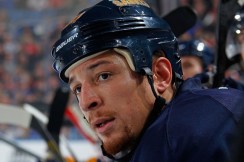
One of the fun things about the draft is making predictions.  Despite the Ottawa organisation having many of the same pieces since Bryan Murray became GM (back in 2007), deciding on who they will pick is a devilish task.  Due to various constraints on my time I didn’t make predictions for last year’s draft, but I’ve managed to squeeze it in this time around.

The framework of how I’ll do this is: 1) look at Ottawa’s trends, 2) use my master list to determine who will be available, 3) provide potential options for each pick and predict which is the best.

History

Craig Smith quite rightly looks at picks after Tim Murray left for Buffalo (although since that was mid-season his fingerprints remain on the 2014 draft; I made a comparison between Tim’s drafts and Ottawa’s not long ago).  With that said there are older trends that indicate the preferences of the Sens since Bryan Murray was hired as GM.  Without further ado, and skipping over the 2007 draft as that’s John Muckler’s draft in all but name, here’s what we have:
2008: Sweden 3, WHL 2, BCHL/CCHL 2
2009: USHL/USHS 3, Sweden 2, WHL 1, QMJHL 1, OHL 1, NCAA 1
2010: QMJHL 1, WHL 1, USHL 1, Sweden 1
2011: OHL 3, Sweden 2, WHL 2, USHL 2, QMJHL 1
2012: OHL 2, USHL/USHS 2, QMJHL 1, WHL 1, Sweden 1
2013: Sweden 2, WHL 1, OHL 1, QMJHL 1, NCAA 1, EJHL 1
2014: USHL/USHS 2, QMJHL 1, Sweden 1, CCHL 1
2015: QMJHL 3, USHL/USHS 3, Sweden 2

Totals
NCAA/USHL/USHS/EJHL 16 (0-4-1-2-2-2-2-3)
Sweden 14 (3-2-1-2-1-2-1-2)
QMJHL 9 (0-1-1-1-1-1-1-3)
WHL 8 (2-1-1-2-1-1-0-0)
OHL 7 (0-1-0-3-2-1-0-0)
BCHL/CCHL 3 (2-0-0-0-0-0-1-0)

Note: Ottawa has not drafted a player under 6’0 since 2011

Notable organisation changes:
-Pierre Dorion was added after the 2007 draft as head scout (arriving from the Rangers)
-Tim Murray left mid-season in 2014, having come to Ottawa at the same time as Dorion (and also from the Rangers)
-Swedish scout Anders Forsberg (now with Buffalo) was with the org for the 08-10 drafts

Trends

In terms of CHL activity the QMJHL has remained steady while both the WHL and OHL have fallen off–I think some of this (particularly the WHL) is purely coincidence as head scout Bob Lowes is a western guy; there’s been a consistent emphasis on American leagues; the org always picks at least one player from Sweden, but no players from any other European league outside of Sweden and no Russians in any context (for example, the Sens gave up the chance to draft Vladimir Tarasenko to acquire David Rundblad in 2010).

What can we expect?  We’re guaranteed at least one QMJHL player, one Swede (what other option do the European scouts have?), and one player from the various US systems.  With that said, here are my predictions:

1-12 – the rankings puts Clayton Keller here, but given his size (5’10) either defenseman Dante Fabbro or Jake Bean (Smith’s choice above) are strong possibilities (despite being on the short side for defensemen, both around 6’0)–both are western players (BCHL and WHL) and I’m inclined to agree with Smith’s pick
2-42 – rankings have WHL defenseman Lucas Johansen here, but I don’t see back-to-back WHL blueliners (or blueliners in general) being selected, so Taylor Raddysh (the OHL rightwinger) is my guess
3-80 – I have another defenseman here (OHLer Sean Day), but I think QMJHL center/RW Maxime Fortier (who isn’t much further down) is more likely despite his size (at 5’10 he would break the 6’0 obsession)
4-103 – WHL center Beck Malenstyn slots here, although I think 6’5 WHLer Hudson Elynuik is more likely (Swedish forward Jesper Bratt is a possibility, but at 5’10 this is a bit of a stretch)
5-133 – 6’7 OHL Belarussian overage defenseman Stepan Falkovksy slots here, but I don’t see him being taken (he’s almost Russian and his numbers aren’t that impressive); USHL defenseman Samuel Rossini is next up, but USDP RW William Lockwood looks more likely to me (the former has traditional size, but his numbers aren’t remarkable)
6-163 – USHS forward Michael Graham slots here, but we’re due for at least one Swede so I like 6’3 overage defenseman Filip Berglund

This leaves me with:
Jake Bean (WHL)
Taylor Raddysh (OHL)
Maxime Fortier (QMJHL)
Hudson Elynuik (WHL)
William Lockwood (USDP)
Filip Berglund (Sweden)

This is a bit light on the US-system side of things and includes two players below the Sens usual height-minimum (Fortier and Lockwood), but it’s close enough to organisational trends to be reasonable.  Ottawa is notorious for taking players who aren’t well known or regarded however, so at least one pick is likely to be a player no one expects.

This article is written by Peter Levi (@eyeonthesens)
Senators News & Notes

ElliotteFriedman

The 6th Sens’ latest podcast was posted a few days ago and had Elliotte Friedman on and he had a number of things to say of which the following interested me:
-he admitted his inclusion of Ottawa as a possible target to move to Quebec was simply speculation (he apparently doesn’t like to use that word to describe it, but that’s what it is)
-he indicated that he believed Bryan Murray did not want to leave his position, implying he was pushed out internally
-he talked about how he thinks getting a coach like Guy Boucher after his first stint in the NHL is a good thing–he’s learned what works and what doesn’t–and as vague as this is it does fit the limited analysis of coaching success that I’ve seen (as I mentioned when Boucher was hired)
-when asked if he thought Ottawa’s talent was too middling to succeed (so they should rebuild), Friedman countered that he thought given the team-friendly contracts the core players were signed on the organisation has to go for it–push for success–which is certainly the sentiment that management has shared; Friedman thinks the Sens have the talent to win, but thinks their style of play has been the problem (which basically boils down to coaching, although that’s not how he framed it)
-on Mike Hoffman: suggested there’s something we can’t see on the ice that’s caused him to get pushed to the fourth line–my guess is friction with his coaches, assuming that’s true, because as Friedman points out Hoffman has incredibly rare skills in today’s NHL; he also added he thought that Boucher’s prior relationship with Hoffman was part of the reason why he was hired
-he said many NHL teams are reluctant to depend on analytics when it comes to big decisions (he said he didn’t think they paid attention to Corsi, but used other metrics to measure the same thing); he echoed a Tweet from Nate Silver that said “I’m not sure that hockey is that much different than random,” which I think is way too flippant and vague to take seriously

Sens logo

A few other Sens items of note:
-Tim Pattyson was moved from his position as the video coach to oversee analytics for the team; it’s an interesting move about which I have mixed feelings: 1) as a trusted voice in the organisation whatever information he brings to the staff should be respected, but 2) as part of the group-think in Ottawa that’s rejected analytics, what will he bring?  (You can read Nichols thoughts on the move here)
-For the first time in a long time the Sens choose not to bring any top picks to the city (I like the move–don’t create room for disappointment in the fanbase)
-Pierre Dorion seems to have moved away (at least publically) from Bryan Murray’s never ending search for a top-six forward, expressing the belief that the team has nine players who could potentially score 20-goals–unless he has a time machine that takes him back to the 1980s I agree with Nichols that this is a pure flight of fancy, but I do like that he’s pulling back from echoing Murray’s unending desire
-Dorion confirmed that Clarke MacArthur is 100% healthy
-Like Nichols I’m puzzled that the Sens are (publically at least) expressing an interest in bringing back Alex Chiasson

2016_NHL_Entry_Draft_logo

Nichols invited Craig Smith to predict who the Sens might pick at the draft this year (as Smith did for Senschirp last year).  Smith does the right thing by looking at the team’s picks since Tim Murray left and noting the Sens interest in size (something I mentioned not long ago), as well as the limitations in where they draft from (nowhere in Europe outside of Sweden, always someone from the Q, etc).  Unfortunately Smith mentions a pretty terrible piece written by his colleague Ryan Wagman (which Craig must not have re-read as it includes an erroneous contradiction to his own thoughts (on size); as for why I have issues with Wagman I’ll refer you here and here; Ryan tends to Google his own name, so hello Ryan).  After various first round profiles (which seem pointless in context, but without them the piece would be extremely short), he eventually concludes the Sens will pick defenseman Jake Bean (no relation to Sean Bean).  He then suggests four potential players as second-round selections (defenseman Cam Dineen, defenseman Adam Fox, winger Cameron Morrison, and forward Jordan Kyrou).

What do I think about the predictions?  I posted my ultimate 2016 draft list yesterday and certainly all the players should be an option at that time, so they’re reasonable suggestions.  I’ll post a brief Sens draft preview to offer my predictions separately.

EK

Erik Karlsson lost the Norris vote and while I think the decision was wrong I don’t really care–I’m not attached to awards–but for those who want some sympathetic outrage Ross A breaks it all down.

matt o'connor

Nick Valentino argues that Sens fans should be patient with Matt O’Connor and not give up after his atrocious rookie season.  He makes the argument his struggles were largely a product of the team in front of him and while he has a point I do think more of an explanation should be offered over why he had so many more problems than the other goaltenders who played in Binghamton (rookie nerves is a possibility).

darrenkramer

Former Sens prospect Darren Kramer was tasered and arrested recently.  The story (via the link) is a fascinating display of Kramer‘s apparent lack of common sense, although until the case goes to court (I imagine it will be settled before that) nothing has been proven.

This article is written by Peter Levi (@eyeonthesens)

Senators News & Notes

Randy Lee talked about a bunch of things and I have a few thoughts:
-22 candidates applied for the Binghamton position and he says interviews were conducted (which contradicts my speculation that they’d simply picked Kleinendorst for the usual nostalgia reasons that have guided the Sens for years); with that said, and regardless of who the other top candidate was, they did go with the feel-good decision that’s based on results from five years ago (rather than looking at recent track records, something comically emphasized in an attempt to say it’s not the reason: “Well, the proven track record. I mean, that year, a lot of those young players he put into really sort of bigger roles and these are guys that were really instrumental in helping us win the Calder Cup Championship … We think that winning is a huge part of development“); Nichols (whose transcription is cited) doesn’t actually delve into Kleinendorst’s struggles since leaving Binghamton, but if “winning” was a true criteria he never would have been hired; it’s also odd that the “fit” with Steve Stirling relevant
-Lee provided absolutely no specifics on how Marc Crawford’s “liaison” position in relation to Binghamton will function despite talking about it at length
-On retaining Stirling: “Definitely, he’s one of those glue guys who you can sort of go to. He’s an extremely hard worker;” I don’t think hard work is something unique to Stirling, so my assumption is that the personal relationships he’s built up with the organisation are what’s keeping him around
-Lee gave Francis Perron the usual nonsense we hear him give to every talented player drafted, “If you don’t change your game, we probably wouldn’t sign you … We don’t want you to score goal six or seven to two. We want you to score the goal that brings your team back or be on the ice when you’re protecting the lead.”  The idea that Perron was only scoring meaningless goals before this is absurd and the idea that the Sens somehow have so much goalscoring talent they don’t need more is equally silly, but Lee is all about the hockey jargon of the day before yesterday (as Nichols points out, “It’s kind of weird that hockey’s a sport where less talented individuals are rarely held to the same level of scrutiny as offensive players“–this is more than weird, it’s just dumb)

My overall takeaway from this is what I’ve long thought: Lee isn’t the sharpest tool in the shed and there’s nothing in his comments that suggests any changes from the way things were done under Bryan Murray.

stayorgo

Nichols writes about Elliotte Friedman’s casual inclusion of Ottawa as a possible candidate to move to Quebec City and I think this point is the proper conclusion:

reach an agreement with the NCC on building a new rink at LeBreton Flats, without an agreement in place, the threat of relocation to a city like Quebec City gives the Senators and the NHL exactly what they want: leverage.

This is all it is–just some smoke to try and shake the trees at the NCC.

prospects

Senators prospect Robert Baillargeon, whose development has badly stalled at Boston University, has transferred to Arizona State for his senior year.  The move is a good one for Baillargeon as a less cluttered lineup will give him an opportunity to show what he can do.

2016_NHL_Entry_Draft_logo

Ross A indulges in some draft speculation and decides that, for no reason in particular, the Sens will ditch their post-Muckler policy and draft a Russian player.  If it happens I’ll eat my hat (fyi, Ruslan Bashkirov played in the Q which is the only reason Murray let Muckler’s scouts pick him).

Free agent signing: Calgary signed Czech goaltender David Rittich

This article is written by Peter Levi (@eyeonthesens)
Kurt Kleinendorst Returns as Binghamton’s Head Coach

6sp-erc neu #RLL

The hiring of Kurt Kleinendorst as head coach in Binghamton is both surprising and yet the least surprising choice for the AHL side of the franchise.  It’s a feel-good move meant to encourage a deflated fanbase (with two terrible recent seasons and news that the franchise will likely leave), but also the path of least resistance.  Kleinendorst was coaching ERC Ingolstadt in the DEL (Germany) as an mid-season replacement (for Emanuel Viveiros in late November).  He took the team from a 6-10-4 start and went 17-12-3 with a surprise run to the semi-finals of the DEL playoffs.  Elite Prospects shows him as having another season on his contract with Ingolstadt, but if Kleinendorst was really interested in coaching in Europe he’d seek out higher profile (and paying) jobs in the KHL or NLA, something he’s quite obviously avoided until he was left unemployed by Minnesota.

Those of you with long memories will remember I favoured the idea of promoting Kleinendorst to the head coaching job in Ottawa rather than bringing in Paul MacLean.  At the time I argued that one of the main reasons MacLean was chosen instead was because Bryan Murray was familiar with him (from their days in Anaheim) and you can say much the same thing with Kleinendorst’s hire.  Throughout Murray’s tenure the organisation showed a preference for known quantities (eg trading for a burned out Martin Lapointe or all the work done for Luke Richardson).  I thought Dorion might be turning over a new leaf, but with Kleinendorst actually reaching out to the organisation the decision became all too easy for him (the 22-person list the org is touting means nothing more than that–I’ve seen no reports of interviews or actual process).  Was this the right decision?  Let’s look at his record since leaving Binghamton:

2012-13 NCAA Alabama-Huntsville 3-21-1 .125 (fired after the season)
2013-14 AHL Iowa 27-36-13 .441
2014-15 AHL Iowa 2-10-0 .167 (fired)
2015-16 DEL Ingolstadt 17-12-3 .580 (mid-season replacement)

None of this is particularly impressive and if you look at his coaching career outside his Calder Cup win there’s not much to get excited about.  That aside, you can argue results are often more about the lineup than the coach (although following that line of logic too far and a coach is never responsible for anything).  When I looked at coaching success earlier this year it was clear that a good coach can’t make a bad roster better–what they can do is take a middling or good roster and make it achieve its potential.  Oddly, either young inexperienced coaches or experienced coaches with losing histories statistically have the larger and better impact on rosters (with the exception, at the NHL level, of Cup-winning coaches not named Randy Carlyle).  Kleinendorst fits the latter two categories (although the articles I read did not examine Calder Cup winning success), so perhaps despite a non-existent coaching search and an unimpressive coaching record this will work out.  It’s worth keeping in mind that whatever system Kleinendorst prefers he’ll be running Guy Boucher’s system.  In the end I remain dubious but hopeful about the move.

This article is written by Peter Levi (@eyeonthesens)