Senators News & Notes

wikstrand

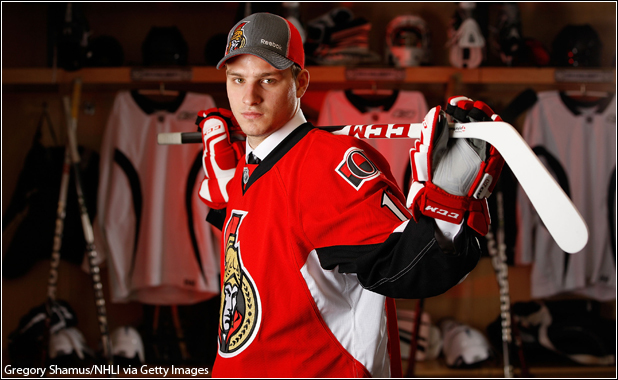
The Sens temporarily loaned Mikael Wikstrand to Farjestad to participate in Champions Hockey League group games (ongoing), but he’ll be back in Ottawa to take part in the rookie tournament.

Rookie Tournament Logo-600x300-NEW_1

Speaking of the rookie tourney, the roster has been announced (2015 picks in italics, AHL/ECHL contracts noted in brackets):

Forwards (15): Filip Chlapik, Vincent Dunn, Ryan Dzingel, Travis Ewanyk, Gabriel Gagne, Alex Guptill, Tobias Lindberg, Max McCormick, Nick Paul, Ryan Penny (AHL), Francis Perron, Matt Puempel, Buddy Robinson, Alex Wideman (AHL), and Matthew Zay (AHL)
Defensemen (7): Chris Carlisle (AHL), Thomas Chabot, Marcus Crawford, Ben Harpur, Chris Rumble (ECHL), Troy Rutkowski, and Mikael Wikstrand
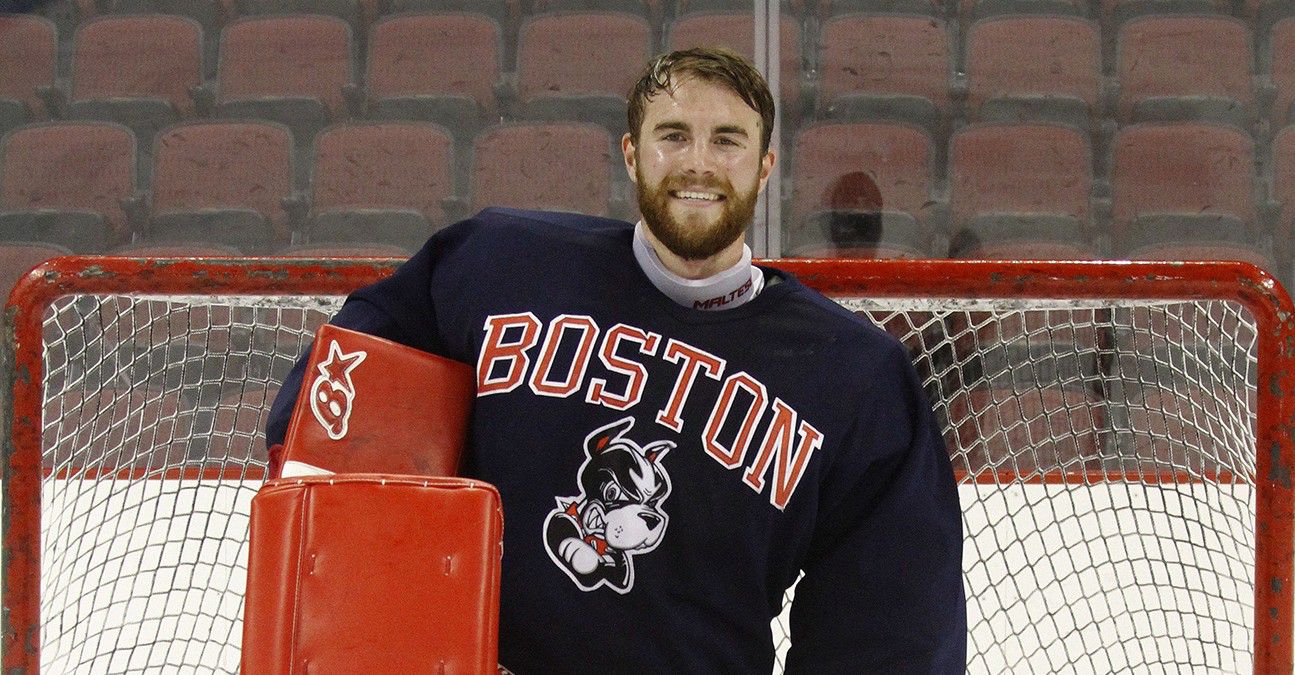
Goaltenders (2): Matt O’Connor and Chris Driedger

The only FA invitee is Marcus Crawford (Saginaw); the Ajax-native is a draft-eligible player, but I think he’s here because he’s local and to round out the numbers.  Incidentally, while I didn’t mention it when he was signed, Carlisle was nominated for the Leo Lalonde Memorial Trophy (overage player of the year in the OHL).  Before you get too excited about that trophy (and the fact that Ryan Callahan won it in 2006), it’s worth noting previous winners include non-entities like Tyler DonatiMichael SwiftJustin DiBenedetto, and Bryan Cameron.  That doesn’t mean he won’t be a useful ECHL (or AHL) player, but keep expectations at a minimum.

The rookie tournament is a lot of fun, albeit the caliber of play is not very high.  I don’t think we’ll see much of Penny, WidemanZay, or Crawford, incidentally.

matt o'connor

Callum Fraser‘s latest post echoes my sentiments:

While Matt O’Connor has never played a professional game of hockey before and Andrew Hammond still only has a couple months in the NHL under his belt, if Craig Anderson has any sort of injury, the Senators will have their hand near the panic button. As for the bottom six, losing arguably their best player [Condra] will likely not go over well. Especially now that Chris Neil, Colin Greening and Zack Smith are getting ready for a possible reunion tour.

Fans with a better memory than mine will know the answer to this, but have reporters ever asked David Cameron if he’s aware of just how bad that trio is?  They don’t pass the eye test or the analytics test.

senshirp-simple6

I don’t typically read SensChirp, but with the dearth of Sens news I was floating around the blogosphere and popped onto the site.  It’s interesting how popular it is–judging by the number of comments it’s more popular than the similar looking SenShot and the similar news digest format of The Silver Seven.  I think the regularity of the blog helps (although it’s not quite as frequent as Silver Seven), but there must be more to it.  I’m always surprised The 6th Sens isn’t more popular, but perhaps the sober tone and less frequent posts makes that impossible.  Putting the speculation aside, there’s a good break down of the Sens draft picks by Craig Smith that I missed from a couple of months ago, so I recommend checking that out.

NHL-Draft

That reminds me that I didn’t do my usual Sens draft review, largely because Nichols followed my format this year by quoting scouting reports on all the players (he splits them into two posts: here and here).  There was no point in replicating what he’d already done (my comments on the picks can be found here).  There’s a lot of chatter about draft picks in the fanbase and for me the touchstone always has to be their statistical performance and the collective reporting of scouts.  Too often fans get excited only by the former or else the hype from just one particular scout/organisation/reporter.

travisyost

Travis Yost has an excellent article that focuses on Individual Point Percentage (IPP) and how it relates to predicting trends for players.

Travis also looks at the difficulty in assessing goaltenders:

To start, there’s either no rhyme or reason to how goaltenders develop, or teams do a very poor job of scouting talent. I’m inclined to believe it’s a mixture of the two – the position, generally, being complex in nature, and the eye test failing us in ways it may not with goal-scoring forwards.

Goaltenders are voodoo. Statistical analysis has proved only mildly helpful as it pertains to identifying goaltending talent and forecasting future performance. Teams also struggle mightily with goaltender evaluation – from the time of the draft, to the time in which they decide to fork over the first (or second) lucrative contract. Down the road, technological improvements may pay significant dividends here, as metrics will be crafted to better identify goaltending talent, and separate skill from the noise.

He followed this article up with one trying to figure out who were the best goaltenders in the league (concluding they are Henrik LundqvistTuukka Rask, and Carey Price).

EvansvilleIceMenCHL

Evansville has signed two more players: Adam Stuart (SPHL 54-21-32-53), a 26-year old forward who will likely spend the year back in the SPHL, and re-signed 31-year old Jarret Lukin (56-12-26-38), one of their few productive forwards from last season.

This article is written by Peter Levi (@eyeonthesens)

Senators News & Notes

matt o'connor

I was reading through Trevor Shackles post and one thing he brought up is worth emphasizing: Matt O’Connor is not a sure thing.  That statement goes for almost every prospect, but it’s worth keeping in mind.  The fact that multiple NHL teams pursued him is a positive, but they also chased Bobby Butler (and many other collegiate free agents who have crashed and burned), so it’s entirely possible O’Connor never turns out.  Something to keep in mind for the upcoming season, although it’s fortunate the Sens have Marcus Hogberg in their back pocket (more on him later).

applause

Ladies and gentlemen, we got him: Nichols has delightfully gone back to qualifying his statements about prospects:

It’s worth noting that I don’t necessarily agree wholeheartedly with Wagman’s assertions. For example, he lost a couple of points of credibility noting that the Senators farm system took a hit because the organization didn’t recoup full value for trading Brian Elliott. I suppose on one hand, the acquisition of Craig Anderson single-handedly cost the organization a shot at drafting Ryan Nugent-Hopkins or Gabriel Landeskog. But on the other hand, having Anderson and Mika Zibanejad is a pretty fucking good consolation prize.  I also have a problem with Wagman definitively writing off prospects like Matt Puempel, Nick Paul and Colin White because they “look like solid third liners, at best.”

Presumably he would have several paragraphs for Pronman as well if he disagreed with him.  We’ll give Nichols a pass for letting Wagman’s unjustified Harpur comment go through (more on him below), but at least Wagman’s cheerleading for Marcus Hogberg has had an impact on Nichols more than anything I’ve said.

bigrig_logo

Nichols (link above) also talks about the recent Chris Phillips revelation that:

The pain and numbness have gone away, but Phillips told Brennan that he won’t put a timeline on when he’ll resume hockey activities. Considering we’re already towards the end of August and that Senators training camp usually begins in the second week of September, Phillips does not have a lot of time to prepare for the season and get ready for the start of camp.

Is it too much to hope that it’s a very long time before the Big Rig threatens to suit up?  Perhaps by the time he returns there will be no room for him, although with a roster that boasts Jared Cowen and Mark Borowiecki, it’s probably too much to hope for.

titantic

There’s a decent chance the 2015-16 Ottawa Senators will be a complete disaster.  The seeds of that potential remain as the worst players from last year’s roster are still here, but more importantly there’s a great deal of uncertainty in net.  Can Craig Anderson stay healthy through most of the season?  It’s highly unlikely.  I’m also concerned for Anderson because the last time he was safely a #1 goaltender (2010-11 with Colorado) he completely bombed–the worst season of his career.  I have no faith in Andrew Hammond–by that I mean I’m expecting the guy who stumbled horribly in Binghamton last year until he demonstrates differently.  There’s no margin for error between the pipes because behind Anderson it’s all hope and projection.

prospects

I thought I’d take a look at the rookies turning pro this season.  Before I get there, I thought I’d add I’m not completely sold on Matt Puempel.  Maybe this is the year he breaks out, but his two seasons in Binghamton have been unremarkable.  His points-per-game actually dropped in his sophomore campaign (slightly, admittedly), and he certainly didn’t lack for opportunity.  He could be a late bloomer, but as a first-rounder known for offense he should dominant in the AHL; just a note of caution.  It’s worth noting all assessments of prospects (including mine) are simply notes of caution (or triumph).

Another prospect we have to take with a grain of salt (for now) is Tobias Lindberg (you can read a more detailed profile here), and I’m speaking specifically of his offensive upside.  He put up decent, but not remarkable numbers in the Swedish junior system and the better numbers he had with Oshawa in the OHL were influenced by first-round pick Michael Dal Colle and third-rounder Cole Cassels.  This isn’t to say he was wholly dependent on those two, but there’s little doubt they inflated his production above what it would have been with a different roster.

There’s no such comparative concerns for Nick Paul, who showed consistent improvement season by season and, while he technically finished second in scoring for North Bay, was their top player in points-per-game, so no one was elevating his numbers.  That doesn’t guarantee his upside, but it means the scouting impressions of him aren’t being prejudiced by his teammates.

I’ve gone through Ben Harpur‘s issues before, but for those who missed it let’s address my concerns: he started this past season on fire, with 19 points in his first 18 games–this is clearly an outlier as he’s never had production like that at any point in his career.  If you take out that production, this is his performance: 39-1-11-12 (ppg 0.30), which represents a modest improvement over his previous season, but as a 19-20 year old in the OHL he’s going to get a production bump regardless.  If a prospect doesn’t produce in junior, they do not suddenly produce as a pro, so Harpur is not going to generate offense in the AHL (or likely the ECHL); all he can be with his “physical gifts” (he’s 6’6), is be a safe, defensive defenseman.  I’m not a fan of defensive specialists on the blueline–everyone at the back-end needs to be able to move the puck (as the unintentional hilarity of Ottawa’s blueline the first half of this season illustrated)–but the key problem with seeing Harpur as that guy is this: even before the draft scouts were complaining about his poor decision-making and that criticism hasn’t changed–in two-year of development he’s still making poor decisions.  You can’t be good defensively if you don’t make good decisions, so fans should take the limited hype about him with a very large grain of salt.

Why am I (and others) so excited about Mikael Wikstrand?  I wrote a long profile about him back in February and there’s a lot to like about the Swedish defender.  Before he was drafted he was seen as a safe, dependable blueliner who did everything well, but wouldn’t provide much offense.  The scouts were wrong about the latter, at least at the Swedish level, as Wikstrand has produced offense.  The season after he was drafted he benefitted from playing with Anze Kopitar for a couple of months, but he actually scored more the following year.  Whether his production carries over to the next level remains uncertain, but the consistent word from scouts is that he’s a mistake-free player–that will likely create a place for him somewhere.

That leaves Vincent Dunn, a prospect nobody is talking about and there’s good reason for that.  Dunn was let go by his team (Rimouski) during the season and that’s pretty damning for a player who was putting up adequate production for them.  He was drafted as a hard-working pest back in 2013 with warning signs about his behaviour; he signed the subsequent summer after a solid year with Gatineau.  His production dipped this past season, but given his relationship with his team that doesn’t mean what it usually does and he wasn’t drafted to be a scorer anyway.  Is there room for a Sean Avery-type in the NHL anymore?  I’m not sure Dunn has enough talent to be that guy or if the Sens should want that guy, but what happened in Rimouski is a big red flag and my expectations are very low for him.

A bit of trivia I neglected to mention in my last post: Branden Komm (the Evansville goaltender) was a development camp invitee back in 2013.

Back in March I looked at European free agents of interest, knowing full well the Sens do not dip their toe into that pool of talent (likely due to the extreme costs of scouting in Europe).  Of the 16 players identified 5 were signed to ELC’s: Kristian Nakyva (Nashville), Artemi Panarin (Chicago), Joonas Donskoi (San Jose), Markus Hannikainen (Columbus), and Eetu Laurikainen (Edmonton).  Other Euro’s signed include Sergei Plotnikov (Pittsburgh), Niclas Andersen (Pittsburgh), Vojtech Mozik (New Jersey), Dean Kukan (Columbus), Sergei Kalinin (New Jersey), Matthias Plachta (Arizona), Joonas Kemppainen (Boston), Yvgeni Medvedev (Philadelphia), Jakub Nakladal (Calgary), Christian Marti (Philadelphia), and Andreas Martinsen (Colorado; I identified him back in 2012).  That’s 12 different teams, with 4 signing two (Columbus, New Jersey, Pittsburgh, and Philadelphia).  Most of these players won’t pan out, but they’re as worthwhile a risk as an NCAA free agent, so I’m always interested in seeing how they do.

This article is written by Peter Levi (@eyeonthesens)

Senators News & Notes

My promised update to my Draft Success article has been posted.  It’s long, but for those interested in the draft there’s plenty of food for thought (beyond the success percentages I also touch on organizational success).  I also updated my article on undrafted European success stories.

havlat

Nichols goes through the pros and cons of having Martin Havlat on the roster (given that the Sens are apparently offering him a PTO for training camp).  I also wouldn’t mind seeing him here–assuming he’s healthy enough to perform and it means the elimination of some of the roster’s dead weight.

Free_Agent_logo_2

Before I looked into it, I thought the organisation might be starting to pull away a little from signing NCAA (and other) free agents to ELC’s (in terms of volume).  Early on in Murray’s tenure it made sense to sign free agents as there wasn’t much coming up through the system, but the organisation has continued to do so long after the cupboard was full.  Looking at the data however, my surmise doesn’t appear to hold much water:
2007: Derek Smith, Tyler Donati (OHL)
2008: Jesse Winchester
2009: Geoff Kinrade, Craig Schira (WHL)
2010: Bobby Butler, David Dziurzynski (BCHL)
2011: Stephane Da Costa, Pat Cannone, Wacey Hamilton (WHL)
2012: Cole Schneider
2013: Andrew Hammond, Buddy Robinson, Ludwig Karlsson, Troy Rutkowski (WHL)
2014: Garrett Thompson
2015: Matt O’Connor
I don’t think it’s a surprise that none of the players signed out of junior (5) have panned out (although it does happen).  The NCAA players have been a mixed bag, although whatever method the Sens use to select them seems to have flamed out badly last year with Garrett Thompson (he and Karlsson are by far the worst coming from that route).  All the college players (excepting the aforementioned) have been useful to the organisation (largely as AHL-talent), although several have been over hyped and none ever became important pieces in the NHL (the jury is still out on some, of course).  Of those now departed I could see Stephane Da Costa getting another shot in the NHL (he’s dominated the KHL), but it wouldn’t be with Ottawa.

EvansvilleIceMenCHL

Evansville added three more players to its roster:
-goaltender Brandon Komm returns (4-10-3 3.28 .903); while his stats don’t look remarkable, they were the best of anyone between the pipes for the team last season–the signing makes me wonder just how firm Christoffer Bengtsberg‘s roster slot is given that Scott Greenham or Chris Driedger will also be in Evansville
J. P. Labardo (ECHL 54-10-7-17); the former OHLer played with Gwinnett last season (his rookie season), but as his numbers are unremarkable I’m not sure what to make of him
Stephen Pierog (OHL 68-13-27-40); again his numbers aren’t that exciting, so presumably he’s providing depth
This means 12 players (so far) are on the pre-season roster (so that doesn’t include the various AHL-contracted players likely to be sent down).  Incidentally, Evansville’s FHL affiliate is the newly minted Berlin River Drivers (based in New Hampshire)–as far as I can tell they had no lower league affiliate last season (drawing players from various SPHL and FHL teams); at the moment the River Drivers are one of only two FHL teams with an affiliation (Dayton is the other), although being affiliated doesn’t seem that common for leagues at this level (I could only find one in the SPHL (Louisana)).  Incidentally, in looking into the FHL it doesn’t seem to have the depth or security of the SPHL, albeit I’m don’t think that’s hugely important to either Evansville or the Sens organisation.

kleinendorst

Readers may remember that I was very high on Kurt Kleinendorst after Binghamton’s Calder Cup run in 2011; unfortunately for Kurt, he’s yet another in a long line of examples that coaching makes little difference in team performance, as since leaving Bingo he’s flamed out in the NCAA and Iowa in the AHL.  It doesn’t mean he isn’t a good coach, but it does mean he can’t magically turn bad teams into good teams.

Masculinity

Andrew over at WTYKY (formerly of The Silver Seven) has an important piece on masculinity and the nasty side of hockey culture.  I can’t cut his piece down into quotable snippets, but I highly recommend it (particularly emphasizing his call to take sports media to task for its complicity).

erik karlsson

Conor Tompkins goes through the stats to illustrate the increasing contribution of defencemen to offense since the dead puck era.  In something of the same vein, Justin Bourne tries to figure out which blueliners get the puck through to the net most effectively, but admits he’s hampered by a lack of good data–what he has raises as many questions as it answers (no one is going to mistake Roman Polak or Jay Bouwmeester as offensive juggernauts)–I laud his attempt however.

corey pronman

I’m beating a dead horse, but I’ll make it brief.  Craig Smith tells us:

Pronman is worth the $

Why?  He makes lists, but so does my 7-year old niece–give me a good reason (yes Smith is a colleague so he has no choice, but my question is to the blogosphere at large).  Nichols is…look, you can’t force an addict to change, you just have to be there when they are ready (he should read his own comments about Pronman from two years ago).  Using someone else’s opinion to justify your own is making an appeal to authority–that’s only valid if there’s a reason to believe the authority you are appealing too.  Anyway, moving on.

ryan wagman

Having done this for as long as I have you’d think I wouldn’t be surprised anymore, but Ryan Wagman over at Hockey Prospectus broke new ground for me.  I mentioned his prospect list for the Sens in my last post and specifically wondered why he included Ben Harpur in it (which wasn’t the main thrust of what I was talking about, but it’s what he gravitated too).  Wagman hit the Twitter machine (he doesn’t follow me, so presumably Googles his own name) to let me know that:

my Harpur placement had far more to it than his size. You can find a full report on him on the site

I was puzzled by this response (follow the link for some commentary on the addiction of some NHL exec’s with size), for obvious reasons, and gave him some friendly advice:

You should link or include the information; nothing I’ve seen in scouting reports is encouraging–just size size size

Nothing Wagman says in the piece referenced suggests anything more than size (nor do the scouting reports when he was drafted two years ago):

his physical gifts are immense but he is currently held back by inconsistent decision making

The latter is far more important than the former, as are his (unmentioned) unremarkable numbers in the CHL–as Wagman knows full well players do not magically produce more when they turn pro, so Harpur‘s only hope as a prospect is being a safe, defensive blueliner–to do so he needs to make good decisions.  What was his response?

Google: Wagman Harpur

That’s not my (or anyone else’s) prerogative.  It’s incumbent on him to justify his own narrative and analysis in the piece.  If he has a unique scouting perspective on Harpur he needs to justify it.  Anyway, that’s more than enough on the guy.

My hope is that I’ll have time to update a few other popular articles of mine; regardless, it’s worth remembering we aren’t that far away from much meatier Sens news so we have that to look forward too.

This article is written by Peter Levi (@eyeonthesens)

European Undrafted Success Stories Revisited

I haven’t updated my undrafted success stories out of Europe article in a couple of years and there’s no time like the present. I’ve focussed on the post-lockout NHL because of the different parameters in which players are viewed (particularly undersized players).  I’ve set the “European pro” bar at 23 (anything earlier and I consider the player still a prospect).  The numbers next to the player’s name are their stats prior to being signed by an NHL team.

2006 (3)
Niklas Backstrom (G, Liiga) 32-9-10, 1.68, .940 – 409 games; remains with Minnesota
Patrick Thoresen (SEL) 50-17-19-36 – played 106 NHL games
Patrick Fischer (NLA) 44-21-32-53 – played 27 NHL games

2007 (4)
Jonas Hiller (G, NLA) 28-16, 2.60 – 378 games; with Calgary
Cory Murphy (D, Liiga) 45-13-37-50 – played 91 NHL games
Erik Ersberg (G, SEL) 41GP, 2.39, .908 – played 69 NHL games
Jaroslav Hlinka (Cze) 46-19-38-57 – played 63 NHL games

2008 (7)
Antti Niemi (G, Liiga) 26-14-6, 2.35, .926 – 328 games; won a Cup with Chicago; with San Jose
Ville Leino (Liiga) 55-28-49-77 – played 296 NHL games
Tim Stapleton (Liiga) 55-29-33-62 – 118 NHL games
Anssi Salmela (D, Liiga) 56-16-16-32 – played 112 NHL games
Fabian Brunnstrom (SEL) 54-9-28-37 – played 104 NHL games
Ryan Vesce (Liiga) 56-26-18-44 – 19 NHL games
Per Ledin (SEL) – played 3 NHL games

2009 (5)
Jonas Gustavsson (G, SEL) 42GP, 1.96, .932 – 106 NHL games; unsigned
Mika Pyorala (Liiga) 55-21-22-43 – played 36 NHL games
Henrik Karlsson (G, SEL) 34GP, 2.45, .914 – played 26 NHL games
Alexander Salak (G, Liiga) 20-20-9, 2.40, .923 – played 2 NHL games
Johan Backlund (G, SEL) 49GP, 2.56, .907 – played 1 NHL game

2010 (3)
Mats Zuccarello (SEL) 55-23-41-64 (1.16) – played 222 NHL games; remains with the Rangers
Jussi Rynnas (G, Liiga) 14-13-1, 2.71, .911 – played 4 NHL games
Marcel Muller (DEL) 53-24-32-56 – played 3 NHL games

2011 (3)
Raphael Diaz (D, NLA) 45-12-27-39 (0.86) – 201 NHL games; with the New York Rangers
Victor Bartley (D, Allsvenskan) 52-11-23-34 – 111 NHL games; remains with Nashville
Iiro Tarkki (G, Liiga) 20-20-14, 2.09, .924 – played 1 NHL game

2012 (4)
Viktor Fasth (G, SHL) 2.04, .934 – played 63 NHL games
Roman Cervenka (KHL) 54-23-16-39 – played 39 NHL games
Daniel Bang (SHL) 50-8-10-18 – played 8 NHL games
Harri Pesonen (Liiga) 60-21-14-35 – played 4 NHL games

2013 (2)
Michael Raffl (Allsvenskan) 49-24-22-46 – 135 NHL games; remains with Philadelphia
Reto Berra (G, NLA) 3.01 .906 – 50 NHL games; remains with Colorado

2014 (4)
Pierre-Edouard Bellemare (SHL) 52-20-15-35 – played 82 NHL games; remains with Philadelphia
Dennis Everberg (Allsvenskan) 47-17-17-34 – played 67 NHL games; remains with Colorado
Melker Karlsson (SHL) 48-9-16-25 – 53 NHL games; remains with San Jose
Ronalds Kenins (NLA) 39-8-17-25 – played 30 NHL games; remains with Vancouver

No players from the Slovak Elite League, Erste Bank Liga (Austria), Get Ligaen (Norway), or Al-Bank Ligaen (Denmark) have had players signed directly out of them.

Conclusions: the vast majority of the players signed (27 of 34) come from either the Swedish or Finnish leagues; 13 are or were NHL regulars (including those from last season).  The greatest successes are the goaltenders, which isn’t hugely surprising given that remains the biggest blind spot for scouts at the draft.  It’s interesting to note how dwarfed the number of players here is by those who arrive via the NCAA route, despite how large the available pool is in Europe.  Part of the reason for the smaller stream of players is the expense of properly scouting those players and the difficulty of deciphering how big ice hockey play will translate to smaller rinks.

This article is written by Peter Levi (@eyeonthesens)

NHL Draft Success (2005-2009)

There have been a sprinkle of articles reviewing draft accuracy over the years (like TSN’s Scott Cullen‘s awhile back) and as engaging as they are I’ve always had problems with the way they are constructed. Examinations of the draft that cover a long period of time fail to account for the changes in the league and the draft itself, so the comparisons don’t really work. When articles cover more recent drafts (Hockey Futures does them at five-year intervals) they are forced to make judgement calls on players whose futures are yet to be defined (just two examples, Colin Greening hadn’t started his pro career five years in, while Carl Soderberg didn’t jump to the NHL until he was 27).  All this preamble is to make two key points: 1) the attitude and approach to the draft in the NHL changed seismically after the 2004-05 lockout (due to the cap), 2) the typical make-or-break moment for a draft pick varies considerably.  On top of that, the raw overview I’m about to give is simply a window into the study, since I’m not focussed on management changes or know how much money/emphasis is being allocated on scouting by teams year-by-year (nor am I comparing the quality of those players).  What follows is a very broad examination of levels of success within the draft by team.  I’ve cut off at 2009 because even the ’10 draft class still hasn’t completed their cycle of development (’09 has some ambiguity, so the results there aren’t included fully included in the comparative data).  All of this presupposes the importance of the draft, something that could not be assumed at points in NHL history.

My framework: what is a successful pick?  Any skater who has played 200+ NHL games (along with some judgement calls, particularly when it comes to goaltenders).  With that many games the player has managed at least two and a half seasons of NHL work and that’s a solid return on the investment.  It’s not the only metric you could use, but it seems both broad and specific enough to be a place to start.

2005 (here)
First Round
18 players have played 200+ games, including 9 of the top-10 (Luc Bourdon tragically died and is the only exception).  Only 3 players never suited up in the NHL (Marek Zagrapan #13, Sasha Pokulok #14, and Alex Bourret #16)
Second Round
8 players hit 200+ games (the best are James Neal #33 and Paul Statsny ##44), with 12 never hitting the ice; only Marc-Andre Cliché might break that 200 barrier.
Third Round
6 players hit the mark (the best are Kris Letang #62 and Jonathan Quick #72; I’m including Ben Bishop #85); 12 never played
Fourth Round
6 players have reached the plateau (the best is Keith Yandle #105); 17 never played; Chris VandeVelde still has a chance to break the barrier
Fifth Round
5 players hit the mark (the best are Darren Helm #132 and Nathan Gerbe #142); 23 never played
Sixth Round
Only Matt D’Agostini qualifies; 22 players never played
Seventh Round
5 players reached the plateau (all serviceable players); 26 players never played

Here’s the success by team (I’ve included those players destined to break the plateau):
4 – Columbus (MacLean), Montreal (Gainey)
3 – Detroit (Holland), Dallas (Armstrong), Pittsburgh (Patrick), St. Louis (Pleau), New York Rangers (Sather)
2 – San Jose (Wilson), Ottawa (Muckler), Los Angeles (Taylor), Arizona/Phoenix (Barnett), Toronto (Ferguson), Nashville (Poile), Buffalo (Regier), Chicago (Pulford/Tallon), New Jersey (Lamoriello)
1 – Anaheim (Coates/Burke), Carolina (Rutherford), Minnesota (Risebrough), Edmonton (Lowe), Philadelphia (Clarke), Atlanta/Winnipeg (Waddell), Colorado (Lacroix), Vancouver (Nonis), Boston (O’Connell)
0 – Washington (McPhee), New York Islanders (Milbury), Florida (Keenan), Calgary (Sutter), Tampa Bay (Feaster)

2006 (here)
First Round
20 players hit the plateau (I’m including Jonathan Bernier), including all of the top-ten picks; 3 players did not hit the ice for an NHL game (Mark Mitera #19, David Fischer #20, and Dennis Persson #24)
Second Round
9 players (I’m including Michal Neuvirth) hit the mark, with only Jhonas Enroth having a chance to join them; 14 players never played
Third Round
While only 3 players have reached the plateau, but another 3 will or should join them (Brian Strait #65, Ryan White #66, and Eric Gryba #68); 16 never hit the ice
Fourth Round
2 players (Matt Beleskey #112 and I’m including James Reimer #99); 22 players never played
Fifth Round
No player has hit or will hit the 200 game-mark (or even 100); 23 never played; Chad Johnson #125 was the best player picked
Sixth Round
3 players hit the mark (Andrew MacDonald #160, Viktor Stalberg #161, and Mathieu Perreault #177), with Leo Komarov #180 having an outside shot of also getting there; 23 prospects never played
Seventh Round
2 players qualify (Derek Dorsett #189 and Erik Condra #211); 24 players never played

Here’s the success by team (I’ve included those players destined to break the plateau):
4 – Washington (McPhee), Toronto (Ferguson)
3 – Boston (O’Connell/Gorton/Chiarelli), Columbus (MacLean), Ottawa (Muckler)
2 – St. Louis (Pleau), New York Islanders (Milbury/Smith), Minnesota (Risebrough), Los Angeles (Taylor/Lombardi), Pittsburgh (Patrick/Shero)
1 – Chicago (Pulford), Arizona/Phoenix (Barnett/Maloney), Florida (Keenan), Atlanta/Winnipeg (Waddell), Vancouver (Nonis), Colorado (Lacroix/Giguere), Philadelphia (Clarke), San Jose (Wilson), Edmonton (Lowe), Detroit (Holland), New York Rangers (Sather), Buffalo (Regier), Carolina (Rutherford), Anaheim (Burke), Montreal (Gainey)
0 – Tampa Bay (Feaster), Calgary (Sutter), New Jersey (Lamoriello), Dallas (Armstrong), Nashville (Poile)

2007 (here)
First Round
16 players hit the mark, including 9 of the top-ten, but Ian Cole, Riley Nash, and Brendan Nash will all get there (so 19); 5 picks never played a game (Alexei Cherepanov #17 died; Logan MacMillan #19, Angelo Esposito #20, Patrick White #25, and Nick Ross #30)
Second Round
4 players have reached the plateau; 15 never played a game
Third Round
One player has reached 200 games (Yannick Weber #73), but Alex Killorn, Robert Bortuzzo, Joakim Andersson, and Corey Tropp should all get there (so 5); 16 players never hit the ice
Fourth Round
3 players qualify (Alec Martinez #95, Dwight King #109, and Matt Halischuk #117); 16 never played; Brad Malone #105 is on track to join them
Fifth Round
2 players (Jamie Benn #159 and Jake Muzzin #141) reach the mark; Chris Terry #132 has a shot to join them; 23 have never played
Sixth Round
Carl Hagelin (#168) and Nick Bonino (#173) qualify; Patrick Maroon #161, Brett Bellemore #162, and Paul Byron #179 should get there (so 5), with two others having outside shots (Luke Gadzic and Anthony Peluso); 17 prospects never played
Seventh Round
2 players (Carl Gunnarsson #194 and Justin Braun #201) reached the mark; 24 have never played; there’s a chance Paul Postma #205 will eventually get there

Here’s the success by team (I’ve included those players destined to break the plateau):
4 – Los Angeles (Lombardi), Montreal (Gainey)
3 – San Jose (Wilson), St. Louis (Pleau), Colorado (Giguere)
2 – Edmonton (Lowe), Carolina (Rutherford), Philadelphia (Holmgren), Buffalo (Regier), Pittsburgh (Shero), Detroit (Holland)
1 – Chicago (Pulford), Arizona/Phoenix (Maloney), Washington (McPhee), Columbus (Howson/MacLean), Florida (Martin), Nashville (Poile), Tampa Bay (Feaster), Calgary (Sutter), New Jersey (Lamoriello), Dallas (Armstrong), New York Rangers (Sather), Toronto (Ferguson)
0 – Ottawa (Br.Murray/Muckler), Boston (Chiarelli), Anaheim (Burke), Vancouver (Nonis), Atlanta/Winnipeg (Waddell), New York Islanders (Snow), Minnesota (Risebrough)

2008 (here)
First Round
17 players have reached 200 games, including 9 of the top-ten, with another 3 on their way (so 20); four prospects never played (Kyle Beach #11, Chet Pickard #18, Anton Gustafsson #21, and Daultan Leveille #29)
Second Round
5 players (Derek Stepan #51, Travis Hamonic #53, Roman Josi (#38), Justin Schultz (#43), and Marco Scandella (#55) have reached the plateau, with Vyacheslav Voinov (#32), Patrick Wiercioch #42, and Jimmy Hayes #60 locks to join them (so 8); 7 players have never suited up
Third Round
4 players (Michael Stone #69, Lance Bouma #78, Zack Smith #79, Adam Henrique #82), with Brandon McMillan #85 possibly getting there, and Jori Lehtera #65 if he can stay healthy (I’ll include him, so 5); 17 prospects never made it
Fourth Round
Two have reached 200 games (Dale Weise #111 and T. J. Brodie #114)), with Braden Holtby (#93) and Gustav Nyquist (#121) arriving there this upcoming season (so 4); 15 players never suited up
Fifth Round
Two players (Matt Martin #148 and Matt Calvert #127) qualify; 18 prospects never played
Sixth Round
4 players qualify (Jared Spurgeon #156, Cam Atkinson #157, Tommy Wingels #177, and Zac Rinaldo #178), with Ben Smith #169 joining them in the upcoming season (so 5); 19 players never suited up
Seventh Round
Only Jason Demers (#186) hits the mark; 22 have never played; Matt Bartkowski #190 could join him soon; I’ll include Anders Lindback (#207) as well (so 3)

Here’s the success by team (I’ve included those players destined to break the plateau):
4 – New York Islanders (Snow)
3 – Nashville (Poile), Ottawa (Br.Murray), New York Rangers (Sather)
2 – Buffalo (Regier), Anaheim (Burke/Bo.Murray), Washington (McPhee), Columbus (Howson), San Jose (Wilson), Los Angeles (Lombardi), Calgary (Sutter), Philadelphia (Holmgren), Arizona/Phoenix (Maloney), St. Louis (Pleau), Toronto (Ferguson/Burke)
1 – Tampa Bay (Feaster), Atlanta/Winnipeg (Waddell), Vancouver (Nonis/Gillis), Edmonton (Lowe), Minnesota (Risebrough), New Jersey (Lamoriello), Detroit (Holland), Chicago (Pulford), Florida (Martin), Carolina (Rutherford), Boston (Chiarelli)
0 – Colorado (Giguere), Montreal (Gainey), Dallas (Armstrong/Hull-Jackson), Pittsburgh (Shero)

2009 (here)
First Round
14 players have hit the threshold (including 9 of the top-10), with another 8 who will get there (so 22); only one player never played (Philippe Paradise #27), with Scott Glennie (#8) as the only top-10 bust
Second Round
2 have reached the threshold, with another 7 on their way (so 9, possibly to be joined by Dmitri Orlov #55); 9 players never made it
Third Round
2 players hit the mark, and I’ll include Tyson Barrie #64 and Brayden McNabb #66 as well (so 4), although it’s worth noting several other players whose careers have just started could bump this number considerably; 12 prospects never made it
Fourth Round
2 reach the threshold, with another 4 on their way (so 6, with the same caveat as above); 13 players never suited up
Fifth Round
2 players hit the mark, with Mike Hoffman #130 likely to join them (so 3); 21 players never suited up
Sixth Round
No player is at 200 games, but Anders Lee #152 should get there; 18 players didn’t make it
Seventh Round
Zero players hit the mark, but Jordan Nolan #186 will get there and Erik Haula #182 has a decent chance; 26 players never hit the ice

The preliminary success by team:
4 – New York Islanders (Snow), Nashville (Poile)
3 – Los Angeles (Lombardi), Ottawa (Br.Murray), Buffalo (Regier), Anaheim (Bo.Murray), Colorado (Giguere/Sherman)
2 – Minnesota (Risebrough), Columbus (Howson), Dallas (Hull-Jackson/Nieuwendyk), Washington (McPhee), Edmonton (Tambellini), Tampa Bay (Lawton), Chicago (Pulford), New Jersey (Lamoriello)
1 – Detroit (Holland), Atlanta/Winnipeg (Waddell), Arizona/Phoenix (Maloney), Toronto (Burke), Florida (Martin/Sexton), St. Louis (Pleau), New York Rangers (Sather), Pittsburgh (Shero)
0 – Boston (Chiarelli), Calgary (Sutter), Carolina (Rutherford), Montreal (Gainey), Philadelphia (Holmgren), San Jose (Wilson), and Vancouver (Gillis) with 0.

My hope is that others will dig a little deeper to get the how and why behind the numbers–a few basic factors (poor coverage of Europe and the dismissal of smaller players) are clearly a factor (as explored here in a look at undrafted success stories).

Overview (2009 is not included for the reasons mentioned above)
Round-by-round success rate:
First: 77/120 (64%)
Second: 30/123 (24%)
Third: 22/120 (18%)
Fourth: 16/124 (13%)
Fifth: 9/127 (7%)
Sixth: 14/123 (11%)
Seventh: 12/128 (9%)

The scaling between rounds is not surprising.  Of the 39 top-ten picks (excluding Bourdon for obvious reasons), only 2 were misses, making them 95% reliable.  Excluding the top-ten picks, the first round is still significantly stronger than the second round (40/79, 50%, excluding Cherepanov for the same obvious reason).  The third round is more meaningful than the rest, but the fourth is only a bit better than the rounds that follow; the fifth-seventh rounds are roughly all on equal footing in terms of results, which suggests there’s still room to improve scouting (as ideally there should be a decline each round; albeit the above data is a small sample size).

Team Performance (GM’s in brackets; the average is 6)
Los Angeles (Taylor/Lombardi), St. Louis (Pleau), Columbus (MacLean/Howson) 10
Montreal (Gainey), Toronto 9 (Ferguson/Burke)
San Jose (Wilson), Ottawa (Muckler/Br.Murray), New York Rangers (Sather) 8
Washington (McPhee), Detroit (Holland), Pittsburgh (Patrick/Shero), Buffalo (Regier) 7
Arizona/Phoenix (Barnett/Maloney), Nashville (Poile), New York Islanders (Milbury/Smith/Snow), Philadelphia (Clarke/Holmgren) 6
Boston (O’Connell/Chiarelli), Carolina (Rutherford), Chicago (Pulford/Tallon), Colorado (Lacroix/Giguere/Sherman), Edmonton (Lowe/Tambellini) 5
Dallas (Armstrong/Hull-Jackson/Nieuwendyk), Anaheim (Coates/Burke/Bo.Murray), Minnesota (Risebrough), New Jersey (Lamoriello) 4
Calgary (Sutter), Atlanta/Winnipeg (Waddell), Vancouver (Nonis/Gillis), Florida (Keenan/Martin) 3
Tampa Bay (Feaster/Lawton) 2

It’s difficult to imagine any scouting staff completely whiffing on an entire year, but organisations do (an average of 5 per season, so a sixth of the NHL).  It’s interesting that LA and St. Louis are benefitting from their excellent scouting (and draft position), whereas Columbus is experiencing much more modest gains (this is where the difference in quality of players manifests itself over quantity).  It seems like a good year for scouts is 2 NHL players (more than that is excellent), while there should always be at least one found (5 teams average less than one).

There’s plenty of room to assess GM’s independent of their teams (from 05-08 half, 15, of the GMs remained the same, although that drops to 13 in 2009).  A quick glance at the variance in performance for those without the same GM (up through 2008):
LA: Taylor 2/1; Lombardi 8/3 (the 2006 draft would have included some or all of Taylor’s scouting staff)
Columbus: MacLean 7/2, Howson 3/2 (the above caveat for 2007, where 1 player panned out)
Toronto: Ferguson 7/2, Burke 2 (the above caveat for 2008, with 2)
Ottawa: Muckler 5/2, Br.Murray 3/2 (the above for 2007, with 0)
Pittsburgh: Patrick 3/1, Shero 4/3 (the above for 2006, with 2)
Arizona/Phoenix: Barnett 2/1, Maloney 4/3 (the above for 2006, with 1)
New York Islanders: Milbury 0/1, Smith 2/1 (the above for 2006, with 2), Snow 4/2
Philadelphia: Clarke 2/2, Holmgren 4/2
Boston: O’Connell 1/1, Chiarelli 4/3 (the above for 2006, plus interim GM Gorton, with 3)
Chicago: Tallon 5/4 (the above for 2005 via Pulford, with 2)
Colorado: Lacroix 1/1 Giguere 4/3 (the above for 2006, with 1)
Dallas: Armstrong 4/3 Hull-Jackson 0/1 (the above for 2008, with 0)
Anaheim: Burke 2/3 Bo.Murray 2/1 (the above for 2005 via Coates, with 1; the same for 2008 with 2)
Vancouver: Nonis 2/3 Gillis 1/1 (the above for 2008, with 1)
Florida: Keenan 1/2 Martin 2/2

A few stray observations in the numbers above: Doug MacLean drafted better than expected in Columbus; my belief that Brian Burke doesn’t draft holds up; Ray Shero was awful; the lauded Peter Chiarelli did not do well at the draft; Dale Tallon’s reputation in Chicago was overrated for the draft.  As for the 15 franchises who kept the same GM’s throughout these four years, Jay Feaster was the worst, followed closely by Darryl Sutter and Don Waddell.  Larry Pleau and Bob Gainey had the best success rate.

It’s worth noting that given top-ten picks are essentially gimmies, GMs who have those picks have their numbers inflated somewhat, so in terms of which scouting staffs can assess after the automatics, here are the adjusted numbers:

Los Angeles, New York Rangers, St. Louis, Montreal, Toronto 8
Columbus, Buffalo, Detroit, Ottawa 7
San Jose 6
Washington, Nashville, Colorado, Philadelphia, Pittsburgh 5
New York Islanders, New Jersey, Boston, Edmonton, Carolina, Dallas 4
Arizona, Calgary, Anaheim 3
Minnesota, Winnipeg, Vancouver, Chicago 2
Florida, Tampa Bay 1

After the first round:

Columbus 7
Montreal, New York Rangers, Toronto, San Jose 6
Los Angeles, Buffalo, Detroit, Ottawa, Nashville, Pittsburgh 5
New York Islanders, New Jersey 4
St. Louis, Washington, Colorado, Boston, Carolina, Dallas 3
Philadelphia, Arizona, Calgary, Anaheim, Minnesota, Chicago 2
Edmonton, Winnipeg, Vancouver, Florida, Tampa Bay 1

The most noticeable drop is by St. Louis, where outside the first round they’ve had middling success (Edmonton’s drop is much less surprising).

At any rate, this all just scratches the surface.  Further analysis and time is required to draw conclusions, but I think this sheds some light on the draft in the current era.

This article is written by Peter Levi (@eyeonthesens)

Senators News & Notes

Luke-Richardson

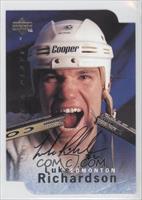
Luke Richardson weighed in on Binghamton (briefly) and thought last season’s debacle was due to a lack of experience, which is an odd conclusion if you look at their roster (which had an abundance of veterans).  It’s such a pat answer I wonder if it’s really what Richardson believes (the best spin I can put on it is that his best players were younger).  He also suggested there might be player movement (a trade) to make room for Chris Wideman in Ottawa (which struck me as speculation, but a welcome thought); otherwise he just had some generalities about Matt O’Connor and Shane Prince.  My two cents on Binghamton’s problems, btw, is that coaching was part of the problem (playing usage in particular), with too much reliance on older players who weren’t delivering.

corey pronman

Superstar to the blogosphere Corey Pronman (sigh) has posted his latest organisational prospect rankings (why the normally discerning Nichols accepts Pronman’s pronouncements so readily is difficult to surmise, but I’d guess it’s the platform he’s given).  For those unfamiliar with these exercises, grades are assigned on the supposed quality of the prospect pool (as long as you don’t ask for details, everybody’s happy).  I might give this approach more credit if there was any reason to believe Pronman (or anyone else) had a track record of predictive success with these assessments, but really, grades are given and then everyone forgets about them–predictions are not being held to the fire, which is odd in an era of analytics.  Let me give just one example of Pronman‘s acumen (his list from 2011):
1. David Rundblad, Defense
2. Mika Zibanejad, Left Wing
3. Nikita Filatov, Right Wing
4. Stephane Da Costa, Center
5. Jared Cowen, Defense
6. Jakob Silfverberg, Right Wing
7. Patrick Wiercioch, Defense
8. Derek Grant, Left Wing
9. Matt Puempel, Left Wing
10. Robin Lehner, Goaltender
Keep in mind guys like Mark Stone, Mike Hoffman and Chris Wideman were in the organisation at this point, so RIP prognostication or an eye for talent (I could go on about this, but you get the point).  Yes, Pronman is better than the guy on the street corner for prospect info, but let’s not go overboard with his opinions.  Anyway, I’ve talked about Pronman before so let’s go back to what Nichols does with this:

The problem with Ottawa’s depth of prospects is that while many of them safely project to be NHLers, there simply is not a lot of room for them at the parent level right now.

I assume Nichols’ point here is that he wants the deadwood removed from the roster to provide that space, but that still doesn’t make having this depth of prospects a problem.  They are useful assets–always a good thing.  Then we have:

The problem therein, is that while the system does have depth at every position, it lacks projectable impact players. Although it’s entirely possible for a prospect to exceed projections and develop into a front line player, it seems unlikely.

And what is an impact player in his opinion?  The default assumption is that it refers to a top-six forward or top-four defenseman, but if that’s what he means he’s simply wrong–there’s no question that at least a couple of the current prospects have that ability (I’m sure Nichols would agree; certainly the organisation thinks they have a future #1 goaltender in O’Connor–and that’s not just blowing smoke up the ass of the public, they traded Robin Lehner to make room for him).  What I think he’s actually referring too is elite talent, a top-line or top-pairing player, which is an entirely different question and (to me) missing the point.  Very few prospects are ever at that level and they certainly spend almost no time within systems because they “graduate” from these lists in a hurry.  While I applaud Nichols for cautioning fans against getting too excited about hidden gems and the organisation pumping the tires of prospects, he’s over the top when bemoaning the lack of “impact players” in the system.  We’d all like elite players rattling around in the minors, but it really doesn’t work that way (I’d recommend checking out my draft success article, which I’ll have to update with last season in mind).  Anyway, I still love you Nichols, I just want you to apply that critical thinking of yours to Pronman a bit more critically rather than using him as a hatchet against whoever you’re having prospect arguments with.

lists-image

Hockey Prospectus (Ryan Wagman) has its own top-ten list and Callum Fraser can celebrate as they inexplicably have Ben Harpur as a Sleeper (it’s amazing how simply being big will impact opinion, “his physical gifts are immense but he is currently held back by inconsistent decision making“–I find the latter more than a little worrying).  That said, his list has no visible criteria behind it and from the information available I haven’t the slightest idea what separates the players on it.  For those of you who share the addiction to size, please read this.

travisyost

Time to cleanse the palate with the inestimable Travis Yost.  Recently he’s looked at what impacts shooting percentage and come to the preliminary conclusion that talented centers have at least some impact (previously analytics guys thought the percentage was always gravitated to the average).  On a TSN podcast he offered the opinion that NHL goalies are overpaid (starts around 9:00).  He also looked at Lou Lamoriello’s draft success with the Devils and I wish he’d examined their success after the lockout.

List making is so arbitrary for prospects I’m tempted to make one myself, although I’d be looking to apply metrics of some kind to it.  Speaking of lists, I’ll need to remember to update some of my stuff on here–feel free to offer some friendly reminders.

This article is written by Peter Levi (@eyeonthesens)

Senators News & Notes

hoffman

The Mike Hoffman arbitration deal was another short-term win for the organisation.  The Sens get Hoffman on the cheap and if he pulls a Peter Regin they can safely eject at season’s end.  The flip side of it is that if Hoffman has another excellent season he’s going to cost them an arm and a leg to lock up long-term.  I’m happy to have him back in the lineup, although it remains to be seen how Dave Cameron uses him.

stayorgo

Apparently the Mikael Wikstrand saga has not yet reached its final chapter as there’s still disagreement between he and the Sens over where he’ll play in the upcoming season.  The back and forth has been perplexing to say the least, but ultimately he’s under contract with Ottawa so as far as I can tell he can’t actually refuse to come over.

Gnomes_plan

I’ve never been a fan of prolonged lists cut up into dozens of pieces; its personal taste and I understand that for daily blogs they have to create content somehow.  My main issue with lists in general is that they too often aren’t grounded in any kind of criteria: what, specifically, separates player X from player Y?  I wish writers would put more effort in methodology so that their rankings meant something tangible to be discussed (and where’s the self-reflection over previous lists and how they could be improved?).  This all comes to mind because The Silver Seven are in the midst of their top-25 prospects and one comment stands out to me (from here):

with Chris Driedger looking like a solid AHL backup

He does?  Ross A is a smart guy so I know he’s seen the goaltender’s Evansville numbers–can you really take Driedger‘s very brief stint with Binghamton as representative?  It’s a smaller sample size than Andrew Hammond in the NHL.  For me it’s a very dangerous assumption and the fact the organisation feels the same is signalled by them retaining Scott GreenhamMaybe Driedger is an AHL backup, but he hasn’t proven himself yet.  That said, my only real quibble with the series thus far is Callum Fraser‘s effort as he offers no substantive reason for Ben Harpur (a marginal prospect) to appear on the list–junior playoff experience does not magically translate to AHL success.  Harpur is a big defenseman without great hands or good hockey sense–for me (as mentioned below) he has a good chance to spend a lot of time in the ECHL or as a healthy scratch.

EvansvilleIceMenCHL

I was about to update signings for Evansville and realised I hadn’t posted any of them as yet, so here’s a brief overview (with rookies in italics):

Forwards
Tyson Fawcett (DOB 1993 ECHL 59-9-15-24) – coming off his rookie season with Brampton, the 5’6 forward was a fairly unremarkable OHL-forward, but looks to be a regular with Evansville
Justin Macdonald (DOB 1990 ECHL 20-7-5-12/FHL 46-44-58-102) – brought up from the FHL towards the end of last season, the former junior-B player was among the first players given an extension; he spent four seasons in southern tier-3 leagues
Joe Zarbo (DOB 1991 NCAA 32-12-8-20) – debuted with Evansville after graduating, he played well and should get a shot in the lineup
Thomas Gobeil (DOB 1994 BCHL 41-25-15-40) – the former QMJHL-forward was not particularly productive in major junior, so there’s a good chance he’ll spend most of his time in a lower league like the FHL

Defensemen
Spencer Humphries (DOB 1992 ECHL 67-3-24-27) – a late-season acquisition from Greenville, he’s signed an extension; this will be his third season as a pro after graduating from the WHL
Donnie Harris (DOB 1990 ECHL 61-1-7-8) – spent all of last year with Evansville and was among the first extended; he has four pro seasons under his belt
Chris Rumble (DOB 1990 NCAA 36-7-13-20) – son for former NHLer Darren, the NCAA grad debuted with Evansville at the end of last season
Mike Kavanagh (DOB 1988 SPHL 54-3-25-28) – tier-2 NCAA grad slots as a career tier-3 player and likely won’t see much action in Evansville

Goaltenders
Christoffer Bengtsberg (DOB 1989 Allsvenskan 3-12-0 2.82 .889) – this is the Swede’s first venture across the pond, arriving after years of bouncing around the Swedish lower leagues; I have no idea how well his game will translate, but he wouldn’t sign if he wasn’t going to get a decent shot

Along with these strictly ECHL contracts we can expect Binghamton players like Danny Hobbs, Daultan Leveille, Matthew Zay, Matthew Wideman, Guillaume Lepine, Chris Carlisle, and possibly Vincent Dunn, Ben Harpur or Troy Rutkowski, and one of Scott Greenham/Chris Driedger.  With what’s likely from the above that makes for eight regular forwards, four defensemen, and two goaltenders, leaving plenty of room for more players to be added.

There isn’t much to miss from last season’s Evansville roster (one of the worst in ECHL history), but some of those who had a modicum of talent have signed elsewhere (Braden Pimm in tier-2 Germany, Robin Soudek went back to the Czech league [he was just released, incidentally], and Miles Bell signed in Norway), although no one from that roster is remotely irreplaceable.

cowick

A lot of fans became invested in former prospect Corey Cowick–the hometown boy done good–could he ever become that depth NHL forward, a grinder?  For myself (and others) there was never a question about his talent ceiling.  Last year he signed with Springfield, but only dressed for about half the games, so he’s had to take a contract with Florida in the ECHL for the upcoming season and unfortunately for Corey that is about where his talent gets him.  He should do well in the ECHL, but I don’t think he’ll ever be a regular AHL player again (if he wants money he’ll probably migrate to the DEL).  The point in bringing this up is that hard work isn’t enough to make up for a lack of talent–something to keep in mind whenever the organisation gets high on a player known primarily for work ethic.

sensnation

It’s a funny old world.  For those who don’t know, I used to write for Sens Nation years ago, but since I gave that up I haven’t heard from them–then I happened to RT something unrelated to hockey and they RT’d it themselves.  It’s such a random thing, but I appreciate that they’re still following my feed (and perhaps reading the blog).

This article is written by Peter Levi (@eyeonthesens)

Senators News & Notes

I wasn’t surprised at the Alex Chiasson arbitration ruling–it’s a good one for the team.  We can hope Mike Hoffman will be given a similarly palatable deal for the organisation if they don’t settle prior to the hearing (for those interested you can read Nichols‘ breakdown of the former).

Amidst a humdrum Pierre Dorion interview was a comment I’m happy to hear from him:

we’ve always fallen into traps that, I think we over-evaluate some guys that are decent NHL players but not great NHL players and I think Bryan (Murray) talked about it on July 1st. We’ve drafted and we’ve developed well here. We’re going to give some of our kids chances. Show us what you can do here. If you’re not good enough, we’ll just bring someone else in. But I think with what we’ve done here in the past, I don’t always see it being fruitful for us to go out and sign free agents

All that’s missing from this for a full mea culpa is an admission that the organisation hangs on to failing veterans for far too long.

Adam Coombs talks about potential red flags for prospects due to how they looked during Ottawa’s latest development camp, seeing concerns for Miles Gendron (decision-making), Ben Harpur (speed and lack of production–something I’ve brought up in the case of many players and for those who want a bit of evidence for why that’s bad go here), Alex Guptill (a plethora of reasons, and somehow I missed him being charged with assault and battery last summer).  On the flipside, Coombs looks at positives from the camp, making the obvious Max McCormick nod, along with Nick Paul (size and speed), Tobias Lindberg (size and speed), Mikael Wikstrand (consistent and does everything well), with honourable mentions for Matt O’Connor and Marcus Hogberg.  It’s important to note what a small sample size such a camp is (even though Coombs references their past seasons), but the opinions mesh with mine and most people’s (except perhaps for Harpur–there are fans of the big player out there, and honestly, almost no one knows who Gendron is).

B-Sens signings continued as they added development camp attendee Ryan Penny (LW, QMJHL 66-32-38-70) and veteran minor league defenseman Nick Tuzzolino (ECHL 55-2-21-23), who played 10-games with Binghamton last season.  I’d expect both to play in Evansville, although the organisation does like big players with no hands.

Speaking of Binghamton, Jeff Ulmer offered up a retrospective on the 2011 Calder Cup championship, which seems like an opportune time to do a “where are they now” snapshot.  I’ve left out two players who briefly suited up (Brennan Turner, now retired, and Patrick Couloumbe, now in France); the players are listed by scoring (those who have played/will play 100+ NHL games are in blue; those currently in Europe are in green; in the one case where both apply I’ve included both colours):

Ryan Potulny – went on to Hershey where after two productive seasons injury saw that drop off and after moving to Hartford last season he’s signed to play in Finland
Ryan Keller
 – went to Oklahoma and then to the NLA where he remains
Kaspars Daugavins – spent the next season in Ottawa, was then traded to Boston the following season before going to Europe (the NLA and KHL)
Zack Smith – became a full time player in Ottawa immediately following
Andre Benoit – split the next season between Ottawa and Binghamton, subsequently signed with Colorado and is coming off a miserable season in Buffalo (which meant he had to accept a two-way deal from St. Louis)
Erik Condra – immediately became an NHL player in Ottawa (now signed with Tampa)
Bobby Butler – spent the next year in Ottawa where he was a disaster; bounced between New Jersey and Nashville before returning to the AHL; signed in Sweden for the upcoming season
Corey Locke – had an injury-plagued return to Binghamton following, then bombed out of the Finnish league (getting loaned to the DEL); retuned to the AHL for one season, but then back to Germany last year
Roman Wick – returned to the NLA where he’s been dominant
Mike Hoffman – spent the bulk of three more seasons in Binghamton before finally making Ottawa full-time
Jim O’Brien – split the next season between the NHL/AHL; full-time the following year before being dumped back to Binghamton the next season; he then bounced out of the KHL and is slatted for full-time AHL action in the upcoming season
Colin Greening – three full seasons with Ottawa were followed by last year’s temporary demotion to Binghamton and the organisation expressing a desire to be rid of him–he remains under contract
Geoff Kinrade – spent most of the following season in the Czech league, then two full seasons in the NLA before splitting between it and the KHL; he’ll be back in Russia this year
Cody Bass – three years in Springfield were followed by one in Rockford last season and Milwaukee in the upcoming season
Jared Cowen – for better or for worse he’s been with Ottawa since
David Dziurzynski – has remained in Binghamton since
Derek Smith – spent two seasons on Calgary’s roster before returning to the AHL; bombed out of the NLA last season and will be with Springfield in the upcoming one
Derek Grant – remained with Binghamton until he signed with Stockton for the upcoming season
Bobby Raymond – split the next season with Binghamton before moving on to Charlotte; since then he’s bounced around the DEL
Mark Borowiecki – spent three more seasons in Binghamton before graduating to Ottawa last year
Patrick Wiercioch – spent the next season in Bingo; split the next between it and Ottawa before becoming a full time NHL-player
Craig Schira – one more year with Binghamton before going to Norway, Finland, and now to Sweden
Eric Gryba – spent another year in Binghamton, split the next between it and Ottawa before becoming a full time NHL-player; traded to Edmonton
David Sloane – retired after the championship
Robin Lehner – spent two more years in Binghamton before graduating; traded to Buffalo
Barry Brust – went to Germany, then back to Abbotsford, and since has played in the KHL

That’s 11 players who went on to at least 100 games of NHL action, a testament to the talent on the roster, although it’s worth noting that as few as three of them are top-end talents (for my money Lehner, Wiercioch, and Hoffman).

This article is written by Peter Levi (@eyeonthesens)

Senators News & Notes

internet-statistics_1

Ross A goes through hockey stats 101 for those confused or intimidated by them.  It’s worth reading, although I don’t think the audience he’s attempting to reach are particularly receptive to olive branches.  Like most new things, younger fans will largely embrace it and as time goes on that will become the norm.

journalism

Speaking of Ross A, he tackled an excellent topic regarding media influence in sports, but unfortunately only pilloried Steve Simmons at the Toronto Star–as much as Simmons deserves it for inventing a story about Phil Kessel, I was hoping Ross would dive into the moribund journalism practiced in this city.

Binghamton_Senators_svg

Binghamton signed undersized Oshawa General defenseman Chris Carlisle (68-7-37-44); he’s almost certainly bound for Evansville.

Somewhat related, I’d speculated a couple of weeks ago that the Sens had cut ties with prospect Tim Boyle; that suspicion was confirmed today as he signed with Wichita in the ECHL.  This make’s Boyle‘s journey in becoming a pro quite bizarre, as he was drafted out of US high school, spent one year in the NCAA, returned to the junior system in the US, went to tier-2 college, and is now going to the ECHL  Ultimately he’s a wasted pick, a player that no scouting source liked prior to the draft who crashed and burned very quickly.  We can only hope the scouting staff learned something from it.

Wrong

I was surprised to discover the legendary Nichols reads this blog.  I can’t recall interacting with him before, but the truism that people gravitate towards perceived negative comments rings true as Nichols hit me up on the Twitter machine:

your comments in regards to my own analysis are ridiculously reductive

He continued his comments in his latest post (I think he liked the alliteration), apparently still blissfully unaware of why I wrote what I wrote (despite a not very subtle hint that he was taking the comments far too seriously–it’s funny how some people respond to these things–good old Bobby Kelly always took things with good humour).  One positive was Nichols spelling out his approach to prospects for anyone who wasn’t aware and the key point is this:

The thing about lower draft selections is that they’re selected lower because they have some perceived deficiency which in turn creates tempered expectations for their future because of the associated risks or lower projected ceilings. That does not mean that low draft picks aren’t valuable either. There will always be value in finding NHL-calibre talent that can play games at the highest level.

It’s admittedly a bit obvious, but clarity is a good thing.  Incidentally, he’s started up a Patreon to support The 6th Sens podcast, so if you have even a few bucks lying around I highly recommend doing so.

This article is written by Peter Levi (@eyeonthesens)

Senators News & Notes

The Sens Development Camp has wrapped up.  It’s always a fun event for those who get the chance to attend, although admittedly you have to love hockey, the Sens, and prospects (RIP Nichols) to get full value from it.

Randy Lee offered comments about performances in the black and white game and besides blowing the usual smoke up the asses of top-picks (and using unfortunate terms like “compete level”), he did offer some insight:

On Ryan Dzingel

Dzingel was really able to show off his speed with a couple of breakaways too. He had a good year in Binghamton last season but it was a transition year where we put him at a different position so that was a bit of a challenge for him. I thought he got better as the season went on and it was great to see how well he did last night.

Changing position in your rookie season at the pro level is not easy and worth keeping in mind in regards to Dzingel‘s occasional struggles in Bingo this past season.

On Mikael Wikstrand

is a guy that you don’t appreciate until you see him in a game. He really thinks the game at a high-level, he moves the puck really well, good offensive instincts and he’s a guy that’s going to be a pretty good player for us.

In a way this is more of the same in terms of comments made about the Swedish defenseman; there’s no question he has an NHL threshold, the only unknown is whether his offensive game will translate at that level.

On Chris Driedger

he had a different season last year but as the season went on, he got better and he played with a lot of confidence last night.

“Different” is the most polite way I can think of to describe Driedger‘s season in Evansville, but he certainly did better in Binghamton and fans can hope he continues to improve.

On Marcus Hogberg

you can see he’s got great feet, really good down low

I’m quite high on the Swedish goaltender, although with Matt O’Connor now as the anointed one it’s a good thing he’s going to spend another year in the SHL.

As usual, Sens TV has little vignettes about the camp, but also footage of the entire scrimmage (about which Lee’s comments above were in response too).  The 3-on-3 tournament today was won by Team Blue (Dzingel, Wikstrand, and free agents Penny and Goff).  Not surprisingly, Max McCormick was named the hardest worker for the entire camp.

I haven’t given my specific thoughts on the Sens picks at the draft, so here are my pick-by-pick thoughts:

Thomas Chabot (1-18) – selected right in the wheelhouse of the scouting consensus so I’m happy with the pick–there’s no guarantee how good he’ll be, but he has the upside to be an excellent addition
Colin White (1-21) – the pick acquired in the Robin Lehner trade (notably not Buffalo’s own pick, but one they acquired from the Islanders); he’s not related to the former NHL-defenseman; there were only two players slotted higher than him when he was selected (Merkley and Jeremy Roy), so there’s no real objection to the selection
Gabriel Gagne (2-36) – acquired from New Jersey in return for a second-rounder (the Dallas pick from the Jason Spezza trade; the Devils picked goaltender Mackenzie Blackwood); this pick has the most questionmarks around it and it’s puzzling that the Sens felt the need to trade up to grab him–no source had him listed this high which suggests they could have waited and that he’s a hit or miss selection
Filip Chlapik (2-48) – the first Czech picked by the Sens since Jakub Culek in 2010 (let’s hope that’s not foreshadowing); like him he comes from the QMJHL; he was selected slightly after projections; the two notable players ranked more highly than him were Kylington and Bracco
Christian Wolanin (4-107) – acquired from Edmonton in the Eric Gryba trade (who got the pick from Toronto via Pittsburgh); another odd player to trade for, as the overage son of the unremarkable NHL defenseman wasn’t ranked by anyone to be taken in the draft; the Sens have done pretty well with overage selections out of the USHL, but I’d take him as another hit-or-miss selection
Filip Ahl (4-109) – the only Swede taken in the draft by Ottawa, he was picked after projections (slightly after for the most part) so he’s a solid pick-up
Christian Jaros (5-139) – the first Slovak ever picked by Murray since becoming Ottawa’s GM, he comes via the Swedish league; projections for him are all over the place so he’s clearly a hit-or-miss pick
Joey Daccord (7-199) – only listed by Central Scouting; as a seventh-rounder he’s by-definition a let’s-hope selection; there were a number of higher ranked players (picked and not picked) available, granting that since the goaltender is slatted for the NCAA they can wait longer on him than (say) a player from the CHL or Europe

The Sens third-round pick wound up with the Rangers (via Edmonton in the Gryba trade), who picked Russian defenseman Sergey Zaborovskiy; Ottawa’s sixth-round pick wound up with Carolina (via Winnipeg to get the pick they used to select Kelly Summers), and they took David Cotton.

Ross A looks at the Sens history with players who file for arbitration and the main takeaway from it is that (under Bryan Murray) Ottawa has always settled prior to the hearing date.

Nichols laments the departure of Erik Condra–I bring it up simply because he’s exactly the kind of late round pick Nichols derides consistently.  Nichols’ general, dismissive attitude towards prospects is mostly sensible, but I think the shorthand of always being dismissively of later picks is a little ridiculous.

There were a number of veteran AHL signings for the BSens and here’s a look:

Matt Kostka (29, AHL 63-5-25-30) – the undrafted NCAA grad’s name may ring a bell as the Toronto media fell in love with him back in the 2012-13 season (when he played half the year with the Leafs); he was subsequently signed and waived by Chicago, picked up by Tampa, and spent last season in the Ranger organisation; a right-handed shot, I think he’s a good addition to the BSens

Eric O’Dell (25, AHL 37-14-15-29) – a former second-round pick by Anaheim (2-39/08; Brian Burke’s drafting record with the Ducks is awful); Anaheim never signed him and the Atlanta (now Winnipeg) franchise picked him up; he’s been a very productive forward for St. John’s (180-72-76-148).  Assuming he doesn’t tank like Carter Camper this past season, he’s a solid addition to the top-six in Bingo.

Zack Stortini (29, AHL 76-13-12-25) – picked by the Oilers in the Dead Puck Era (3-94/03), when the one-dimensional goon was finally let go by Edmonton he’s bounced around the AHL (this will be his fifth team in five seasons); I’m not a fan of this kind of player, but the one good thing he does (or should do) is take some of the fighting pressure off of players like Max McCormick and Michael Sdao and give space for them to develop their game.

This article is written by Peter Levi (@eyeonthesens)