DeBrincat on the Move and Ottawa’s RFA Decisions

My belief, expressed back in April, that the local rumours about moving DeBrincat ultimately originated from within the org, seem justified as Pierre Dorion has finally made public his desire to move the player. This dovetails into what I said when he was acquired back in the summer, which was that there was a good chance the deal would ultimately fail. Dorion has already admitted he has no hope of getting back the value he gave up for the player (a top-ten pick, an early 2nd, and a 3rd next draft), hoping for something like a 2nd or 3rd round pick. So, as I’ve asked repeatedly since he was acquired, what was the point of trading for him? One year of DeBrincat for what (moving from 26th to 20th overall)? Dorion tends to get a free pass and this has been helped this time by drip feeding this eventuality for the last two months. As I said last summer, his acquisition echoes that of Matt Duchene and with similar results (I’m not sure how many people realize Dorion has surrendered the 4th and 7th overall picks for players who didn’t get the team into the playoffs and who spent less than two seasons with the org). This is one of the reasons why I don’t trust Dorion and I’m hopeful his days as GM are numbered.

Dorion also talked about how the team has dealt with their RFAs:
Qualified: Brannstrom, Pinto, Sokolov, Bernard-Docker, and Mandolese
Not qualified: Gauthier, Gambrell, Lodin, Ferguson, Larsson, and Aspirot

Those not qualified all had arbitration rights and in theory could be brought back as FAs (I don’t know that any are worth bringing back, but keep that in mind–if I was going to guess there’s a chance someone like Aspirot could return on an AHL-deal). Among those qualified, only Brannstrom has arbitration rights, but I’d expect him to be signed and/or moved long before that. The only surprise for me was retaining Mandolese (cf), although that may be as an extra piece to move or as depth going forward.
It’s funny, but not long after saying the Sens didn’t need to add anymore skill, Mendes says that the team needs one or two top-six forwards. I can’t even pretend to understand what’s changed for him between June 9th to June 26th, but it echoes a similar about face from Marc Method on Zub’s contract (that change took about four months).

This article was written by Peter Levi
NHL Remains Risk Averse

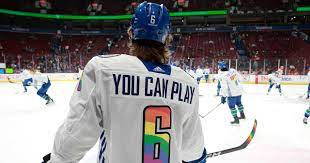
The NHL is a very conservative league–I don’t necessarily mean politically conservative, but simply a reluctance to change, and when they do change it’s incremental. This can be very frustrating when it comes to how the game is managed, but on the business side it’s an understandable caution for what remains a regional sport. Given that, I was initially surprised to learn that the league is going to step away from putting political symbols on jerseys for next season. This clearly wasn’t intended as some sort of statement, or simply a result of opposition from a few Russian Orthodox players (other religious denominations could oppose it as well, eg, but in the NHL that’s the only group I’m aware of refusing to wear jerseys). I think where this decision comes from is another tenant of the NHL: risk averse. The league has watched what’s happened to Bud Light (whose demographics at least superficially echo the NHL’s, and absolutely where they’d like the game to be more popular). Bud hasn’t found a way out of their merchandising disaster, so the NHL decided they were better off not taking that risk (it should be emphasized this is about the American market). Pride jerseys were empty virtue signaling anyway and not a key component of marketing. While for Anheuser-Busch, the failure of one brand (Bud) is disappointing, it’s something they can move on from without much trouble, but the NHL has no such flexibility: if people turn away from the league it would face contraction (folding of franchises)–there’s no apparent loss in moving away from the jerseys, so why take the risk? This should make apparent to fans, if it wasn’t already from Bud, Target, Starbucks, and so forth, that none of this means anything to those companies. It’s just marketing and the moment it stops working, it’s removed. Investing energy in top-down approval is a fools errand.

When looking for outrage from the Ottawa fan community I was surprised to see nothing at first–no articles from The Silver Seven (they waited for two days), Senshot, not the HFBoards, and even most Twitter feeds were silent (nothing from Nichols, Ary, etc; Travis Yost is the exception, but it’s one lazy Tweet–see below). TSN initially only ran the AP-story and both it and the follow-up a day later are buried deep on their page. The local collective silence is much louder than Pierre McGuire‘s faux pas back in 2019, as that did resonate with traditional media for five-seconds (now completely forgotten and not brought up during his tenure with the franchise). This is remarkable in this space, since it’s not that long ago it would have blown up everywhere.

Yost’s take is particularly ridiculous (the NBA has more success because of jerseys? Doesn’t the WNBA do the same thing?–correlation is causation for Travis). I’ve mentioned before that Yost seems to have closed the door on being anything other than ‘the stats guy’, but he had an opportunity here to delve into the issue Andrew-style (wtf happened to Andrew anyway?) and try to make an argument. One could argue (correctly) this approach is good for his job security, but I credit this with being Yost’s actual opinion rather than just scoring social credit points. One thing Beata (above) correctly identifies is the current cultural shift (albeit she would have made the same arguments years before the shift happened, so is it awareness or coincidence?). One of the interesting things not reflected on by either is that acceptance of LGBTQ+ is going down as pushes for it have increased. It’s hard not to believe that they genuinely think corporations and the military industrial complex (who promote and participate in this) share their concerns. To my mind there are much more successful approaches to building tolerance (which is what the community was doing when I was growing up) and that’s a positive bottom-up approach rather than 1%ers screaming at the peasants.

Regardless, as a marketing move it’s a smart one from the NHL. The backlash they’ve received has been minimal and is meaningless to their bottomline, while it avoids offending markets they are pursuing. For the community, there’s clearly less juice in the system to fire up the fans to be offended by it. No one is making an argument about ethics or efficacy, so I won’t address them, but I find it all fascinating.

This article was written by Peter Levi

Playoff Lessons, NHL Struggles, New Ownership, Sens Sign Oskar Petterson, the Cap, and TSN 1200 Changes

What are the takeaways from the 2023 NHL playoffs? The two most obvious are 1) offensive depth (which makes Ian Mendes’ recent comment about not needing to add skilled players ridiculous, even if it probably reflects what the org thinks), 2) goaltending importance is declining. I think #1 is inarguable (and frankly, has always been the case), but with #2 none of the elite goaltenders in the league could drag their teams forward. It must make GMs wonder just how much cap space to invest in an elite ‘tender. Far better, it seems, to have a pair of decent goaltenders who can be rotated through as needed and easily discarded if they start to decline.

At a broader level, what I said not long ago still stands: this is the least interesting final four that I can recall (ratings vs last year were roughly half, cf). The NHL failed to reward new or casual fans with the dynamic talents or popular teams. This is a result of the league expanding in the wrong places as well as its long habit of not correcting erratic officiating (lauded by many, but a terrible approach if trying to expand the sport). Has the league learned anything from this? No. I don’t think Gary Bettman’s NHL has learned anything during his long tenure (ergo 26 years of the dead puck era–the current two-year change has only dragged it towards Original Six scoring, not like the league’s growth in popularity in the 70s and 80s).

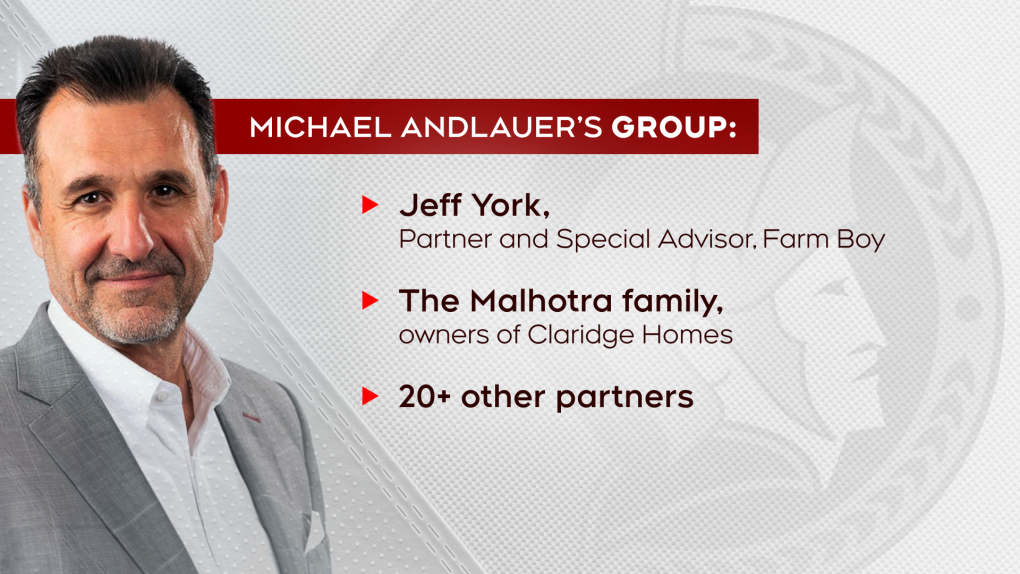
New Sens ownership has arrived and created understandable excitement. Financial security and a push to win means Ottawa will be a cap team, but I’m unconvinced that Pierre Dorion is the right GM for that and I fear a splurge of mad spending and trades that leads to poor results (echoes of 2017-18, cf). Going over Dorion’s trade history (and here and here) is frightening (the Mark Stone trade is front and center right now). Back to the ownership: let us recall that, other than Montreal’s miracle run to the Cup, the Canadiens have largely been a mess (especially since 2015). Andlauer wasn’t the only owner, but it’s worth noting he doesn’t arrive with a pedigree of success.

The coverage of Andlauer has been interesting and I’m not sure what Ian Mendes was smoking when he wrote:

This is not the right time for a glitzy, Hollywood-style ownership group in Ottawa. It’s time for some adjectives better suited to this sleepy government town. Quiet. Calm. Stable.

What’s his rationale? He’s comparing Melnyk’s ownership to Ryan Reynolds and Snoop Dog–why? There’s no real argument provided to make that connection, nor is there an effort to look at Andlauer’s prior history with Montreal (this applies to Nichols as well, albeit his article is better for what it does cover). Mendes’ comment seems to be purely about maintaining access–it’s a lazy article and perhaps a consequences of what happened to the fan-friendly Mendes‘ career.

Cap Space

Speaking of Nichols, something he pointed out (as pointed out by others), if the Leafs buy out Matt Murray, they actually clear 1.3 million in Sens cap space. It would be an amusing result of the whole botched situation (one of many self-owns by Pierre Dorion, cf).

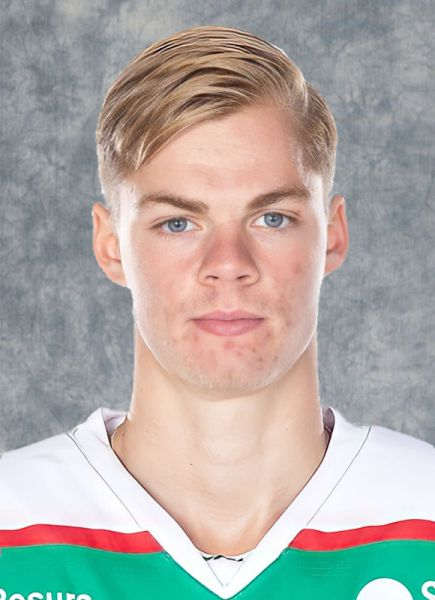
The Sens signed last year’s 3rd-round pick Oskar Pettersson to an ELC. I don’t know why they felt rushed to do so (he’s coming off a good year, but not a breakout year), but I suppose there’s no harm in doing so. I suspect this is laying the groundwork for roster moves (time will tell–certainly the two recently signed European FA’s, DR Nikolas Matinpalo and LW Jiri Smejkal, suggest adding depth in order to move current prospects–could the disaster that is Tyler Boucher be on the move?).

Speaking of criticism and change, TSN 1200 has been hit with cuts from Bell (as have plenty of other stations). The most serious loss is Shawn Simpson, who is the only person at the station I paid much attention to. It seems like the overall changes to format are fairly small, but the station has been on a long downward spiral. Is there an appetite for safe, team-friendly coverage? That’s unclear to me. If Ottawa becomes a contender, the station can survive with that approach.

This article was written by Peter Levi