Senators News & Notes

BryanMurray_1986_medium

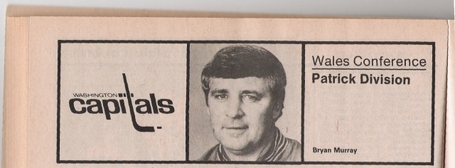
The big news is Bryan Murray stepping down as GM (into an advisory role) while Pierre Dorion takes the reigns.  This has been expected for quite some time, with the only question being would it be this year or next year.  Nichols worries that whatever gratification fans might feel to see the old fashioned Murray removed, we have no idea whether or not Dorion will modernize the organisation or not (Ian Mendes is pretty vague in trying to pump up what he’ll do).  In general, of the various people within the org, Dorion makes the most sensible comments about players, but that doesn’t necessarily mean he’s going to move away from the team’s outdated affection for grinders.  The positive signs I want to see from Dorion are to clean house in Binghamton, remove Randy Lee (or demote him), and actually embrace analytics and modern thinking.  It’s entirely possible none of that will happen and only David Cameron will exit stage left (any failed season needs someone to take the blame).  Since Dorion said nothing specific there’s no indications (yet) of what he’ll do (praising Ben Harpur is a bad sign however).

By any metric you want to use Bryan Murray finishes his tenure in Ottawa as a failure.  He tried to push the team he inherited from John Muckler into a playoff contender and failed, then tried to rebuild, but refused to follow through, leaving his team permanently mired in mediocrity.  His draft record, while better than Muckler’s, is only average and it’s an open question how much of his success was derived from the work done by his nephew Tim Murray.  In the end Bryan Murray was a stubborn, old fashioned GM, unable or unwilling to move forward with the times and his record is rife with short-term thinking and a poor ability to assess talent.  The only good question he was asked at the press conference was about his repeated failure in picking coaches (his answer paraphrased by Ary M):

He pointed that he’s been hands on with coaching because stuff bothers him systems-wise. Often, he’s tried to give an opportunity for people in the organization [assistant coaches, staff in Binghamton] who seem to fit when they’re interviewing and evaluating as people who can “step up and fill a role”. Despite this, he notes, coaching in the NHL is really difficult, especially for an assistant or minor league coach who hasn’t dealt with the day-to-day process as you do in the NHL. He’s been disappointed in a couple of his hires, and touched on the fact that maybe they were too quick to hire because they needed to rebound quickly to make the playoffs.

There are all kinds of problems with this–from his interference (and thus abrogating the authority of his coaches) to believing somehow people “deserve” a chance as opposed to using actual metrics for figuring out what works.

For those of you who have read this blog since the beginning (or in Jeff Ulmer’s case, have read my thoughts for much longer), I used to be a fan of Murray’s.  He seemed like a breath of fresh air compared to Muckler, but time has not been kind to Murray’s accomplishments and it’s simply a relief to see him give up his post.

prospects

Ary M put up an interesting prospect post which, while a mixed bag on specifics, is well worth checking out.  Things I quibble with:
-there’s no inherent value in keeping either Phil Varone or Jason Akeson; both players have topped out in the AHL and if you can’t crack weak Buffalo or Phildelphia lineups it doesn’t speak well to your ability to transition–they’re more likely to be Martin St. Pierre clones than late blooming Mike Hoffman‘s
-I wouldn’t sign Quentin Shore; unremarkable college numbers do not transition to the NHL at all (and only sometimes at the AHL-level)
Buddy Robinson‘s limitations are those of a north-south player who belongs in the bottom-six; his numbers in the AHL have been hurt by how Luke Richardson uses him, although his ability to do anything at the NHL-level remains an open question
Ben Harpur isn’t an AHL defenseman, much less an NHL one
Andreas Englund doesn’t have the puck skills to be anything other than a depth defenseman, although the fact that he was signed by the org is no surprise

travisyost

I wrote a piece about coaching a few weeks ago and Travis Yost put up some narrower analysis for just this season looking at various tendencies.  It’s an interesting read exploring what coaches emphasize (shot production, shots-against reduction, etc), although the sample size is far too small to draw any large scale conclusions.

Binghamton_Senators_svg

The unintended farce that is the Binghamton Senators continues as GM Randy Lee flails ineffectually in signing NCAA grads.  He cut Mike Borkowski loose while adding a pair of even less impressive players: Kevin Morris (who was toiling away in the ECHL after graduating) along with Andrew Miller.  The BSens season is essentially over (3 games remain) and I’m not sure what they hope to accomplish by seeing a few games from these guys.

This article is written by Peter Levi (@eyeonthesens)

Senators News & Notes

murray-bryan-00495982

The Nichols stenography machine was in action again and his analysis of Bryan Murray’s patter is excellent.  It’s baffling that Murray thought this team was playoff worthy (on the bubble maybe), but an indicator of how poorly the organisation assesses talent these days.  It’s also bizarre that the man responsible for this mess is being put in charge of fixing it.  Let me quote a related point by the inestimable stenographer:

I don’t think there’s any question that the Senators could use an upgrade on Dave Cameron, but if this offseason goes by without introducing any significant changes to the hockey operations department that will allow for self-improvement or help mitigate the risk of making mistakes, then it’s a wasted season that should have brought about positive change.

Amen.  I am a bit higher than Nichols is on Ryan Dzingel and Nick Paul, and he’s kinder to Matt O’Connor than I would be, but that’s largely splitting hairs.

Analysis

Analysis

Ary M has a good memory and referenced my exploration of the success of NCAA free agents from a couple of years ago, drawing a large number of people to the site.  It’s one of a number of pieces I’ve written about on topics that remain largely unexplored and I’m glad he remembered it.  Updates to it and other things like it have been slowed due to a lack of time, albeit I did set up a Patreon in the hopes that it might free things up to allow me to go full bore with articles like that.

prospects

Kristopher Bras posted a Senators prospect piece for Hockey’s Future and it’s problematic (his fondness for Ben Harpur is inexplicable (maybe he’s from the Ryan Wagman school of “he’s 6’6 and…er…”)–I can only hope he’s never seen him play; Chris Driedger‘s rating fell despite having a better season, Gabriel Gagne went up despite showing no improvement, etc).  I’m not sure what it is about HF, but their Ottawa coverage has been poor for a very long time.

Binghamton_Senators_svg

Since my last update the BSens have gone 5-5-3 through garbage time as they play out the string.  Their 188 GF for the season continues to see a drop in production (2.68 from 2.75), while their 229 GA represents a slight improvement (while still being awful); their powerplay has correspondingly dropped (17.6 from 18.2), while their PK has also dropped (80.4 from 81.1).  There are some who want to blame roster moves for these results, but this isn’t just an organisational flop, but also a sign of abysmal coaching (as you can see in the precipice the best newly acquired talent has gone over since fully under Richardson’s thumb).  Here’s the individual performances over this period:

Jason Akeson 13-2-11-13 (3 points in his last 7)
Phil Varone
 13-4-8-12 (1 point in his last 6)
Casey Bailey 13-3-6-9
Max McCormick 13-2-6-8
Ryan Rupert 13-4-3-7
Kyle Flanagan
 6-1-5-6
Michael Keranen
13-4-1-5 (1 point in his last 8)
Jerome Leduc 13-2-2-4
Guillaume Lepine 13-1-3-4
Mike Borkowski
 10-2-1-3
Chris Carlisle
 13-0-2-2
Ben Harpur 11-0-2-2
Mark Fraser
 4-1-0-1
David Dziurzynski
 7-1-0-1
Zack Stortini
 12-1-0-1
Buddy Robinson
13-0-1-1
Travis Ewanyk 13-1-0-1
Danny Hobbs 13-0-1-1
Nathan Todd 1-0-0-0
Nicholas Trecapelli 1-0-0-0
Kevin Tansey 6-0-0-0
Nick Tuzzolino 10-0-0-0

Matt O’Connor 3-3-1 3.41 .890
Chris Driedger 2-2-2 2.93 .906

It’s the usual routine in a Luke Richardson world–talented players are stifled while unproductive grinders clutter the lineup.  The team has other options (Troy Rutkowski or Chris Rumble are better than a number of the blueliners above, for example), but there’s no ability to judge talent in Binghamton, so it is what it is.

The BSens signed defenseman and local hero Kevin Tansey to an ATO.  He spent four unremarkable seasons at Clarkson in the NCAA (151-12-22-34) showing no signs of improvement (he actually regressed).  He attended one of the Sens development camps and one of the things he’s noted for is poor puckhandling skills.  Fortunately he’s on an ATO, not actually signed, and we can hope the 6’4 defender will fade off into the sunset.

Speaking of ATO’s, CIS grad Nick Trecapelli was called up from Evansville to aid Binghamton’s moribund blueline.  He had good numbers at Guelph, but it’s highly unlikely his skills will translate at this level.

Another local hero, Ottawa 67 Nathan Todd, signed an ATO (the center has decent OHL numbers, 53-17-33-50, but is nothing to get excited about).

There was also an ELC signing out of the CHL as Ottawa inked Macoy Erkamps from Brandon in the WHL (where Sens scout Bob Lowes has deep roots).  The 21-year old attended Ottawa’s 2013 development camp; he was ranked for that draft (expected to be a late round pick), but was passed over.  Smallish for a defender (6’0), he put up consistent but unremarkable numbers in the WHL until this season when he set career highs (72-13-58-71) across the board.  He got to ride shotgun with top draft pick Ivan Provorov and there’s little reason to doubt that he (and Erkamps being an overager) contributed to the offensive explosion (as Nichols echoes).  Ottawa under Murray hasn’t often handed out ELC’s to CHL players, but it has happened before: Craig Schira (09), David Dziurzynski (10), Wacey Hamilton (11), and Troy Rutkowski (13).  This is not an impressive list and indeed the CHL is a poor way to find NHL talent.

EvansvilleIceMenCHL

Binghamton seems to largely ignore it’s affiliate, but I figured I’d update it anyway.  The team is 6-6-1 as they tread water towards oblivion.  Their 198 GF is about the pace they’ve been on for awhile (2.86), while their 230 GA is a slight improvement (3.33 vs 3.39); their powerplay continues to be in free-fall (10.1 from 11.9), while their PK remains abysmal (79%).  A look at the players:

Nathan Moon 13-2-8-10
Alex Wideman 13-4-8-12
Jordan Sims
 13-4-5-9
Chris Rumble 13-2-7-9
Spencer Humphries 8-0-6-6 (2-0-0-0 with Evansville)
Matthew Zay 12-3-3-6
Tyson Fawcett 13-2-4-6
Andrew Harrison 13-5-1-6
Ryan Penny 8-3-2-5
Sebastian Strandberg
 8-1-4-5
Mike Duco 4-3-0-3
Daniel Turgeon
10-1-2-3
Troy Rutkowski 12-1-2-3
Andrew Himelson 13-1-2-3
Curtis Leonard 13-1-2-3
Vincent Dunn 12-1-1-2
Nick Trecapelli 2-1-0-1 (in Binghamton)
Michael Trebish
4-0-1-1
Casey Thrush 5-1-0-1 (3-1-0-1 with Evansville)
Mychal Monteith 8-0-1-1
Scott Morongell 8-0-1-1
Daultan Leveille 1-0-0-0 (in Binghamton)
Mac Olson
3-0-0-0
Frank Schumacher 7-0-0-0

Scott Greenham 4-3-1 2.63 .923
Christoffer Bengtsberg 2-3-0 2.99 .905

There’s not a whole lot to say here; the team has suffered through injury problems, but above and beyond that they’ve had a weak blueline and inconsistent scoring from their depth players.

On the FA signing front: Ethan Prowe (Pittsburgh), Kevin Boyle (Anaheim), Kalle Kossila (Anaheim), Brandon Tanev (Winnipeg), Adam Chapie (Rangers), and Charlie Lindgren (Montreal)

This article is written by Peter Levi (@eyeonthesens)

Senators News & Notes

dave cameron

Just after posting about there being no news in Sensland, Eugene Melnyk  dropped a few bombs.  Thoughts:
-I agree with Nichols (link above) that Melnyk threw Dave Cameron under the bus and that he’ll be gone at the end of the season; I can’t celebrate knowing Bryan Murray is likely the one replacing him, as Murray’s coaching selections have been between awful and incompetent
-Melnyk carried on the Sens tradition of making excuses for how the season turned out (blaming injuries)
-Nichols spends about forty paragraphs explaining why being a budget team hurts the Senators–it’s all good stuff, but just on the face of it the problems it creates are pretty obvious
-I’m not sure what “Well, not a lot of changes, but key changes” means, but again, who is making the changes is what’s important
-I partially agree with Nichols’ sentiment on how the Sens have drafted, although I’d add that they’ve traded away (or alienated) some of the better assets they’ve acquired, with a downward arc since losing Anders Forsberg and Tim Murray (the former, incidentally, works for the latter in Buffalo now)
-I’ll quote Nichols: “maybe if a team struggles to get on a significant winning streak, the talent level of that team isn’t very good?” Indeed!
-Melnyk understandably poopoos another rebuild, even though the team never truly went through that process
-Melnyk: “I’m looking at all of it [adding new voices]. It’s right across the board. There’s nobody safe when you have a year like we just did. There’s no way. The status quo will just us there again next year and this team cannot survive not making the playoffs. We have to do it by guts. We have to do it by hard work and we can get there.”  The “guts and hardwork” is meaningless patter and is usually used to justify the Mark Borowiecki‘s and Zack Stortini‘s of the world.  On the other hand, doing so would be the status quo–so who knows what Melnyk means here?  It doesn’t help that he added this:

Well, I’ve actually had a lot of experience in analytics when it comes to horse racing. In horse racing, it doesn’t work. I can tell you that. I spent a lot of money on it. In hockey, you defer to and it depends on who you talk to. It can work as a tool, but it’s only a small tool. It’s not even half the tool. It just tells you… a lot of statistics, you have to be into that, but a good, experienced hockey person like a Bryan Murray – of that vintage – they don’t need analytics. They can see it already. They’ve seen the play over and over and over again and they know how to fix things because they’ve been there and done that. It’s just another day in the office, so analytics are great. People should see it, but it’s not the beginning and the end. There’s no chance that it will make that big of a difference

This is incredibly stupid.  We all know what a false equivalency is, but putting that aside, Eugene simply demonstrates no understanding of analytics at all.  Zero.  Which does explain why Bryan Murray can bumble and stumble around with old-time-hockey cliches and get away with it (and also why the Sens will remain a bumbling organisation so long as he, or someone like him, is at the top).

matt_puempel

Ary M explores at length the mismanagement of Matt Puempel as an asset, which is well worth reading, but no surprise to anyone who has followed the Sens the last few years.  Having finally become a top-AHL players he’s languished and stagnated in the NHL as Dave Cameron (like all of Murray’s coaching hires) prefers to dress less talented players.

travisyost

Travis Yost looks at what drives coaches to reduce ice time and the answer (for both forwards and defense) is a decrease in offensive production.

Analysis

Analysis

There was an interesting piece posted recently that found that Francophone officials call more penalties on Anglophone players.

freeagent

More free agent signings out of college, as Casey Nelson was signed by Buffalo and Tom Parisi by Montreal.

This article is written by Peter Levi (@eyeonthesens)

Senators News & Notes

punisher

Why I stick to using generic titles for these posts I really don’t know–I should set up a Patreon for the development of better blog titles.  Anyway, after a weekend of mainlining Daredevil (when do I get my Punisher series?), I thought I’d take a quick look at developments in Sensland now that the organisation is in garbage time with the playoffs completely out of the picture (congrats to Bryan Murray and the organisation–their off-season and in-season decisions have really paid off).

BryanMurray_1986_medium

The Sens are 2-1 over the past week, meaning the odds of a top-ten pick in the upcoming draft got a little worse.  The Habs, Canucks, and Jets have had the good sense to tank, but we know Murray’s Sens will fight for every last point so that the non-rebuild can continue.

scott-gomez-hershey-bears-1

Did we really sign Scott Gomez?  I keep thinking it’s some sort of Internet meme.

It’s so dull and quiet in Sens land that Nichols has to waste his time pretending to care about what John Muckler thinks, Callum Fraser leads his thoughts with the trivial news that Francis Perron signed an ELC (who would have thunk it?), WTYKY pulled puckpossessed out of retirement for drawings, etc.  I understand the desperation–there’s that shared sense of hopelessness that a clueless senior citizen is screwing things up and there’s nothing any of us can do about it.

senscup

As a masochist, I want to bring up a post by Kevin Lee from late December:

At their core, the Ottawa Senators are a really good team. They have one of the best top six in the league when healthy, arguable the best goalie in Sens history in Craig Anderson, and two time (soon to be three) Norris trophy winner Erik Karlsson. There’s also a mix of talent in the bottom six.

I have a feeling Kevin wouldn’t phrase things quite like this if he were writing the post today (and really, Craig Anderson?).  Injuries aside, even healthy this team isn’t much better than its current 34-31-8 record.  But let’s keep going down the Lee rabbit hole, shall we?

In the meantime, if the Sens aren’t going to be able to manage a trade to acquire a defenceman, what option do they have? There’s an easy one in Fredrik Claesson. … He has done everything that management has asked of him, but has yet to be rewarded for it. It’s about time the team sees what they have in him. It’s certainly plausible that he could turn out to be better than Borowiecki or Cowen.

And then we saw him play in the NHL!!  Oh gawd–a player with even more puck limitations than Borowiecki.

Let us end on a note from Kevin that I heartily agree with:

This season has also highlighted how from management down to coaching, the franchise views skilled players. It started in the offseason as the franchise signed veterans Zack Stortini (who would be named captain) and Mark Fraser as the mentors for the Binghamton Senators. Are those really the type of players you want your younger players modelling their game after?

No they aren’t Kevin, no they aren’t.

Binghamton_Senators_svg

As you’d expect, Binghamton is surging now that the games mean nothing (3-0 since my last post)–presumably saving the moribund coaching staff and ensuring yet another awful 2016-17 for BSens fans.

EvansvilleIceMenCHL

Even Evansville (which, just like Binghamton, sits at the bottom of their division) is winning (2-1).  I think I neglected to mention that the Evansville franchise is moving to Owensboro next season (an SPL team will come to the city), making it unlikely that Ottawa will keep their affiliation with them (if there’s been an official announcement on what the Sens will do I missed it).

BLOGGER RANKINGS

Time for some fun.  Let’s see re-visit Alexa and see how it ranks Sensland:
1.The Silver Seven 791,096
2. Senschirp 1,208,578
3. 6th Sens 3,857,833
4. WTYKY 8,950,700
5. SenShot 15,711,968
6. Eye on the Sens 15,866,054
7. SensNation no rating (apparently posting nothing for a month hurts)

Should we draw conclusions from this?  No.  Will we?  Of course.  The Silver Seven needs to step it up–not going to the dirty areas–pretty soft, probably European.  Senschrip is spending to much time in the box–needs to control that aggression.  The 6th Sens are what I like–good Canadian boy and everything like that.  WTYKY–can’t even pronounce it–probably Russian–why are they in the league when a good guy like Zack Stortini is playing in the minors?  SenShot has been on the shelf–can’t help the team if you don’t even play!  Eh, what’s that about Cold-FX?

cold-fx-don-cherry

This article is written by Peter Levi (@eyeonthesens)

Assessing Coaches

On the surface this seems like an easy thing to do: who is winning the most?  Take a look at Cups, at career winning percentage, and bingo-bango, you have your answer–these are the best coaches.  There’s something very tidy in that simplicity, but obviously there’s more to it.  Oddly, there isn’t a lot written on the subject, but I’ve scrounged around and found some material to dig into.

Jonathan Willis focuses on how fans and the media tend to criticise the wrong things (or focus on only a few factors) when it comes to coaching, but within that piece is this gem about Scotty Bowman:

The one thing my dad’s always been so good at, I think, is he’s been able to adjust…. [F]or a guy who’s ‘old school’ and has been around so long, he’s incredibly progressive and willing to try new things, willing to do things which are not the norm, and that’s what made him successful as a coach … he was very unpredictable … I think all coaches today are kind of – I don’t want to say programmed – but they’re led to do a certain thing. So if you can force yourself to try things maybe a little different or take a different approach, it’s going to give you that advantage. Ironically I think what makes him so exceptional is that he didn’t think he had all the answers.

Stan Bowman is absolutely right about how robotic some NHL coaches are–it’s their way or the highway.

Dave Berri spoke quite generally about coaching changes and in it he cites a study from The Sports Economist which concluded:

We find that for particularly poorly performing teams, coach replacements have little effect on team performance as measured against comparable teams that did not replace their coach. However, for teams with middling records—that is, teams where entry conditions for a new coach appear to be more favorable—replacing the head coach appears to result in worse performance over subsequent years than comparable teams who retained their coach.

This echoed other studies, including one on the NHL:

The effect of a change of coach on team performance in the NHL has been estimated in a parametric model, also based on match-level data. Ordered probit regression has been used to represent the discrete and hierarchical structure of the ‘win-tie-lose’ match-results-dependent variable. The use of lagged match results data provides a control for the phenomenon of mean-reversion in team performance. The empirical results suggest teams that changed their coach within-season tended to perform worse subsequently in the short term than those that did not. However, the detrimental effect appears to be short-lived, and over a longer time horizon the effect is almost neutral. In the broader context of the debate concerning the managerial influence on organizational performance, the results suggest that a change of management in the midst of a crisis is unlikely to improve performance by more than might have been expected through the natural tendency for mean-reversion after a spell of poor performance.

Berri concludes:

That suggests that coaches in sports are not very different from each other. It may be true (and more than likely very true) that you are better off with a professional coach than with a random person grabbed from the stands (or no one at all).  But it doesn’t appear that the choice of professional coach matters much.

If your mind revolts at the idea that coaches are a rotation of robots whose performance is simply an indication of how good their roster is, I understand the feeling.  Let’s keep in mind that there are always exceptions to the rule and, indeed, there are signs that it’s not so simple.

A newer study by Jean-Rene Gauthier finds that hiring younger, more inexperienced coaches has a more positive impact (presumably a more adaptive group); coaches with historical losing records also provide as boost, as do (paradoxically) those who have won a Stanley Cup (all the post-lockout winners, other than Randy Carlyle, are coaching at the moment).  He concludes that firing has an overall positive effect (which runs contrary to earlier studies).

Nick Emptage offers a much narrower and more analytics-focused look, which you can peruse at your leisure (Carlyle was a bad coach kids–who knew?).  In a similar vein check out THN or Benjamin Wendorf.  Taking a look at these numbers we can see that, while it may not always be born out in the win column, certain coaches employ much better systems and better player usage and that shows in their possession and other metrics.  It’s this latter reason that you can look at Mike Babcock’s lousy 21-32-10 record with Toronto and understand the team is performing better with him than without him.

What, ultimately, can we conclude from this mountain of data?  Like everything else, comparative analysis will ultimately tell you which coaches are having a positive impact, regardless of their win-loss record.

This article is written by Peter Levi (@eyeonthesens)

Senators News & Notes

patrick-eaves-hockey-headshot-photo

Nichols states the obvious: Zack Smith won’t maintain this level of production in the future (comparing him to Patrick Eaves).  Nichols follows Sylvain St-Laurent on Twitter (who used to follow me once upon a time) and learned that the Sens are interested in NCAA free agent Drake Caggiula (33-19-23-42) at North Dakota (second on the team in scoring behind Vancouver’s first-round pick Brock Boeser; also teammates with Sens prospect Christian Wolanin).  It would be a shock if the Sens didn’t sign at least one NCAA free agent.

Binghamton_Senators_svg

The BSens signed NCAA FA Mike Borkowski to a PO and he’s already suited up for a game.  He’s yet another local boy (Kanata) who had steady numbers at Colgate (his career year was his sophomore season).  This year he was 37-13-9-22, which put him third on the team in scoring.  His numbers are not very remarkable, and although he has better pedigree than (say) Nick Craven from a few years back; his numbers are a lot like Garrett Thompson‘s.

EvansvilleIceMenCHL

Evansville made a move I wholeheartedly approve of, as they moved out the disappointing defenseman Spencer Humphries for Brendan Ellis (from the South Carolina Stingrays).

prospects

Prospect update time, with college and European regular seasons over:

Sweden
Marcus Hogberg (3-78/13, G DOB 94) SHL Linkoping 14-7-5 2.31 .911
He’s split time with David Rautio, with the 30-year old benefiting from some good fortune (he’s GAA is much better at 1.96, but his save percentage is similar at .916); overall his numbers are similar to last season (2.30 and .917); he’s a good prospect and one I’m interested to see in North America
Andreas Englund (2-40/14, D DOB 96) SHL Djurgardens 45-2-4-6
Virtually identical numbers to last year (49-2-3-5); I’m not excited by him at all (his limitations with the puck are a major concern), but the org likes him
Christian Jaros (5-139/15, D 96) SHL Lulea 24-0-4-4
With Asploven in the Allsvenskan he was 25-2-3-5; his numbers are a slight improvement over last year (25-0-1-1); he needs another year before I feel strongly about him one way or another, but he tops out as a depth player
Filip Ahl (4-109/15, LW DOB 97) SuperElit HV71 18-18-13-31
With Sundsvall in the Allsvenskan he put up 16-4-2-6 and with HV71 in the SHL he was 17-0-0-0; overall some improvement with his numbers, but like Jaros he needs another season before I really form a strong opinion

NCAA
Colin White (1-21/15, C DOB 97) Boston College 30-17-22-39
As you’d expect from the first-rounder he leads his team in points-per-game (he’s just behind Ryan Fitzgerald for the scoring lead); a genuinely good prospect to be excited about
Quentin Shore (6-168/13, C DOB 94) U Denver 34-11-9-20
Unremarkable numbers in his final year, behind all three players on the top line; I wouldn’t sign him
Christian Wolanin (4-107/15, D DOB 95) North Dakota 27-4-10-14
Wound up third on the blueline in points-per game (behind Tucker Poolman and Troy Stecher), which is a solid first season at this level
Kelly Summers (7-189/14, D DOB 96) Clarkson 35-3-10-13
Fourth in defensive scoring, with slightly better numbers than the previous season (33-6-4-10); doesn’t blow me out of the water, but there’s still time for him to blossom
Robert Baillargeon (5-136/12, C DOB 93) Boston U 33-6-6-12
An ugly season for him, as he continues to decline from the heights of his rookie season in the NCAA (he’s eighth in scoring among forwards); looks like a bust
Chris Leblanc (6-161/13, RW DOB 93) Merrimack 33-6-6-12
Continues his unremarkable career with his third season identical to all the others (he’s seventh in scoring among forwards); another bust
Shane Eiserman (4-100/14, RW DOB 95) U New Hampshire 32-3-9-12
About the same level of production as last year (seventh among forwards); still too early to call where he’s going, but depth is the best you can hope
Miles Gendron (3-70/14, D DOB 96) Connecticut 28-2-4-6
It still amazes me that he was a third-round pick; regardless, he’s had an adequate rookie campaign (among U Conn’s moribund defensecorps he’s third in production); plenty of time left on this one

Junior
Francis Perron (7-190/14, RW DOB 96) QMJHL Rouyn-Noranda 61-41-66-107
Incredibly productive, so management will hesitate–how good is he in the corners?  He’s well ahead of all his teammates in scoring and a distant second in the league (behind Arizona pick Conor Garland)
Filip Chlapik (2-48/15, C DOB 97) QMJHL Charlottetown 50-12-40-52
These are lower numbers than his draft year (66-33-42-75), but scoring on the team is down and he’s still second on his team in points-per-game behind Pittsburgh pick Daniel Sprong
Thomas Chabot (1-18/15, D DOB 97) QMJHL Saint John 45-10-34-44
The first-rounder comfortably leads the team’s blueline and he sits fifth in the Q in points-per-game by a defenseman; a good prospect, but it’s always hard to translate Q numbers to the pro level
Cody Donaghey (FA Tor 14, D DOB 96) QMJHL Halifax/Moncton 49-10-24-34
Production has exploded since being traded to Moncton; overall he’s fourteenth in blueline scoring in the Q
Gabriel Gagne (2-36/15, RW DOB 96) QMJHL Victoriaville/Shawinigan 40-17-18-35
The Sens did a lot of wheeling and dealing to get him, but the 6’5 power forward has seen his production drop with Shawinigan (he’s fifth on the team in points-per-game); how much his injury problems early in the season have impacted his play remains to be seen
Joel Daccord (7-199/15, G DOB 96) USHL Muskegon 17-18-3 3.16 .901
Much better numbers than his backup, but he’s very far down the list of USHL goaltenders (still far too early to make judgments about him)

freeagent

Two more free agents were signed by NHL teams: Detroit signed CHL FA defenseman Daniel Renouf, while Edmonton signed former Minnesota draft pick and current mid-tier KHL forward Jere Sallinen, despite the fact his career year in Europe was three years ago (good enough at the time that he was included in my European FA’s of interest).

changes

I’ve wondered for the last few years how healthy the traditional sports scene is–I’ve had a general sense of an aging, declining audience, but gut feelings are pretty useless so I decided to look for numbers related to it, having the pet theory that younger fans were being channeled into eSports.  Here’s a look into the demographics of sport along with the trends (most of the numbers are via ESPN) for the average age of the fanbase:
Golf: old (exact average isn’t given, simply emphasized)
Olympics: 50s
MLB: 55
NCAA: 50ish (40% are 55+)
NFL: 47
NHL: 43
MLS: 39
NBA: 37
Ten years ago the average age for MLB was just 41.  Participation overall in baseball (and other sports) is shrinking.  Looking into the numbers, it wasn’t surprising that the NHL has the wealthiest audience among professional sports (it’s not surprising given the cost of playing hockey), and the second whitest audience behind NASCAR (92% and 94% respectively).  What you can draw in general about these numbers is that those watching professional sports are an aging, gradually shrinking group.  You could try and relate that to an aging population, but as we’ll see below, that’s not enough of an explanation.

Where is the youth going?  One of the places, as I’d surmised, is eSports, which is experiencing exponential growth.  Originally an phenomena restricted to Asia, it experienced 100% growth in the US over the past two years, with 18% of video game players watching  (70% of Americans play video games).  Viewership is fairly diverse, with an estimated audience of about 226 millon (either 38% of 44% female, which is better than traditional sports, perhaps helped by the lack of a barrier to entry on the professional side).

Assuming we are in the midst of a transition (a reasonable assumption, even if it’s not all going to one place), why is it occurring?  I haven’t seen data related to the question (or even seen the question asked), so I’m left to speculate:
1) mainstream sports are anchored in dying mediums (radio and television), with extremely poor streaming options
2) the games are long and (with the exception of basketball) within them not much happens
3) limited content (long off-seasons; long gaps between games; huge gaps between championships and playoffs; even the gaps within games are long)
4) repetitive (there’s limited variety in what you’ll see on the field of play)

None of this is to suggest that sport is going anywhere, but I do think the shrinkage will continue–the hard question is at what state we strike equilibrium and it’s far too early in the process to even hazard a guess.

lists-image

I was going to call this “Blogger Power Rankings”, but it seemed a little too ridiculous.  Regardless, I was curious which blogs were the most frequented, so I took a look at the numbers via Alexa (red is declining, green is increasing, with a few comparables included):
TSN 4,160
Sportsnet 8,798
Hockey’s Future 13,420
Elite Prospects 24,726

Hockeybuzz 25,311
Hockeydb 25,834

Hockey Writers 47,751
1. The Silver Seven 780,461
2. SensChirp 1,311,595
3. 6th Sens 3,884,315
4. SensNation 7,361,845
5. Welcome to Your Karlsson Years 9,015,235
6. SenShot 15,729,919
7. Eye on the Sens 15,888,297

It’s worth pointing out that only the top two blogs actually post regular, daily content, and that the difference between, say, SenShot and WTYKY (or the latter with SensNation) is very small in terms of actual viewership numbers, despite the millions of places separating them.  The only results which surprised me were #6 and #4, as neither site seems particularly active.

This article is written by Peter Levi (@eyeonthesens)
Senators News & Notes

borowiecke

Mark Borowiecki tore his MCL too late in the season to help the team (so no repeat of last year’s fortuitous injuries), but in the midst of reaction to that (and Borocop in general), Nichols wrote a long piece holistically describing all the issues surrounding him.  My opinion on it:
1) Should Borowiecki be reading Sens forums and blogs?
Absolutely not.  It’s a waste of his time and there’s always going to be negative things out there (whether they are valid or not)
2) Should Borowiecki be making snide remarks about analytics or bloggers?
No.  It’s self-serving and makes him an even bigger target for criticism
3) Do the criticisms of Borowiecki have anything to do with who he is as a person or how hard he tries on the ice?
No.
4) Is it Borowiecki‘s fault that Dave Cameron and management like him so much?
No, but management and coaching receive more criticism about it than he does, so this doesn’t seem like much of an issue to me
5) Should bloggers/fans criticise Borowiecki?
They can do whatever they want, but it’s only interesting if there’s substance to back it up (which is abundant in this case)

internet

More generally, let me tackle something Nichols said that I think a lot of people (including myself) have said in different ways before (and this isn’t really about Nichols, just the sentiment in general):

The internet is unquestionably a toxic place where criticisms and opinions are streamed in real-time, the medium serves as an echo chamber for vile and repugnant idiocy.

Is it really?  If you want to go slinking around 4chan, sure, there’s plenty of repugnance there, but that’s what that site is for.  If anyone thinks the Internet is somehow worse than their workplace or their neighbourhood they are being cripplingly naive (people online exist in real world too).  If you want to go brawling on forums, people are going to say stupid things, but who cares about what an idiot says?  The inability of such people to articulate anything makes them ridiculous, not scary.  Of course there are genuine cases of harassment, but that’s not where Nichols was going and its not generally what people mean when they make broad statements like this.  For my part, the positives of Internet interaction far outweigh the negatives–it’s a great way to meet people, to learn new things, and continue to evolve as a better person.  Here’s a personal for-instance of Internet “drama”: Nichols has only referred to me once in his blog and that was to criticise something I’d said, but that hasn’t made me (or him) bitter or resentful–I promote his Patreon when I remember and his blog remains a favourite of mine.  You can disagree with someone and still act like an adult about it, and when you find people who can’t do that you ignore them and move on.

applause

Let’s credit Ross A over at The Silver Seven for being right about Chris Driedger.  For those with good memories, I criticised Ross for being positive about him after his disastrous season in Evansville last year, but it seems like the young goaltender simply had a rough year (and let us never forget that goaltenders remain the most difficult prospects to call).  He’s easily out performed Matt O’Connor in Binghamton and looks nothing like the disaster he was in the ECHL.

Gnomes_plan

On the flipside of the above, I was going through the WTYKY archive and came across Luke P. and James discussing the state of the Sens in mid-February; they said some interesting things:

I feel like a lot of the negativity stems primarily from a few well-spoken, high-profile blogger/media figures who have been running with this narrative that the Ottawa Senators have no coherent plan. (Please see this James Gordon article entitled “The Ottawa Senators have no coherent plan”, and this 6th Sens article where Nichols writes of Ottawa’s “whimsical ‘get into the playoffs and anything can happen’ approach to team building.”).

When thoughtful people have opinions like that Luke, there might be some substance to them!  But let’s continue.

I think the Ottawa Senators DO have a plan and that plan is to get better one incremental improvement at a time.

Two problems here: 1) we can accept that they have a plan and still argue that either management has the wrong plan or is making the wrong moves for their plan (in which case having a plan is irrelevant), 2) if he’s going to cite other people’s arguments he needs to at least detail their remarks and break them down rather than posting links no one is going to click to create strawmen for his own.  Now from James:

it’s okay to be skeptical. Who knows how trades and FA signings are going to work out.

We can make very good guesses at how trades/FA signings are going to turn out–one of the joys of statistics (both the usual kind and analytics) is that you can examine trends in player performance and make very reasonable guesses at what will happen.  By throwing up his hands here James is preventing even himself from assessing roster moves (and yes, I realise James is being flippant, but it’s a silly thing to say regardless).  Anyway, no point in beating a dead horse.

jamesduthie

I’ve been critical of The Silver Sevens media interviews, but while continuing to throw softballs with James Duthie he at least said a couple of interesting things:

I have gotten much better [at dealing with criticism on social media].  I hit the block button and move on.  I suppose I’m human and occasionally something will bother you.  But I fully realize you are never going to please everyone. Once you embrace that, you’re good.

Amen.  And:

I would love to see that [more women working in hockey media].  It is an old boy’s network.  There is no doubt.  But I think smart, experienced people like Cassie and Tessa Bonhomme are changing attitudes.  But it’s a slow process.  Too slow.

This is particularly interesting as Duthie is openly criticising his own bosses and all the other media outlets (TV, newspapers).  It’s a safe sort of criticism, but nice to hear.

Binghamton_Senators_svg

I don’t often cite Jeff Ulmer here, not because of a lack of respect (I remember Jeff fondly from the old days on the HFboards), but because of this:

As usual, I’m shooting from the hip with very little usage of stats in the thought process

Jeff doesn’t attempt to justify this which is a smart choice (what can he say?), but the inherent problem with his gut is that it’s not shared by anyone else.  His grades sadly mean nothing as there’s no criteria for them–they might as well be emojis of peanut butter and puppies.  How does a reader know Mark Fraser is a C?  Why should a reader trust Jeff’s opinion when it’s based on nothing they can tangibly examine?  Jeff’s approach is very common in traditional media, but it’s one I think is outmoded and (unfortunately) almost completely useless.  Jeff doesn’t help his cause by assigning grades and then having his descriptions bare no relation to it (Zack Stortini as an example of that); he makes little effort to show why a player’s grade went up or down.  The worst part for me is this:

with all the changes that have now taken place, that’s not going to happen [the team making the playoffs]

Jeff is referencing his own belief that Luke Richardson and Steve Stirling were going to get the team into the playoffs at the mid-point of the season.  Playoffs?  This team?  And to use the canard that roster moves are somehow at fault is ridiculous.  When you make statements like that and they blow up in your face, it hurts your credibility when your assessments are made via your gut–your gut said playoffs and the team is scrapping the bottom of the league’s barrel.  This is one of the reasons I prefer an analytical approach, because instinct is a poor way to make judgements.  Jeff is following the organisation’s trend of making excuses for what’s happened rather than accepting responsibility for it (which, in order to justify his gut, he has no choice).  I get irritated by his approach because I know how smart Jeff is and I wish he’d embrace better ways to express his opinions.

freeagent

A few free agents have been signed by NHL teams over the last couple of months: New Jersey signed NCAA free agent forward Nick Lappin (31-17-16-33), Carolina signed NCAA FA forward Andrew Poturalski (37-22-30-52), Florida signed CHL FA forward Dryden Hunt (67-54-56-110), and San Jose signed CHL FA forward Jonathon Martin (60-36-31-67).  For those wondering, the odds of these players panning out is very low (you can see the stats here, albeit I haven’t updated them in awhile), with college typically more successful than the CHL.  The Sens usually sign at least one NCAA free agent before the draft.

A final note: Mikael Wikstrand is having a fine season with Farjestad since being released from Sens prison (17-1-8-9).

This article is written by Peter Levi (@eyeonthesens)

Senators News & Notes

Cracking open the paper this morning…no wait, no one under 40 reads newspapers.  Ahem.  Logging onto the Interwebs this morning I was confronted by a giant wall of text from Nichols explaining the ins and outs of Mike Hoffman and I thought, haven’t we been here before?  Isn’t this deja vu?  It is, twice over!  I can feel his exasperation as he patiently tries to lay things out and it reminds me of trying to explain climate change to my conservative mother-in-law–the lights are on, but no one is home.  It’s not a bad metaphor for Sens management–old and uncomfortable with change.  But hey, there’s always next year, right?

Other tidbits: Jordan Mandy talks about the Sens playoff chances being buried, which seems a bit redundant as those bells were ringing in the pre-season.  Callum Fraser wants to be positive about Scott Gomez because…just because goddamnit! (I love that he used David Legwand as some sort of positive association).  Gomez has bounced through five organisations over the past five seasons, including an extended stay in the AHL this year, but given that this season is going nowhere, why not?  That’s as positive as I can make it.

I wonder if Bryan Murray ever wakes up in a cold sweat and remembers he had Ben Bishop and Robin Lehner in his grasp and got rid of both of them for nothing–sacrificed on the pyre of an aging Craig Anderson because, you know, the Sens were going on a deep playoff run, right?  By the way kids, as Lehner rounds into form in Buffalo, let us recall what I wrote before he was moved.  For those waiting for Matt O’Connor to save the day, see below.

Binghamton_Senators_svg

I haven’t posted a Binghamton update since late January and a lot has changed since then, so let’s take a brief look: the team has gone 7-11-1, which is a lower winning percentage than my last look (they are 22-31-4 overall); their 157 GF is also a drop (2.75 from 2.86), and their 190 GA is also worse from last time; the PP is about even (18.2 vs 18.5), as is their PK (81.1 vs 81.5); but the overall picture is a team getting worse and that comes as no surprise.

The team moved their top-three 5-on-5 scorers (Lindberg and O’Dell were traded and Dzingel is in Ottawa), as well as two of their top-three PP producers (Schneider, also traded, and O’Dell).  Collectively five of the team’s top-six scorers are now gone (four via trade) since last time.  Players in italics were either traded or are now in the ECHL, while players in bold are currently on the NHL roster.

Phil Varone 14-4-13-17 (3-1-3-4 with Bingo)
Cole Schneider 18-6-10-16 (16-5-7-13 with Bingo)
Eric O’Dell 18-6-8-14 (16-4-7-11 with Bingo)
Michael Kostka 18-3-11-14
Kyle Flanagan 19-3-7-10
Casey Bailey 18-2-8-10 (11-2-4-6 with Bingo)
Jason Akeson 18-2-7-9 (3-1-2-3 with Bingo)
Michael Keranen 15-2-5-7 (2-0-1-1 with Bingo)
Buddy Robinson 18-5-4-9
Tobias Lindberg 17-4-3-7 (6-1-1-2 with Bingo)
Max McCormick 16-3-4-7
Ryan Dzingel 6-2-4-6
David Dziurzynski 8-1-4-5
Chris Carlisle 18-2-2-4
Nick Paul 8-1-2-3
Michael Sdao 10-0-3-3 (9-0-1-1 with Bingo)
Ryan Rupert 17-1-2-3 (11-1-1-2 with Bingo)
Conor Allen 17-1-2-3 (15-1-2-3 with Bingo)
Travis Ewanyk 15-2-1-3
Zack Stortini 18-1-2-3
Mark Fraser 19-1-2-3
Matt Puempel 2-2-0-0
Danny Hobbs 9-1-1-2
Ben Harpur 12-1-1-2
Jerome Leduc 18-1-1-2 (3-1-0-1 with Bingo)
Fredrik Claesson 19-1-0-1
Guillaume Lepine 19-1-0-1
Ryan Penny 9-0-1-1 (returned to Evansville)
Vincent Dunn 3-0-0-0 (returned to Evansville)
Alex Wideman 3-0-0-0 (returned to Evansville)
Nick Tuzzolino 2-0-0-0

Chris Driedger 5-4-1 2.98 .903
Matt O’Connor 2-7-0 3.50 .882

If O’Connor is the next great goaltender in the NHL I’ll eat my hat.  Otherwise we have the problem Binghamton has had all year: terrible coaching, an awful bottom group of forwards, and a talentless defense.  Trying to project forward to next season there’s nothing to be excited about (except, maybe, Driedger).

EvansvilleIceMenCHL

I haven’t updated Evansville in literally forever, so here’s a look: the team is 15-14-7 since my last update, which is a modest improvement over their start to the season.  Their 161 GF is a welcome improvement (from 2.5 to 2.87), while their 190 GA isn’t much of a change (3.39 vs 3.45).  The powerplay has completely collapsed (11.9% from 15.6%), and while their PK improved (79.1% from 75%) it’s still the second worst in the league.  It’s a truism that special teams are an area coaches have the most influence over, so draw your own conclusions.  Here’s a look at player performance since last time (they are organised by points-per-game because of how varied the games played are):

Ryan Penny 6-4-4-8 (1.33)
Danny Hobbs 13-7-5-12 (0.92)
Jordan Sims 34-10-18-28 (0.82)
Nathan Moon 36-12-17-29 (0.80)
Vincent Dunn 29-9-11-20 (0.68)
Alex Guptill 25-9-8-17 (10-4-3-7 with Evansville) (0.68)
Chris Rumble 32-8-13-21 (0.65)
Alex Wideman 26-8-9-17 (0.65)
Tyson Fawcett 36-9-14-23 (0.63)
Daultan Leveille 32-6-14-20 (0.62)
Mike Duco 21-8-5-13 (0.61)
Justin MacDonald 15-2-7-9 (0.60)
Troy Rutkowski 26-3-11-14 (0.53)
Ben Harpur 4-0-2-2 (0.50)
Andrew Himelson 36-2-13-15 (0.41)
Benjamin Dieude-Fauvel 22-5-4-9 (1-0-0-0 with Evansville) (0.41)
Spencer Humphries 33-2-11-13 (0.39)
Andrew Harrison 14-2-3-5 (0.35)
Sebastian Strandberg 23-3-5-8 (0.34)
Matthew Zay 31-4-6-10 (0.32)
Alec Hagaman 9-1-1-2 (0.22)
Jonathan Carlsson 26-1-3-4 (8-0-3-3 with AHL Rockford) (0.15)
Curtis Leonard 29-0-4-4 (23-0-3-3 with Evansville) (0.13)

Scott Greenham 6-3-2 2.62 .922
Christoffer Bengtsberg 6-6-5 2.93 .903
Cody Reichard 2-2-0 3.78 .892 (retired)

The team has been plagued by injury problems, but they also suffer Binghamton’s issue of a poor defensecorps.  Why Al Sims traded away the useful Dieude-Fauval is beyond me, but overall the Evansville group is (at this level) more talented than Binghamton’s.  For those who haven’t paid attention, Strandberg, despite being a forward, continues to play on defense (his numbers hurt more by his injury problems than the position switch).  It’s interesting that Carlsson has been more productive at the AHL level.  Regardless, there’s no real chance the Icemen make the playoffs and in that respect they are an echo of Binghamton.

This article is written by Peter Levi (@eyeonthesens)

Comedy at the Deadline

shane_prince_ottawa

I don’t normally post twice in a day, but the Sens continue to make comical decisions.  Anyone who doesn’t understand why trading Shane Prince for a 3rd-round pick is a bad idea needs their head examined, but for those looking to have it spelled out Nichols is here for you.  Am I surprised by the move?  Absolutely not–it’s completely consistent with how the organisation does things.

pierre dorion

As frustrating as the above is (and it’s a terrible move), I was much more amused by the minor league trade that sent Conor Allen to Nashville in exchange for Finnish forward Michael Keranen.  The Finn was a European free agent signed by Minnesota last season after a career year in the Liiga with Ilves.  His offensive numbers didn’t translate as hoped (this season he’s the fourth or fifth most productive forward for Iowa), although they’re certainly good enough to help Binghamton (his contract ends this year and I think there’s no chance he’ll be retained).  My interest is less about Keranen and more about Allen going the other way.

I wasn’t impressed when Allen was acquired from Nashville for Patrick Mullen, and my surmise at the time about his limitations certainly panned out–Pierre Dorian looks a little silly having said this at the time:

In Conor Allen, we’ve added a hard, competitive player who has ability. He’s played NHL games in the past and provides us additional organization depth

Get it?  He was good in the corners–the only criteria that seems to matter.  However, the organisation revised its impression in less than two months and it must have been bad indeed for them to throw him away for a rental like Keranen, particularly given how lousy the BSens blueline is.  In essence the BSens have traded two defensemen in Mullen and Allen for 21 games of Keranen (who himself is a rental).  Utterly bizarre, but fitting for what has been an abominable season (I wonder if the move has something to do with the number of veteran contracts they have, but still, what does adding a bunch of 25-26 year old forwards really do for Binghamton this season?).

This article is written by Peter Levi (@eyeonthesens)

Senators News & Notes

jared cowen

A lot of Sens fans (myself included) enjoyed a good chuckle when they heard that Jared Cowen was waived by Toronto.  This is the beginning of the end for the former first-round pick, a player we now know was carried by Jared Spurgeon when he was drafted and has ridden his size through his fruitless NHL career.  Rest in peace.

cole schneider

The BSens made a poor trade with Buffalo as Tim Murray happily fleeced them of Cole Schneider (along with Eric O’DellMichael Sdao, and Alex Guptill).  In return the BSens get a pair of undersized 25-year old reliable AHL-scorers (Jason Akeson and Phil Varone), along with failed blueline prospect Jerome Gauthier-Leduc.  All three players have their contracts up at the end of the season, but there’s no reason to doubt that local boy Akeson will be kept.  In essence the Sens gave up on Schneider, who is the only real prospect among all this minor league confetti, and in return get a player who maybe is a bit better than O’Dell (maybe)–there’s also a potential 7th-round pick for Ottawa if Schneider plays at least three NHL games.  I agree with Nichols that all-in-all there’s not much to get upset about here, but it bothers me when the team gives up on talented players and gets nothing in return.  With Schneider gone, Nick Paul and Ryan Dzingel in Ottawa, and Tobias Lindberg traded, the cupboard is truly bare.

borowiecke

You know we live in a funny world when we’re worrying about what Mark Borowiecki thinks about Erik Karlsson.  Nichols spends way too much time on this, but the key point is this:

But, is Mark Borowiecki truly held accountable for his play on the ice?  To borrow a phrase from Daniel Alfredsson, probably not.

No he’s not, but the organisation reinforces his delusions.

Regular readers have noticed I haven’t been posting my game-by-game breakdowns for both Binghamton and Evansville and for those who aren’t away I stopped because there’s simply not enough interest for me to invest my time in it (it has been suggested that I set up a patreon to do it, but until I hear from more people I’ll leave it be).  I will continue to post updates on both teams from time-to-time.

This article is written by Peter Levi (@eyeonthesens)

  • Calendar

    • March 2026
      M T W T F S S
       1
      2345678
      9101112131415
      16171819202122
      23242526272829
      3031  
  • Search