Senators News & Notes

Randy Lee talked about a bunch of things and I have a few thoughts:
-22 candidates applied for the Binghamton position and he says interviews were conducted (which contradicts my speculation that they’d simply picked Kleinendorst for the usual nostalgia reasons that have guided the Sens for years); with that said, and regardless of who the other top candidate was, they did go with the feel-good decision that’s based on results from five years ago (rather than looking at recent track records, something comically emphasized in an attempt to say it’s not the reason: “Well, the proven track record. I mean, that year, a lot of those young players he put into really sort of bigger roles and these are guys that were really instrumental in helping us win the Calder Cup Championship … We think that winning is a huge part of development“); Nichols (whose transcription is cited) doesn’t actually delve into Kleinendorst’s struggles since leaving Binghamton, but if “winning” was a true criteria he never would have been hired; it’s also odd that the “fit” with Steve Stirling relevant
-Lee provided absolutely no specifics on how Marc Crawford’s “liaison” position in relation to Binghamton will function despite talking about it at length
-On retaining Stirling: “Definitely, he’s one of those glue guys who you can sort of go to. He’s an extremely hard worker;” I don’t think hard work is something unique to Stirling, so my assumption is that the personal relationships he’s built up with the organisation are what’s keeping him around
-Lee gave Francis Perron the usual nonsense we hear him give to every talented player drafted, “If you don’t change your game, we probably wouldn’t sign you … We don’t want you to score goal six or seven to two. We want you to score the goal that brings your team back or be on the ice when you’re protecting the lead.”  The idea that Perron was only scoring meaningless goals before this is absurd and the idea that the Sens somehow have so much goalscoring talent they don’t need more is equally silly, but Lee is all about the hockey jargon of the day before yesterday (as Nichols points out, “It’s kind of weird that hockey’s a sport where less talented individuals are rarely held to the same level of scrutiny as offensive players“–this is more than weird, it’s just dumb)

My overall takeaway from this is what I’ve long thought: Lee isn’t the sharpest tool in the shed and there’s nothing in his comments that suggests any changes from the way things were done under Bryan Murray.

stayorgo

Nichols writes about Elliotte Friedman’s casual inclusion of Ottawa as a possible candidate to move to Quebec City and I think this point is the proper conclusion:

reach an agreement with the NCC on building a new rink at LeBreton Flats, without an agreement in place, the threat of relocation to a city like Quebec City gives the Senators and the NHL exactly what they want: leverage.

This is all it is–just some smoke to try and shake the trees at the NCC.

prospects

Senators prospect Robert Baillargeon, whose development has badly stalled at Boston University, has transferred to Arizona State for his senior year.  The move is a good one for Baillargeon as a less cluttered lineup will give him an opportunity to show what he can do.

2016_NHL_Entry_Draft_logo

Ross A indulges in some draft speculation and decides that, for no reason in particular, the Sens will ditch their post-Muckler policy and draft a Russian player.  If it happens I’ll eat my hat (fyi, Ruslan Bashkirov played in the Q which is the only reason Murray let Muckler’s scouts pick him).

Free agent signing: Calgary signed Czech goaltender David Rittich

This article is written by Peter Levi (@eyeonthesens)

Kurt Kleinendorst Returns as Binghamton’s Head Coach

6sp-erc neu #RLL

The hiring of Kurt Kleinendorst as head coach in Binghamton is both surprising and yet the least surprising choice for the AHL side of the franchise.  It’s a feel-good move meant to encourage a deflated fanbase (with two terrible recent seasons and news that the franchise will likely leave), but also the path of least resistance.  Kleinendorst was coaching ERC Ingolstadt in the DEL (Germany) as an mid-season replacement (for Emanuel Viveiros in late November).  He took the team from a 6-10-4 start and went 17-12-3 with a surprise run to the semi-finals of the DEL playoffs.  Elite Prospects shows him as having another season on his contract with Ingolstadt, but if Kleinendorst was really interested in coaching in Europe he’d seek out higher profile (and paying) jobs in the KHL or NLA, something he’s quite obviously avoided until he was left unemployed by Minnesota.

Those of you with long memories will remember I favoured the idea of promoting Kleinendorst to the head coaching job in Ottawa rather than bringing in Paul MacLean.  At the time I argued that one of the main reasons MacLean was chosen instead was because Bryan Murray was familiar with him (from their days in Anaheim) and you can say much the same thing with Kleinendorst’s hire.  Throughout Murray’s tenure the organisation showed a preference for known quantities (eg trading for a burned out Martin Lapointe or all the work done for Luke Richardson).  I thought Dorion might be turning over a new leaf, but with Kleinendorst actually reaching out to the organisation the decision became all too easy for him (the 22-person list the org is touting means nothing more than that–I’ve seen no reports of interviews or actual process).  Was this the right decision?  Let’s look at his record since leaving Binghamton:

2012-13 NCAA Alabama-Huntsville 3-21-1 .125 (fired after the season)
2013-14 AHL Iowa 27-36-13 .441
2014-15 AHL Iowa 2-10-0 .167 (fired)
2015-16 DEL Ingolstadt 17-12-3 .580 (mid-season replacement)

None of this is particularly impressive and if you look at his coaching career outside his Calder Cup win there’s not much to get excited about.  That aside, you can argue results are often more about the lineup than the coach (although following that line of logic too far and a coach is never responsible for anything).  When I looked at coaching success earlier this year it was clear that a good coach can’t make a bad roster better–what they can do is take a middling or good roster and make it achieve its potential.  Oddly, either young inexperienced coaches or experienced coaches with losing histories statistically have the larger and better impact on rosters (with the exception, at the NHL level, of Cup-winning coaches not named Randy Carlyle).  Kleinendorst fits the latter two categories (although the articles I read did not examine Calder Cup winning success), so perhaps despite a non-existent coaching search and an unimpressive coaching record this will work out.  It’s worth keeping in mind that whatever system Kleinendorst prefers he’ll be running Guy Boucher’s system.  In the end I remain dubious but hopeful about the move.

This article is written by Peter Levi (@eyeonthesens)

Senators News & Notes

2016_NHL_Entry_Draft_logo

My annual draft material is in process–a fun time of year for me, but a hell of a lot of work.  For any and all who enjoy it and wish to support it you can do so via Patreon.

zack smith

Trevor Shackles asks a good question: what do the Sens have in Zack Smith?  It’s a long piece with a fair amount of data, but can be summarized this way:

shooting over 20% isn’t sustainable for even the best of the best … scoring at a clip like he did last year has some luck involved … Beginning on the 51st game of the year, Smith began to mostly play with Mark Stone [and] Jean-Gabriel Pageau, and that’s when he really began to succeed … I think I can point to Smith and call him a good supplementary player that can chip in

I suggest you to read the entire piece as it’s quite long, but the above represents the key points.  Smith had his career season buoyed by talented linemates (especially Stone).  I don’t think Trevor emphasizes enough that 25 goals isn’t just an NHL high, but something Smith has never done at any level of hockey.  A few things become clear when you look at the whole picture: 1) the anchors in the bottom-six caused problems not just for Smith but for Pageau as well (namely Alex ChiassonChris Neil, and Curtis Lazar), 2) despite having spent a lot of time as part of the dreaded trio of Greening-Smith-Neil, it’s his wingers who were the larger part of his struggles, 3) I was advocating moving Smith while his value was high, but perhaps there’s enough behind beyond these career numbers to remain.

pierre dorion

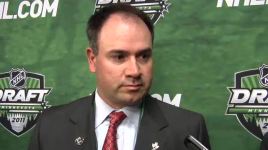
Nichols goes over Pierre Dorion’s comments about the draft on radio.  Unfortunately there’s not a lot here and Dorion wasn’t asked any interesting questions (will the team finally draft outside North America/Sweden; how will the draft improve with no meaningful additions to the scouting staff; how will the draft differ from when Bryan Murray was GM; etc).  The 2015 draft showed a disturbing tendency towards size over talent, but just one year isn’t enough to make a trend.  I agree with Nichols that this comment is disturbing:

we’re also looking at maybe improving our depth – having, maybe looking at getting a bit more experience. I don’t like to use the excuse that we’re young. I don’t think we’re young anymore. I think we’re a team that is looking to hit its stride and compete against some of the better teams in the league. If we can improve our depth, I think that’s definitely… looking at players that can play multiple roles on our team, that might be a bit more what we’re looking to do.

The last thing this team needs is to follow Murray’s tendency to hire veterans past their prime to take up roster spots, nor is it the team’s missing link to playoff contention depth.  Ottawa needs more talent and I’m also not keen on Dorion parroting Melnyk’s constant dictum of playoffs playoffs playoffs–know what you are and work with that.

negativeno

Ross A continues to link this site which is much appreciated–the reach of The Silver Seven is far greater than mine–and he mentioned that I’d criticised his praise for Luke P’s piece for WTYKY.  The criticism is more about omission–I have no idea what specifically Ross was praising–the peon to Chris Phillips, the criticism of the fanbase, or all of it?  I wanted more context (even if the answer is to simply boost WTYKY’s viewership).

Writing the above makes me wonder more broadly about how fans feel about strong opinions.  Andrew (at WTYKY) is one of the only writers who gets as strident as I do, although there are certainly plenty of Don Cherry-clones for whom yelling disguises empty diatribes.  Most traditional media simply parrots the opinions of the organisation they cover (underwriting the pulse of hockey forums and blogs).  For myself I’ve always looked for opinions backed by analysis–the best facts and information available from which good arguments are made.  Do fans want rainbows and unicorns?  I really don’t know–sport is entertainment so perhaps that tickles their fancy more–it’s hard to say.

Free agent signing: Jonas Gunnarsoon (Nashville) via Malmo in the SHL.

This article is written by Peter Levi (@eyeonthesens)

Senators News & Notes

Tom-Pyatt

In what appears to be a nod to the new coaching staff, Ottawa signed former Ranger pick (4-107/05) Tom Pyatt, younger brother of Taylor, who spent the last two seasons playing for Geneva in the Swiss league.  Prior to his time in Europe he spent four unproductive seasons in the NHL (mostly for Tampa Bay, 205-25-24-49 PPG 0.23).  Unquestionably he’s Binghamton-bound and if there’s a potential silver lining in his middling career AHL numbers (156-32-51-83 PPG 0.53) it’s that in his final half-season in Hamilton he was on a torrid pace (41-13-22-35).  It’s worth pointing out the 09-10 Hamilton roster was stacked, so that impacted his production.  Realistically Pyatt is a borderline second-liner in the AHL and seemingly not the kind of asset Binghamton really needs, but I’ll hold off calling it a bad move until the roster is filled out.

bigrig_logo

I’m not sure what WTYKY as a site is anymore, but Luke P decided it was a good idea to attack the fanbase as a preamble to praising Chris Phillips (who not long after retired).  I don’t want to dwell on it too much, but let’s go over it briefly:

Essentially Sens fans have adopted the worst qualities of the fanbases that surround us

Luke’s evidence for this is…he offers none (just anecdotal references to radio show call-ins and social media).  The characterization is meant as a backdrop for praising the Big Rig, but it seems an odd sort of crutch to use.  I also remain puzzled by his inability to separate criticism of someone’s performance as a professional (in this case, as a hockey player) and who they are as a person (we’ve seen this in recent discussions of Luke Richardson and Mark Borowiecki, for instance).  Phillips might be a saintly human being, but that’s inconsequential to who he was as a player.  Ross A has praised the post without explanation (presumably referring to the comments on the Big Rig rather than the description of the fanbase–after all, The Silver Seven can’t get too negative).

fail

Not surprisingly we hear that the Sens are likely to move Alex Chiasson, one of the poster-boys for how badly Murray has been beaten in trades during his time in Ottawa.  Nichols goes through his time with the team, including perceptions and organisational hype, but it can be summed up best this way:

He was given ample opportunity to play on the power play and play even strength minutes alongside skilled players. He just didn’t get the job done.

Amen.

[A late add: Mikael Wikstrand signed a four-year extension with Farejestad; that his future with Ottawa was over was never in doubt, but with the length of the contract means the Sens have surrendered any ability to make use of him as an asset short-term (they continue to control his rights, but with no out-clause in the contract they can make no use of it until it ends.  A suitably botched end to a ridiculous situation.]

More free agent signings: Tim Heed was signed by San Jose (identified on my FA list from a year ago), as was Yohann Auvitu by New Jersey.

This article is written by Peter Levi (@eyeonthesens)

Senators News & Notes

pierre dorion

The Nichols machine recorded some Pierre Dorion patter from last week and I have a few thoughts about it:
1) why would you bother talking to Alex Chiasson?  Wash your hands of him and move on
2) I’m glad he doesn’t want to go to arbitration with Mike Hoffman (I enjoyed this as well, “I think our fans know that the relationship between Mike and the previous coach or previous coaches wasn’t the greatest“–yes Pierre, we know that)
3) I’m happy Dorion wouldn’t commit to signing either Quentin Shore or Gabriel Gagne (although his comments suggest more interest in the latter, which makes sense)
4) unfortunately Randy Lee is going to remain Binghamton’s GM, so the hope for AHL fans is that Dorion’s influence provides the team with decent talent (and please no more Danny Hobbs)
5) they are looking at experienced coaches for Binghamton rather than someone like Luke Richardson, which is a positive step
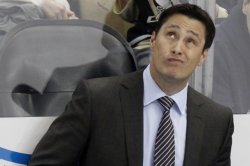
6) I’m not entirely sure how Marc Crawford will function as a “liaison” for the AHL coaching staff–does that make him functionally an assistant GM for Binghamton or is he simply Dorion’s go-between?  The facets of this are unclear to me, although it’s easy to understand why they want to make sure Bingo doesn’t play Richardson’s system anymore (sticking with Boucher’s)
7) Nichols doesn’t dwell on the obvious conclusion (due to the aforementioned reluctance to criticise Richardson), but clearly Dorion wasn’t happy that Richardson wasn’t imitating the NHL style of play in Binghamton (otherwise there would be no need for Crawford to be a liaison to ensure it)

boucher

The early fan love for Guy Boucher is amusing (he does have the best scar among NHL head coaches).  Nichols has a hard time not gushing and there’s no question Boucher’s a great talker and as a fan I want to buy in too.  If memory serves the Sens had interest in Boucher back in 2010, but wouldn’t give the term Tampa Bay offered (four years).  I can’t say I’m nearly as excited by the presence of Marc Crawford, whose amply demonstrated at the end of his NHL tenure that he had lost touch with what works in the NHL, but as an assistant that’s not very relevant.

It all sounds so good, but like any coach who’s introduced after his predecessor crashed and burned in the previous season, the newness and sheen of the replacement has yet to wear off. Optimism abounds and it will take some time before fans and the media can micro-analyze Boucher’s actions and identify his own shortcomings.

Exactly.  Mid-season we can take a stab at it.

negativeno

At the bottom of a Ross A piece he says something I found surprising:

There’s been a lot of complaints that we’ve been too negative as a blog this past season. I know i contributed to that.

I assume the first sentence is incomplete and should say “There have been a lot of reader complaints etc.”  Really?  The entire site strikes me as positive in tone–just how fluffy do they need to be?  Obviously The Silver Seven needs to be beholden to their readership, but it’s a sad state of affairs if that many people need a rose-coloured view of the team.  Perhaps it’s a common sentiment for fans in this city?  You’d think the incessant organisational pap from the regular media would be enough.

Speaking of Ross A, he posted the individual (as opposed to collective) grades given by The Silver Seven staff and I want to point out that my old buddy Jeff Ulmer gave Max McCormick the same grade he gave Erik Karlsson (an A)–he wasn’t asked about this oddity in the Q&A, sadly, but as someone who watched  McCormick in a Binghamton context all year I wouldn’t give him an “A” if you put a gun to my head–he’s a good grinder who tops out as a fourth liner in the NHL–nothing to get excited about.  I was also entertained by a few quotes about Mark Borowiecki:

[Adnan] There is nothing useful that Borowiecki does well compared to NHL players. I think Callum is better than Boro in some ways. I don’t think there has ever been a defenceman less deserving of an NHL roster spot since I have been a Senators fan.

[NKB] Borowiecki did nothing this year to convince me he was an NHL-calibre defenseman. He’s actually a decent skater, but he simply hasn’t improved his play with the puck and the Sens have a terrible time breaking out of their end when he’s on the ice. Taken all together, he’s just not capable at this level. I can’t give anything but an F to someone who I don’t consider to be an NHL-level player.

[Callum] Every argument I’ve ever heard in favour of Borowiecki has to do with his fighting, leadership and effort. Those are the three attributes I look at the least when evaluating a player. The arguments usually end with the other person saying “you just don’t understand.” And that’s fair. Because it’s true. I don’t understand why Borowiecki is an everyday NHLer.

This tickled the cockles of my heart–I agree with all three on the Borocop–may he fester in the pressbox throughout 2016-17.  Incidentally, I’ve mentioned before that I’m not fond of grading systems (eg here) since they almost never have an actual rubric behind them, but Ary M actually created one for himself and it’s pretty similar to what I use.

marcus sorsensen

Former Sens pick Marcus Sorensen has been signed by San Jose as a free agent–he was on my list of potential signings and it will be interesting to see how he does with the Sharks.

Minnesota signed Hungarian goaltender Adam Vay as a free agent out of the incredibly obscure Hungarian league (the Mol Liga)–before we get too excited about the selection he did spend two years playing US junior hockey and I suspect his size (6’5) is one of the major reasons behind the signing.

This article is written by Peter Levi (@eyeonthesens)

NHL Draft Success (2005-2009)

draft

There have been a sprinkle of articles over the years reviewing draft accuracy, but I’ve always had issues with the way they are constructed. Examinations of the draft that cover a long period of time fail to account for the changes in the league and the draft itself, so they don’t really work (you’ll see 20 and 30 year swaths as if everything about those periods is the same). When articles cover more recent drafts (Hockey Futures does them at five-year intervals) they are forced to make judgement calls on players whose futures are yet to be defined (just one example, Carl Soderberg didn’t jump to the NHL until he was 27).  All this preamble is to make two key points: 1) the attitude and approach to the draft in the NHL changed seismically after the 2004-05 lockout (due to the cap), 2) the typical make-or-break moment for a draft pick varies considerably.  On top of that, the raw overview I’m about to give is simply a window into more in depth analysis, since I’m not focused on all the nuances of scouting departments and only lightly touch on management changes.  What follows is a very broad examination of levels of success within the draft by team.  I’ve cut off at 2009 because even the ’10 draft class still hasn’t completed their cycle of development (’09 could still see some slight adjustments and you’ll see below there are players in the ’06 class still up in the air).  All of this presupposes the importance of the draft, something that could not be assumed at points in NHL history (there have been times when teams could buy their way out of trouble).

My framework: what is a successful pick?  There are a lot of complicated ways to decide, but the simplest is to say any skater who has played 200+ NHL games has returned value on the investment (I also make a few judgement calls, particularly when it comes to goaltenders).  Two and a half seasons of NHL work isn’t the only metric you could use, but it’s a good place to start.

2005 (here)
First Round
18 players have played 200+ games, including 9 of the top-10 (Luc Bourdon tragically died and is the only exception).  Only 3 players never suited up in the NHL (Marek Zagrapan #13, Sasha Pokulok #14, and Alex Bourret #16)
Second Round
8 players hit 200+ games (the best are James Neal #33 and Paul Statsny ##44), with 12 never hitting the ice
Third Round
6 players hit the mark (the best are Kris Letang #62 and Jonathan Quick #72; I’m including Ben Bishop #85); 12 never played
Fourth Round
7 players have reached the plateau (the best is Keith Yandle #105); 17 never played; Chris VandeVelde is 3 games away so I’ve included him in the total
Fifth Round
5 players hit the mark (the best are Darren Helm #132 and Nathan Gerbe #142); 23 never played
Sixth Round
Only Matt D’Agostini qualifies; 22 players never played
Seventh Round
5 players reached the plateau; 26 players never played

Here’s the success by team:
4 – Columbus (MacLean), Montreal (Gainey)
3 – Detroit (Holland), Dallas (Armstrong), Pittsburgh (Patrick), St. Louis (Pleau), New York Rangers (Sather)
2 – San Jose (Wilson), Ottawa (Muckler), Los Angeles (Taylor), Arizona/Phoenix (Barnett), Toronto (Ferguson), Nashville (Poile), Buffalo (Regier), Chicago (Pulford/Tallon), Edmonton (Lowe), New Jersey (Lamoriello)
1 – Anaheim (Coates/Burke), Carolina (Rutherford), Minnesota (Risebrough), Philadelphia (Clarke), Atlanta/Winnipeg (Waddell), Colorado (Lacroix), Vancouver (Nonis), Boston (O’Connell)
0 – Washington (McPhee), New York Islanders (Milbury), Florida (Keenan), Calgary (Sutter), Tampa Bay (Feaster)

2006 (here)
First Round
20 players hit the plateau, including all of the top-ten picks; 3 players did not hit the ice for an NHL game (Mark Mitera #19, David Fischer #20, and Dennis Persson #24)
Second Round
9 players hit the mark, but I’d throw Jhonas Enroth in there (so 10); 14 players never played
Third Round
5 players have reached the plateau, but another should join them (Brian Strait #65, so 6); 16 never hit the ice
Fourth Round
2 players (Matt Beleskey #112 and James Reimer #99); 22 players never played
Fifth Round
No player has hit the 200 game-mark (or even 100); 23 never played; Chad Johnson #125 was the best player picked
Sixth Round
4 players hit the mark (Andrew MacDonald #160, Viktor Stalberg #161, and Mathieu Perreault #177), with Leo Komarov #180 likely getting there (I’ve included him); 23 prospects never played
Seventh Round
2 players qualify (Derek Dorsett #189 and Erik Condra #211); 24 players never played

Here’s the success by team (I’ve included those players destined to break the plateau):
5 – Toronto (Ferguson)
4 – Washington (McPhee)
3 – Boston (O’Connell/Gorton/Chiarelli), Columbus (MacLean), Ottawa (Muckler)
2 – St. Louis (Pleau), New York Islanders (Milbury/Smith), Minnesota (Risebrough), Los Angeles (Taylor/Lombardi), Pittsburgh (Patrick/Shero), Buffalo (Regier)
1 – Chicago (Pulford), Arizona/Phoenix (Barnett/Maloney), Florida (Keenan), Atlanta/Winnipeg (Waddell), Vancouver (Nonis), Colorado (Lacroix/Giguere), Philadelphia (Clarke), San Jose (Wilson), Edmonton (Lowe), Detroit (Holland), New York Rangers (Sather), Carolina (Rutherford), Anaheim (Burke), Montreal (Gainey)
0 – Tampa Bay (Feaster), Calgary (Sutter), New Jersey (Lamoriello), Dallas (Armstrong), Nashville (Poile)

2007 (here)
First Round
19 players hit the mark, including 9 of the top-ten; 5 picks never played a game (Alexei Cherepanov #17 died; Logan MacMillan #19, Angelo Esposito #20, Patrick White #25, and Nick Ross #30)
Second Round
4 players have reached the plateau; 14 never played a game
Third Round
3 players have reached 200 games (Yannick Weber #73, Alex Killorn #77, and Joakim Andersson #88), with Robert Bortuzzo and Corey Tropp having a slim chance to get there (I didn’t include them in the totals); 16 players never hit the ice
Fourth Round
3 players qualify, with Steven Kampfer #93, Brad Malone #105, and Colton Sceviour #112 getting there (so 6); 16 never played
Fifth Round
2 players (Jamie Benn #159 and Jake Muzzin #141) reach the mark; Chris Terry #132 has a shot to join them (not included); 23 have never played
Sixth Round
4 players qualify; Anthony Peluso #160 could join them (not included); 17 prospects never played
Seventh Round
2 players (Carl Gunnarsson #194 and Justin Braun #201) reached the mark; 24 have never played; there’s a chance Paul Postma #205 will eventually get there (not included)

Here’s the success by team (I’ve included those players destined to break the plateau):
4 – Los Angeles (Lombardi), Montreal (Gainey)
3 – San Jose (Wilson), St. Louis (Pleau), Colorado (Giguere)
2 – Edmonton (Lowe), Philadelphia (Holmgren), Detroit (Holland), Dallas (Armstrong)
1 – Chicago (Pulford), Carolina (Rutherford), Pittsburgh (Shero), Buffalo (Regier), Arizona/Phoenix (Maloney), Washington (McPhee), Columbus (Howson/MacLean), Florida (Martin), Nashville (Poile), Tampa Bay (Feaster), Calgary (Sutter), New Jersey (Lamoriello), New York Rangers (Sather), Toronto (Ferguson), Anaheim (Burke)
0 – Ottawa (Br.Murray/Muckler), Boston (Chiarelli), Vancouver (Nonis), Atlanta/Winnipeg (Waddell), New York Islanders (Snow), Minnesota (Risebrough)

2008 (here)
First Round
18 players have reached 200 games, including 9 of the top-ten; four prospects never played (Kyle Beach #11, Chet Pickard #18, Anton Gustafsson #21, and Daultan Leveille #29)
Second Round
7 players have reached the plateau, with Vyacheslav Voinov (#32) joining them absent his legal problems–I’d also include Jake Allen (#34), so 9; 7 players have never suited up
Third Round
4 players (Michael Stone #69, Lance Bouma #78, Zack Smith #79, Adam Henrique #82), and Jori Lehtera #65 if he can stay healthy (so 5); 17 prospects never made it
Fourth Round
Four have reached 200 games; 15 players never suited up
Fifth Round
Two players (Matt Martin #148 and Matt Calvert #127) qualify, but Philip Larsen (#149) should join them this season (so 3); Mark Borowiecki (#139) could join them, but is not included; 18 prospects never played
Sixth Round
4 players qualify (Jared Spurgeon #156, Cam Atkinson #157, Tommy Wingels #177, and Zac Rinaldo #178), with Ben Smith #169 likely joining them in the upcoming season (so 5); Mark Barbeiro (#152) has a shot to make it; 19 players never suited up
Seventh Round
2 players make it (Jason Demers (#186) and Matt Bartkowski (#190)); I’ll include Anders Lindback (#207) as well (so 3)

Here’s the success by team (I’ve included those players destined to break the plateau):
4 – New York Islanders (Snow)
3 – Nashville (Poile), Ottawa (Br.Murray), New York Rangers (Sather), St. Louis (Pleau)
2 – Buffalo (Regier), Anaheim (Burke/Bo.Murray), Washington (McPhee), Columbus (Howson), San Jose (Wilson), Los Angeles (Lombardi), Calgary (Sutter), Philadelphia (Holmgren), Arizona/Phoenix (Maloney), Toronto (Ferguson/Burke)
1 – Tampa Bay (Feaster), Atlanta/Winnipeg (Waddell), Vancouver (Nonis/Gillis), Edmonton (Lowe), Minnesota (Risebrough), New Jersey (Lamoriello), Detroit (Holland), Chicago (Pulford), Florida (Martin), Dallas (Armstrong/Hull-Jackson), Boston (Chiarelli)
0 – Colorado (Giguere), Carolina (Rutherford), Montreal (Gainey), Pittsburgh (Shero)

2009 (here)
First Round
18 players have hit the threshold (including 9 of the top-10), with another 3 who will get there (so 21); only one player never played (Philippe Paradise #27), with Scott Glennie (#8) as the only top-10 bust
Second Round
6 have reached the threshold, with another 4 on their way (so 10), with a chance Richard Panik (#52) will join them (not included); 9 players never made it
Third Round
3 players hit the mark, with Brayden McNabb #66, Andrej Nestrasil (#75), Kevin Connauton (#83), and Nicolas Deslauriers (#84) likely to make it (so 7); 12 prospects never made it
Fourth Round
6 reach the threshold (including Sami Vatanen); Linden Vey (#96) and Ben Chiarot (#120) have a solid chance to get there (so 8); 13 players never suited up
Fifth Round
3 players hit the mark (including Mike Hoffman); 21 players never suited up
Sixth Round
Anders Lee #152 should get there; 18 players didn’t make it
Seventh Round
2 players have or will hit the mark (Jordan Nolan #186 and Erik Haula #182)

Success by team:
5- Los Angeles (Lombardi)
4 – Ottawa (Br.Murray), New York Islanders (Snow), Nashville (Poile)
3 – Buffalo (Regier), Anaheim (Bo.Murray), Colorado (Giguere/Sherman), Washington (McPhee)
2 – Minnesota (Risebrough), Columbus (Howson), Dallas (Hull-Jackson/Nieuwendyk), Edmonton (Tambellini), Chicago (Pulford), New Jersey (Lamoriello), Detroit (Holland), Atlanta/Winnipeg (Waddell)
1 – Tampa Bay (Lawton), Arizona/Phoenix (Maloney), Toronto (Burke), Florida (Martin/Sexton), New York Rangers (Sather), Pittsburgh (Shero), Vancouver (Gillis)
0 – Boston (Chiarelli), St. Louis (Pleau), Calgary (Sutter), Carolina (Rutherford), Montreal (Gainey), Philadelphia (Holmgren), and San Jose (Wilson) with 0

I’ve been writing this piece for years in the hope that others will dig deeper, but as yet I’ve seen nothing like it.  A few things continue to be true: coverage of Europe still lags behind North America (likely due to cost) and smaller players still need to do more to be selected (both these categories are where the majority of undrafted success stories come from).

Overview
Round-by-round success rate (with year-by-year in brackets):
First: 96/150 (64%) (18/20/19/18/21)
Second: 41/154 (26%) (8/10/4/8/10)
Third: 27/150 (18%) (6/6/3/5/7)
Fourth: 26/153 (16%) (7/2/5/4/8)
Fifth: 13/157 (8%) (5/0/2/3/3)
Sixth: 15/153 (9%) (1/4/4/5/1)
Seventh: 14/158 (8%) (5/2/2/3/2)

The scaling between rounds is not surprising.  Of the 49 top-ten picks (excluding Bourdon for obvious reasons), only 3 were misses (HamillFilatov, and Glennie), making them 94% reliable.  Excluding the top-ten, the first round is still significantly stronger than the second round (50/99, 50%, excluding Cherepanov for the same obvious reason).  There should be a steady decline throughout the rounds, but between the fifth-seventh it’s a crapshoot with no meaningful difference in terms of success (this could be due to sample size or there may be something else going on–my guess is either the fifth is where they start swinging for the fences or it’s the last round where team’s are conservative).

Team Performance (the average is 8)
15 – Los Angeles
12 – Columbus, Ottawa
11 – Toronto, St. Louis
10 – Nashville, New York Islanders, Washington, Buffalo
9 – Detroit, Montreal, New York Rangers
8 – Colorado, Edmonton, San Jose, Anaheim, Dallas
7 – Arizona, Chicago, Philadelphia
6 – Minnesota, New Jersey, Pittsburgh
5 – Winnipeg/Atlanta, Boston
4 – Florida, Vancouver
3 – Calgary, Carolina, Tampa Bay

It’s difficult to imagine any scouting staff completely whiffing on an entire year, but it happens (an average of 5 per season (5/5/6/5/7)).  It’s important to note these numbers don’t distinguish the quality of players and there are certainly a number of prospects who were in the NHL much longer than made any sense.  The average successful pick by team per year is c.1.5, so a good year for scouts is 2 NHL players, while there should always be at least one.

There’s plenty of room to assess GM’s independent of their teams (from 05-09 thirteen teams have had the same management in place).  A quick glance at the variance in performance for those with GM changes:

LA: Taylor 2/1; Lombardi 13/4 (the 2006 draft would have included some or all of Taylor’s scouting staff, with 2 panning out)
Columbus: MacLean 7/2, Howson 5/3 (the above caveat for 2007, where 1 player panned out)
Ottawa: Muckler 5/2, Br.Murray 7/3 (the above for 2007, with 0)
Toronto: Ferguson 8/3, Burke 3/2 (the above caveat for 2008, with 2)
New York Islanders: Milbury 0/1, Smith 2/1 (the above for 2006, with 2), Snow 8/3
Colorado: Lacroix 1/1 Giguere 4/3 (the above for 2006, with 1), Sherman 3/1 (the above for 2009, with 3)
Edmonton: Lowe 6/4, Tambellini 2/1
Arizona/Phoenix: Barnett 1/1, Maloney 6/4 (the above for 2006, with 1)
Anaheim: Burke 3/3 Bo.Murray 5/2 (the above for 2005 via Coates, with 1; the same for 2008 with 2)
Philadelphia: Clarke 2/2, Holmgren 5/3
Chicago: Tallon 5/4 (the above for 2005 via Pulford, with 2), Pulford 2/1
Dallas: Armstrong 5/3 Hull-Jackson 1/1 (the above for 2008, with 1), Nieuwendyk 2/1 (the above for 2009)
Pittsburgh: Patrick 3/1, Shero 3/4 (the above for 2006, with 2)
Boston: O’Connell 1/1, Chiarelli 4/4 (the above for 2006, plus interim GM Gorton, with 3)
Vancouver: Nonis 2/3 Gillis 2/2 (the above for 2008, with 1)
Florida: Keenan 1/2 Martin 2/2, Sexton 1/1 (the above for 2009 with 1)
Tampa Bay: Feaster 2/4, Lawton 1/1

The teams where the GM remained the same:
St. Louis (Pleau) 11/5
Nashville (Poille) 10/5
Washington (McPhee) 10/5
Buffalo (Regier) 10/5
Detroit (Holland) 9/5
New York Rangers (Sather) 9/5
Montreal (Gainey) 9/5
San Jose (Wilson) 8/5
Minnesota (Risebrough) 6/5
New Jersey (Lamoriello) 6/5
Winnipeg/Atlanta (Waddell) 5/5
Calgary (Sutter) 3/5
Carolina (Rutherford) 3/5

Since top-ten picks are essentially gimmies, GMs who have those picks have their numbers inflated, so in terms of what they can do outside of that here are the adjusted numbers:

(Average is 6)
12 – Los Angeles (-3)
10 – Ottawa (-2), Buffalo
9 – Columbus (-3), Toronto (-2), Nashville (-1), Washington (-1), Detroit, New York Rangers, St. Louis (-2)
8 – Montreal (-1), Dallas
7 – New York Islanders (-3), Colorado (-1), Anaheim (-1)
6 – Edmonton (-2), San Jose (-2), Philadelphia (-1), New Jersey
4 – Chicago (-3), Minnesota (-2), Pittsburgh (-2), Boston (-1)
3 – Arizona (-4), Winnipeg/Atlanta (-2), Vancouver (-1), Calgary
2 – Florida (-2), Carolina (-1)
1 – Tampa Bay (-2)

Arizona had the most top-ten picks (with 4), which forms the majority of their success; Los Angeles (which had 3), still produced a huge number of successful prospects, so those are the two clearest examples of teams whose scouts true colours are revealed this way.

All of this just scratches the surface.  Further analysis and time is required to draw conclusions, but it sheds some interesting light on the draft in the current era.

This article is written by Peter Levi (@eyeonthesens)

Senators News & Notes

cartoon-report-card

Nichols posted a great (and long) State of the Union piece on where the Sens are and what their year was like.  There’s a lot to absorb, but virtually nothing to disagree with (perhaps he could have included the insanity of Mikael Wikstrand‘s situation, but I suppose that would make the article even longer).  In essence we stand on the precipice of whether or not Pierre Dorion will truly be his own man as GM (in a positive, progressive sense), or not, along with how much Eugene Melnyk’s insanity will impact what happens.

fail

It’s not surprisingly the Sens lost out on the Drake Caggiula sweepstakes–despite the opportunities the Sens soft lineup offers, it makes a ton of sense for the NCAA free agent to want to play with the staggering forward talent available to him in Edmonton.  There’s no guarantee Caggiula will be a great NHL player–it’s a rare thing even for hyped NCAA forwards–but for the prospect-starved Sens he would have been a great addition.

boucher

Just as unsurprising as the above was Bruce Boudreau choosing greener pastures (Minnesota), as the Sens balked at the term he wanted (4 years).  I mentioned a few weeks ago when the coaching search started that I wasn’t going to get excited by who the Sens interviewed, so never spent time speculating on what he could or couldn’t do if he was hired.  As it turned out the Sens have landed Guy Boucher (giving him 3 years), a highly touted coach back in the day who has been plying his trade in Europe since getting bounced out of Tampa Bay.  Nichols dives deep on who Boucher was in his first head coaching gig–after one good season he fell off the rails on the heels of defensive struggles (some of which can be blamed on goaltending).  Damian Cristodero talks about Boucher’s infamous 1-3-1 style, believing that after his first season teams adapted to it.  When I researched coaching success back in March I came up with this:

hiring younger, more inexperienced coaches has a more positive impact (presumably a more adaptive group); coaches with historical losing records also provide as boost, as do (paradoxically) those who have won a Stanley Cup

At 44 Boucher is young and with less than 3-seasons in the NHL he’s not heavily experienced, but you have to take all these things with a grain of salt.  Ultimately the impact of a coach is limited by the talent available to him, so that’s the next challenge for Pierre Dorion.

curtis lazar

It has been clear to me since he was drafted that Curtis Lazar is an underwhelming player given his pedigree (first-round pick).  Trevor Shackles does a deep dive to look at the comparables and arrives at the horror show you’d expect for someone with no hands (if you read through the scouting reports prior to him being drafted none of his offensive struggles are a surprise).  He’s basically a Senators special: a physical, hard-worker who struggles to generate offence.  There was no reason to rush him into the NHL, but Bryan Murray’s inconsistent attitude towards prospects struck here.  There’s always hope for him to blossom I suppose, but I think he’ll remain a third or fourth line forward.

Binghamton_Senators_svg

A little Binghamton note in relation to the potential move of the franchise to Belleville via Jeff Ulmer transcription:

All I know is that the AHL is committed to being here for not only the three years we have right now but we’re working on adding another six. The AHL is very, very committed to Broome County, I’m not even, I’m not worried about having an AHL team here, I know we will.

The key here is that Tom Mitchell didn’t say the Senators are committed to being in Binghamton, but the AHL.  I take this as a tacit admission that he’s aware that the Sens are interested in moving, but confident if that happens another franchise will take their place.

This article is written by Peter Levi (@eyeonthesens)

Senators News & Notes

pierre dorion

Nichols goes over the unintended comedy of Pierre Dorion saying he has carte blanche to hire the best coach available with Eugene Melnyk immediately walking the comment back including this canard:

To put that kind of money out for one single person, that’s tough, even from a  management point of view. You wouldn’t do that with an executive, why go crazy in the business of hockey to do that?

This is so absurd not even Melnyk believes it–an executive often does make absurd amounts of money in business (Melnyk seems to embrace Donald Trump’s emphasis on verbal diarrhea).  The point is less about the specific comment and more about Melnyk’s refusal to spend money on his hockey operations (season tickets available folks!), so with Dorion’s hands tied it’s hard to imagine a top coach with a brain wanting to handcuff themselves into Ottawa’s situation.  My guess is Dorion will roll the dice with an assistant coach (ala Paul MacLean).  Incidentally, I never went into how much of a slap in the face it was to Luke Richardson to tell him he won’t even be considered for Ottawa’s head coach position–while it’s the right decision, often teams will at least formally go through the motions with their AHL coach when a change is being made–not so here, which is a welcome acknowledgement of how bad Richardson was in Binghamton.

Speaking of Nichols, it’s interesting to see someone as disinterested in prospects as he is noticing the Sens going big (as in size) since Tim Murray left.  I agree with him wholeheartedly that skill is what should matter.  One interesting thing Pierre Dorion said (via the same link):

did the guy that we had slotted 10 and he wasn’t in our top-12, well, why did he go there? And did the guy that went 14, he wasn’t in our top-10 and should we have had him there? And why is that? As staffs, we sit back and always reflect on, ‘Why didn’t we like this guy that’s turned out to be a player?’ or, ‘Why did we like this guy who hasn’t turned out to be a player?’ So it’s something that we do as an exercise quite often

This is excellent to hear, but I’ve seen no evidence that the Sens have shifted their drafting philosophy due to such exercises.  There is an almost mindnumbing sameness to their drafts from 2008-2015 (with minor variations when Tim Murray was around).  Dorian also mentions that they had Cody Ceci in the top-5 or 6 of the 2012 draft and it’s difficult to make sense of that in retrospect (for those who remember my 2012 draft preview no scouting service had Ceci any higher than 10th).

Luke-Richardson

Worsteverything has a four-part series on the Sens, but what I wanted to address are his comments on Luke Richardson (which echo those around the blogosphere, as I went over previously):

Luke Richardson is an awesome and inspirational person who has been through unimaginable stuff. My respect for him and his family almost makes writing stuff like this objectively quite challenging … Luke seems like a positive guy and a very good communicator from what I can gather from interviews … I hate that the organization loses such a quality person but ultimately I support both a full coaching changeover as well as giving Richardson his best chance to advance his career

I really wish bloggers who are unfamiliar with something would leave it alone (or, at least, not try to assess it).  Richardson seems like a good communicator from interviews?  Wat?  It’s the written equivalent of throwing up your hands and saying “I haven’t a clue!”–so why bother?  I’m not sure what purpose is being served here, but I suppose at the least I can repeat: he’s a bad coach (as is clear from the statistical evidence available to everyone or by hitting up Google to find an assessment), but his charity work and personal tragedy seems to overwhelm anyone’s efforts to assess him as a professional.

christian wolanin

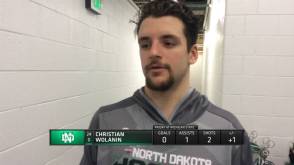
DJ Powers wrote a piece about Ottawa prospect Christian Wolanin–it’s a basic Q&A, although it does cover who his primary defensive partners were this season (Tucker Poolman and Keaton Thompson–both drafted players and both with better numbers than the rookie, albeit not overwhelmingly so).

hogberg

Chapin Landvogt puts Marcus Hogberg at the top of drafted goaltending talent in Sweden, although there’s not a ton of substance to this, but he does say:

Taking these decent, yet not entirely uncommon, SHL numbers into account, one must note that he manned the nets behind a defensive group that featured three regulars aged 19 or younger

And then wonders if he’d be better off with another season in Sweden.  The Sens would have to sign him first for that to be a question (they lose his rights this year if they don’t), but currently there’s no place for him anywhere else, so that seems entirely probable.

My psychic powers paid off as Michael Keranen signed with Jokerit as fast as humanly possible (not, incidentally, his previous Liiga team–he was with Ilves when Minnesota signed him).

More FA signings: Sergei Zaitsev (aka Sergei Zaytsev; Toronto), Lukas Bengtsson (Pittsburgh), Linus Hultstrom (Florida), Michael Garteig (Vancouver), and Daniel Pribyl (former Montreal pick; Calgary).

This article is written by Peter Levi (@eyeonthesens)

Senators News & Notes

HPK

A unique set of Finnish visitors came to the site the other day reading my ancient Nathan Lawson profile from four years ago.  Someone (“Rinksu”) on the HPK end of the Jatkoaika Keskustelu boards linked it and I hope fans there got something useful out of it (HPK has lost one of its goaltenders, former Edmonton pick Samu Perhonen, while the other ‘tender, Jere Myllyniemi, had an awful season; presumably Lawson is in the rumour-mill after spending a couple of years in the Austrian league).

I also appreciate the RT from Nichols yesterday–it’s gratifying when poppabear gives you a little love.

borowiecke

Ary M has a piece discussing potential options for Ottawa’s bottom-pairing (something likely moot since the current options are already signed), but what grabbed my attention were these two comments:

Fredrik Claeasson has been Binghamton’s best defender for quite some time but likely caps out as a 6th defender.

Can you just state that as fact?  It’s certainly something that gets tossed around by fans a lot, but internally the organisation rewarded the god awful Mark Fraser (?) and I feel like Freddy has showed some worrying signs (such as his on-ice numbers for powerplay goals against).  My feeling is that Ary M has watched very few Binghamton games and is simply repeating sentiments he’s heard.

Unfortunately, that wasn’t enough to save Luke Richardson

Why is this unfortunate?  As above there’s no effort to justify the statement–for those of us who’ve watched the trainwreck that was Richardson this was a welcome relief (about which I discussed here; and about the coaching staff in general, here).

Binghamton_Senators_svg

Speaking of Binghamton, Nichols breaks down the rumour that Ottawa might be looking to move it’s AHL affiliate to Belleville.  There are two hurdles to this (the Bruce Garrioch report suggests the team wants the move for the 2017-18 season), and let’s look at them quickly:
1. The Sens signed an agreement with Binghamton through the 2018-19 season
I wasn’t able to find an example of an NHL team breaking it’s affiliate agreement, but I imagine it’s not an insurmountable hurdle (there are likely mechanisms within the contract allowing it to happen)
2. Millions of dollars are needed to renovate the the arena and the city council has yet to approve the money
Belleville lost it’s OHL team to Hamilton last year in part to city council refusing to invest in arena improvements; however, there was a recent report that suggests the changes required are already underway:

During closed door talks Thursday, council approved spending $510,000 (contract worth $450,000) for an Ottawa-based firm to commence drawings and designs aimed at rejuvenating the antiquated arena.

What it will do is convince a pair of current suitors the city is serious about bringing hockey back to Belleville. The mayor is holding “healthy discussions” with those clubs, one of which the city has signed a non-disclosure agreement with and the second interested party inking a “letter of intent with a party that we’ve been discussing for the last four months and we’ve extended that for 30 days. It’s a party that has interest in our community in a hockey capacity.”

We know the non-disclosure agreement is with the Senators, but not who the second suitor is.  Garrioc’s report means Ottawa’s management wants the notion floated, but it remains to be seen if an actual deal will be finalised.  (In researching this, incidentally,  I came across an old blog by AHL President Dave Andrews which is worth reading.)

For those who missed it I provided my breakdown of Binghamton’s season yesterday.

This article is written by Peter Levi (@eyeonthesens)

Binghamton Season Review

Binghamton_Senators_svg

Another long and disappointing season is in the books for Binghamton and it’s time for my review (you can read last year’s here).  Let’s start with the basics: the team finished 31-38-7 (14th in the conference), falling out of serious contention at the beginning of the season then muddling along the rest of the way.  How does this compare to last season?  Let’s compare them side-by-side (2014-15/2015-16):
34-34-8/31-38-7 (-3 wins, -7 points, -3 places in the conference (14th))
242 GF/204 GF (-38, dropping from 1st in the conference to 9th)
358 GA/341 GA (+17, moving up two places in the conference to 13th)
PP 20.6/17.8 (-2.8, dropping seven places from 2nd)
PK 81.1/81.8 (+0.7, moving up four places from 24th)

What’s evident is that Luke Richardson can’t coach defense.  The team’s goal scoring is a reflection of talent rather than strategy, but it’s staggering how awful they’ve been defensively (including on special teams) for the past two seasons.  There are plenty of excuses to be made for this fact which I’ll address below.

The AHL regular season consists of 76 games, so the most convenient way to divide it up is in four 19-game intervals (notable streaks in brackets):
5-12-2 (Oct.10-Nov.28; 5 straight losses, front end of 5 straight losses)
10-8-1 (Dec.4-Jan.16; back end of 5 straight losses, 4 straight losses, 5 straight wins, front end of 5 straight losses)
First half: 15-20-3 (33 points)
7-11-1 (Jan.22-Mar.5; back end of 5 straight losses, 4 straight wins, 4 straight losses)
9-7-3 (Mar.8-Apr.17; 4 straight wins, 7 straight losses)
Second half: 16-18-4 (36 points)

This is a remarkable number of streaks, tallying 13 of the teams total wins (41%) along with 30 of their losses (66%).  What’s apparent is how things never improved–no matter what happened to the roster, Binghamton failed more often than not–saddled with a coaching staff and management group unable to foster any solutions.  A lot of excuses have been made for these results because of the roster, so we’ll look at that next.

The players below are listed by points-per-game (PPG), with a minimum of 15 games played (this applies to ECHL stats as well); rookies are in italics; players in blue were 25 and older at the start of the season; AHL season totals are in brackets for traded players (additions to the roster during the season are underlined):

Phil Varone 21-6-17-23 (1.09) [65-19-36-55 (0.84)]
Jason Akeson 21-5-17-22 (1.04) [73-13-39-52 (0.71)]
Matt Puempel 34-17-13-30 (0.88)
Ryan Dzingel 44-12-24-36 (0.81)
Cole Schneider 54-17-25-42 (0.77) [73-21-35-56 (0.76)]
Eric O’Dell 50-18-19-37 (0.74) [67-27-23-50 (0.74)]
Casey Bailey 30-7-14-21 (0.70) [68-11-28-39 (0.57)]
Tobias Lindberg 34-5-17-22 (0.64) [56-11-23-34 (0.60)]
Michael Kostka 50-5-24-29 (0.58)
Max McCormick 57-15-15-30 (0.52)
David Dziurzynski 43-8-12-20 (0.46)
Kyle Flanagan 44-6-14-20 (0.45)
Jerome Leduc 22-4-6-10 (0.45) [76-11-15-26 (0.34)]
Patrick Mullen 36-1-15-16 (0.44) [65-3-27-30 (0.46)]
Ryan Rupert 30-7-6-13 (0.43) [59-13-12-25 (0.42)]
Buddy Robinson 62-13-10-23 (0.37)
Nick Paul 45-6-11-17 (0.37)
Michael Keranen 21-4-3-7 (0.33) [66-12-18-30 (0.45)]
Colin Greening 41-7-6-13 (0.31)
Conor Allen 17-1-4-5 (0.29) [66-3-11-14 (0.21)]
Zack Stortini 66-8-8-16 (0.24)
Ryan Penny 24-2-3-5 (0.20) [ECHL 33-10-13-23 (0.69)]
Guillaume Lepine 69-4-9-13 (0.18)
Chris Carlisle 65-4-8-12 (0.18)
Fredrik Claesson 55-3-7-10 (0.18)
Danny Hobbs 50-3-4-7 (0.14)
Travis Ewanyk 68-5-4-9 (0.13)
Ben Harpur 47-2-4-6 (0.12)
Mark Fraser 60-2-5-7 (0.11)
Michael Sdao 17-0-2-2 (0.11) [29-0-6-6 (0.20)]
Nick Tuzzolino 27-1-0-1 (0.03)

Scott Greenham 3-1-0 2.19 .928 [ECHL 11-9-3 2.78 .920]
Chris Driedger 18-15-4 2.83 .912
Matt O’Connor 10-20-3 3.31 .895

ECHL Prospects (players on ELCs)
Troy Rutkowski 61-6-24-30 (0.49)
Vincent Dunn 55-13-14-27 (0.49)

I was curious what the with-or-without you numbers were in terms of wins–which players had a noticeable drag on the lineup or gave it a boost.  With the team’s overall winning percentage serving as the baseline (0.40) and understanding this kind of breakdown favours or punishes players with fewer games played, here are the numbers (those in green are above the line, those in red are below):
Sdao 0.58
Lindberg, Keranen, Flanagan 0.47
Bailey, Rupert 0.46
Leduc 0.45
Puempel 0.44
Lepine 0.43
Kostka, Varone, Akeson, Hobbs 0.42
Greening 0.41
team 0.40
O’Dell, Paul, Carlisle, Claesson, Stortini 0.40
Schneider, Dzingel, McCormick, Harpur, Mullen 0.38
Penny, Tuzzolino 0.37
Ewanyk, Fraser 0.36
Robinson 0.35
Dziurzynski 0.32
Allen 0.29

The most obvious thing here is that players added late in the season are slightly above the average while those who did not play then are slightly below.  SdaoAllenLeduc,  Keranen, Varone, and Akeson did not play enough games to really establish their effect.  Anything within .03% of the team average is within the margin of error.  With that in mind Lindberg, Flanagan, BaileyRupert, and Puempel stand atop the list, while Dziurzynski, Robinson,  Ewanyk, and “top-defenseman” Fraser sit along the bottom.  How many wins or losses do these percentages translate too?  At the top it’s 3-5 more wins, while on the bottom it ranges from 3-6 losses.  In my opinion the difference relates to puck-possession (or lack thereof).

There is a lot to unpack with all the information that is on-hand, so let’s start with a few general observations:
-the team was awash with veterans, so making the excuse that the team’s results were due to a “youth” doesn’t wash
-Binghamton traded seven players to no noticeable effect on team performance (despite claims from others that there was improvement)
-however much some fans might want to make the excuse that a lot of the best prospects on the team were away in Ottawa, when they were in the AHL there was no tangible difference in team results
-the garbage-time production of Varone and Akeson (and Bailey) can’t be taken at face value (the tallies for the entire season seem right for their expected production)

Selected thoughts on individuals:
McCormick‘s numbers made a solid jump in his sophomore season (0.32 to 0.52), but much of that was due to Richardson jamming him down the throat of productive lines and the PP (places he doesn’t belong–I’d keep him on the third line and off the PP)
Robinson was jerked around all season and that impacted his totals (0.45 to 0.37); his worst struggles were at the end of the season with just 1 point in his final 12 games
Paul‘s production was awful; he never recovered from being irrationally scratched early in the season
Stortini was unable to replicate his career numbers from the previous season (0.32 to 0.24), despite getting enormous amounts of PP time (he finished with just 1 point in his final 16 games)
-Career ECHLer Lepine spent the entire season being carried by partner Kostka, so don’t let his numbers fool you
Claesson did not have a great season, with particular struggles on the PK
-While Penny is not the most talented prospect out there, it boggles the mind that he was passed over for the likes of Ewanyk and Hobbs
Driedger, while clearly the best of the tandem, he did have his struggles (particularly in January); he finished tied for 19th in the league in save percentage (third among AHL rookie goaltenders–while it’s not his rookie season as a prospect, it’s his first full season in the AHL); it’s a solid showing for him playing behind an atrocious defensecorps
O’Connor struggled mightily in his rookie campaign, and while he stabilized with the team firmly out of the playoff race (only 3 sub-.900 games in his last 15 starts), it remains to be seen if that’s a trend or what his ceiling really is (he finished 44th in the league in save percentage)

What can we conclude?  The lineup in Binghamton was never going to light the world on fire, but the coaching staff only achieved the baseline of its potential.  Lineup choices were unimaginative, young players were stifled, and older players of limited talent were given far too much leeway.  None of the rookies who remain in the organisation had good seasons and none of the player movement had any impact on results–all the significant problems rest on the shoulders of management and coaches, none of whom were willing to accept it (instead blaming the players).  Thankfully Luke Richardson has moved on and we can only hope that Randy Lee is removed from his GM position going forward.

This article is written by Peter Levi (@eyeonthesens)

  • Calendar

    • January 2026
      M T W T F S S
       1234
      567891011
      12131415161718
      19202122232425
      262728293031  
  • Search