I’m only looking at those who were not playing pro (excluding Halliday and Pettersson, as they played significant time in Belleville where they were discussed). The prospects are arranged by age (oldest to youngest) since I think that’s a better indicator of where they are in their development. Those signed are in green.
His numbers dropped when he moved from Sudbury to Windsor. Like many of the org’s draft picks, the Sens gambled on size. Toure will have to make it as a strong defender. I think what you hope for is not a physical player, but someone like Kjell Samuelsson–very long who can take away time and space while clogging up the zone. He should be in Belleville this season, as he’s already burned one year of his ELC in the OHL, although as it stands he’s fourth on the depth chart on the right side.
Oliver Johansson, 07/03, 3-74/21, 6’0, LW/C 23-24 SEL 51-5-3-8 22-23 Allsven 27-6-3-9
Picked in large part because of his work ethic (cf), his rookie numbers in the SEL are fine, but don’t tell us much (he certainly needs to produce more to be worth signing). I don’t know enough about him to say if he’s an offensive dead zone like Parker Kelly (although the odds do lean towards that).
Another gamble on size. After an abysmal USHL season he finished second on his team in defensive scoring and I imagine his shocking numbers are due to his partner Scooter Brickey (this phenomena is not uncommon, think of Jared Cowen playing with Jared Spurgeon). We’ll want to see him produce without that help to feel better about his abilities.
While there’s still plenty of time for him, there’s nothing that jumps out yet (very unremarkable USHL numbers). As an undersized forward, he needs to be either smart defensively or productive (the former seems like his only option, but even so, you need some talent to go along with it).
You want to see progression from season-to-season, which we don’t here, but he has the upcoming year to demonstrate there’s light at the end of the tunnel.
These are not good USHL numbers (even worse than Wallberg‘s above), albeit there’s an adjustment from Europe to that league. He needs to demonstrate something soon or he’s another failed gambit on size.
He was much more productive when moved to Brantford mid-season (26-1-16-17), which is the first time outside of international play we’ve seen him demonstrate the talent the org believes is there. As a smaller d-man it’s hard to imagine he’s in the org’s long term plans and I expect him to be moved. In theory he’ll be in Belleville this season (albeit as a spare part, with the org currently have 5 left-d not including Kleven).
His numbers dropped after being traded to a stacked Saginaw team, which is no big deal. He’s been very productive in the CHL and it will be interesting to see how that transitions to the AHL-level (on a roster desperate for talent). As things stands he’d be third on the left side.
Nicholas Van Tassell, 04/04, 7-215/23, 6’4, CR 23-24 NCAA 24-1-1-2 22-23 USHL 62-19-18-37
The big center didn’t accomplish much as a freshmen, which is worrying, but he gets one more season to demonstrate something before we cast him aside.
Starting ‘tender had an excellent playoff. There’s always a reason to be patient with goaltenders, so the org should continue to take its time with him.
Vladimir Nikitin, 01/05, 7-207/23, 6’4, GL 23-24 BCHL .898 2.76 15-6-3 22-23 Kazak Jr .921 2.07 18-6-0
He’s going back to the MHL (the AHL of the KHL), which is an interesting decision (as opposed to heading to the NCAA, USHL, or CHL). The Sens can take plenty of time with him, so we’ll have to see how things go, but as an off-the-wall pick expectations are low.
These are solid numbers as a freshmen, so if he can continue to improve on them there’s potential. I like offensively gifted defensemen, so he was a worthwhile risk as a pick.
By points-per-game he was fourth in scoring on his team, well behind Vegas pick Trevor Connelly. There’s plenty of time for him to develop, so we’ll see how things go in the NCAA, but I would say his USHL numbers lower than what you’d want.
Second in scoring among blueliners and a nice jump in production from last year–this is the kind of growth you want to see. How far that takes him remains to be seen, although it was enough for the Sens to sign him to an ELC.
No one above looks like a game breaker. These are all support prospects whose top side is filling out the bottom of the lineup. It would be nice if the group featured more talent, but it’s one obviously talented player (Halliday) graduated out of this class before the end of the season.
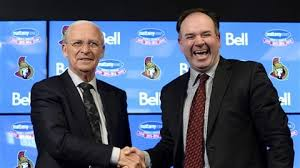
The Sens have not hit the halfway point of the season, but 38-games in (squeaking past the worst team in the league this afternoon), with no significant help coming on the goaltending front (the LTIR they get from Forsberg just makes room for Pinto), Ottawa is going to miss the playoffs again and I think it’s a fitting final note to the Pierre Dorion regime (the same that had been prematurely declaring the end of the rebuild since 2019). I’d argue Dorion was damaging the organization back from when he simply managed the draft and some blame has to be given to Bryan Murry and Eugene Melnyk for buying into his bullshit. You reap what you sow and Dorion had no idea how to build a winning team despite seeing examples year after year after year (as I went over exhaustively in the link above).
Unfortunately for new GM Steve Staios (how many former NHL players are GMs now? Verbeek, Sweeney, Adams, Conroy, Kekalainen, Nill, Yzerman, Blake, Guerin, Fitzgerald, Drury, Briere, Grier, Francis, and MacLellan–16 if my counting is correct), he has a team that’s too good to rebuild (with a fanbase exasperated by the Dorion rebuild), but not good enough to compete. He has assets he can play with, but not a lot given the teams problems.
I went through the problems about a month ago, so a quick recap: Goaltending: Korpisalo and Forsberg have been about equally bad, but we’ve had ex-Sens goaltenders post up fantastic numbers behind good defensive clubs (Filip Gustavsson and Cam Talbot). Clearly, it’s not just the goaltending (and shoutout to Joey Daccord, yet another discarded Sens ‘tender who has found success)–how goaltending coach Zak Bierk still has a job is mystery–you can see the erratic results in the minors as well. Depth: at forward and on defense is not good enough. There’s a long list of players who should not be in the lineup and there’s very little in the system that’s NHL ready to plug those holes.
What can they do? Move bodies. A lot of bodies. Here’s who I would move and why (cap number included), keeping in mind that realistically the Sens (even if they wanted to) could not trade that many players before the deadline so I’ve highlighted them in probability (green absolutely will go, orange is 50-50, and red is my wishful thinking):
Tarasenko (5.0) – he’s on everyone’s list because of his expiring contract, although that will reduce what you can get for him (the Sens will have to take a player back for cap reasons) Joseph (2.95/26) – Ian Mendes has bought into the hype again (what’s the definition of insanity?), but you sell high and he can’t get higher than now (the Sens problem is his contract–term/cost) Kubalik (2.5) – he’s 28, on an affordable expiring deal, and you have a prospect who can fill his roll in Jarventie (if not this season, perhaps next), so get something for him Brannstrom (2.0) – nothing against him, but there’s no space for his role on the team assuming we’re keeping both Chabot and Chychrun (which I would); his age (24) and decent season should increase what you can get for him Hamonic (1.1/25) – the wheels have fallen off (just like they did in Vancouver); he really shouldn’t have been retained [After I posted this The Athletic listed him as the biggest underperformer on the team, cf, along with Kubalik above] Kastelic (0.835/25) – there are plenty of suckers for truculence in the league–he’s averaging less TOI than Smejkal when he’s in the lineup–time to go!) MacEwen (0.775/26) – no one plays less than he does–if you don’t trade him you’ll have to buy him out (which I would do if no one will take him); alternatively you permanently bury him in Belleville Kelly (0.7625) – he’s on the verge of a career year (over 82 games a whole 15-points) and he’s cheap, but he’s not so good in his role that you can’t replace him with a player with more upside
You’ll note one name I constantly deride is not on this list: JBD. Why? It may be a fluke, but he hasn’t been the trainwreck that he was in the AHL (perhaps the better structure in the NHL makes it easier for him). He’s so cheap (0.805) that he’s harmless to keep if you are shifting out a large number of players (as I’m suggesting). So for now I am holding back on my policy of firing Bernard-Docker straight into orbit.
There are two other players to discuss: Giroux, not because the team wouldn’t want him, but if he wants out. As a player-directed event, we can’t know if that’s an issue, so we’ll leave it be. The other is Zub, largely because of the cap hit and term–I think he’s overpaid (4.6), but it’s not egregious and Sens get cap relief next season, so I doubt he moves.
What about the pipeline Staios is inheriting? How are things in Belleville? On an individual basis it’s a mixed bag. There are some odd things happening (no idea what coach Bell is thinking replacing Lassi Thomson on the PP with Jacob Larsson, who has the offensive instincts of a dead whale). Among the prospects Crookshank and Jarventie are the only ones who have been consistent (although the latter is currently hurt); Sokolov is slowly getting over the worst start of his career; Guenette had a fantastic start but has hit a wall (five game pointless streak and 4 over his last 12); Thomson‘s numbers have cratered (at least in part due to the PP change); T. Boucher and Ostapchuk are finding their feet, and so on. Kleven is the one guy, along with the aforementioned at the top, who might be able to make the transition, but I’d leave him in Belleville for as long as you can to get him the reps as a pro. He’s not a dominant AHLer (yet at least), so he’s going to be a depth player in the NHL if he comes up.
As for the older prospects Dorion gambled on, Smejkal has a lot of components you like, but he’s slow, doesn’t use his size, and doesn’t generate enough offense to make the leap (at 27, he has to be ready now). For the younger Matinpalo (25), defensively he’s got the tools and like all Finnish players the physical side isn’t an issue. The concern for him was production and keeping in mind he isn’t on the PP I’m not convinced there’s enough there. I think he was intimidated during his NHL audition so fans did not get a chance to see him play his game (which is quite good defensively). In a dead season after some moves, I’d be content to see if he can handle being a 6 on the blueline, but whether he has a long term future or not remains in doubt. None of the other assorted veteran players taken off the scrapheap have stood out (Highmore and Currie are underperforming, while Pilon has been average, and there’s still no reason for Imama to be there at all).
What about prospects not currently in the org? Let’s start with those signed: Toure, 20, RD (OHL 25-6-6-12) – undrafted; an improvement over last year (as you’d expect from an older player), but unclear how well his talent will translate Hamara (3-87/22), 19, LD (OHL 33-1-11-12) – improvement over last year, but like Toure, I don’t know how well it translates and since he’s not a big guy you want to see numbers Donovan (5-136/22), 19, LD (OHL 36-9-21-30) – about the same pace as last year, but it’s good to see him maintain high numbers Pettersson (3-72/22), 19, RW (SHL 22-0-1-1) – roughly the same production in the men’s league as last year, which is a bit disappointing (but not yet a big deal yet) The bottom three all played in the WJC (absent Russia, making it feel like the 84′ Olympics–does it really matter?), but only Hamara had good results there. It also feels odd that all three OHLers have been traded, but trivial matters aside, nothing that’s happened staples any of these guys as significant NHLers in the near future (if at all).
How about the unsigned? Halliday (4-104/22), 21, CL (NCAA 21-6-15-21) – similar to last year Wallberg (6-168/22), 20, DL (NCAA 21-1-12-13) – these are good numbers given his unremarkable USHL season prior Nordberg (2-64/22), 19, LD (USHL 24-1-10-11) – so-so numbers in a fairly weak junior league O’Neill (5-143/22), 19, RW (NCAA 14-2-2-4) – coming off pretty terrible USHL numbers last year, this isn’t too bad Reidler (5-151/22), 19, GL (USHL .902) – he’s played well Dyck (7-206/22), 19, CL (NCAA 18-0-7-7) – switched schools and the results have improved Nikitin (7-207/23), 19, GL (BCHL .847) – getting caved-in by tier-2 (which is still a big step-up from the Kazakh league) Van Tassell (7-215/23), 19, CR (NCAA 12-0-1-1) – unimpressive numbers from an unimpressive USHLer Stanley (4-108/23), 18, RD (NCAA 14-1-2-3) – fine for a rookie blueliner Andonovski (5-140/23), 18, LD (OHL 41-3-17-20) – solid improvement over his prior season Beckner (7-204/23), 18, CL (USHL 29-8-14-22) – similar to his BCHL production
What’s clear here is that, other than Halliday, there’s nothing coming soon and that it’s unlikely what’s coming is anything other than potential depth. There’s always a chance for a surprise, but none of the numbers suggest it.
As for picks, Dorion has peddled away a great many of them. This is what the Sens have the next year (with me assuming they will get Boston’s first-rounder instead of Detroit’s while keeping their own this year and probably next): 2024: 1st (2; Bos); 2nd, 4th (3; Det/TB), 5th, 6th 2025: 1st, 2nd, 3rd, 4th, 5th, 6th, 7th 2026: 3rd, 5th, 6th 7th This means the Sens have to be in contention by 2026 because of all the capital jettisoned. Staios has to hit homeruns in this (2024) draft, since there’s nothing else on the board prepared for him. The team also has to go back to drafting for talent rather than focusing on grit. Can he do that with Dorion’s scouting team? I have no idea.
Where does this leave the Sens? They have excellent pieces: arguably a top-four (when healthy) and four top forwards in their prime (along with Giroux)–arguably six if Pinto/Greig continue developing, but we have to be careful with assumptions like that. The strange thing for Staios is that it’s what’s surrounding the talent that’s been neglected. He needs to shore up the bottom-six and bottom-pairing and restock the pool. That doesn’t mean drafting for a fourth-line center, that means drafting talented players who can be put in that role for while pressuring the person above them. That’s success–a team with talent throughout. The good thing about that is none of this requires blockbuster trades. It needs good drafting and smart moves and Staios can do both then the team isn’t far from turning this around–just not in time for this season.
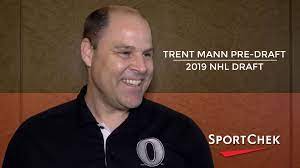
Let’s start off with the drafting philosophy with the advent of Trent Mann: take a sure thing with lower potential rather than take a risk and get nothing (you can read a poorly thought out fan iteration of this argument here). Let’s briefly put aside whether that’s a good idea or not and see how many ‘wins’ the team has had after the 2nd round since 2008 (the first draft controlled by Dorion and the first one where the Sens returned to trying to build through it)–we’ll look both at the high end players and the depth talent (excluding goaltenders because it doesn’t really apply), to see how either end of this philosophy has panned out (how the players are categorized is based on how scouts viewed them–going through 2010 you can see those assessments on this site, prior to that you’ll have to hunt a little harder; ‘winning’ is determined by NHL games played, cf, so it’s not an inherent assessment of their value as players).
Third Round Talent (0-2) Wins: None Losses: Jarrod Maidens* (12), Miles Gendron (14) Pluggers (1-2) Wins: Zack Smith (08) Losses: Jakub Culek (10) *Maidens never played due to injury
Fourth Round Talent (2-5) Wins: Chris Wideman (10), Jean-Gabriel Pageau (12) Losses: Andre Petersson (08), Tobias Lindberg (13), Todd Burgess (16) Undetermined: Christian Wolanin (15) Pluggers (2-5) Wins: Derek Grant (08), Marcus Sorensen (10) Losses: Timothy Boyle (12), Shane Eiserman (14), Filip Ahl (15) Undetermined: Ben Harpur (13)
Fifth Round Talent (1-2) Wins: Mike Hoffman (09) Losses: Robbie Baillargeon (12) Undetermined: Maxime Lajoie (15) Pluggers (1-4) Wins: Mark Borowiecki (08) Losses: Jeff Costello (09), Fredrik Claesson (11), Vince Dunn (13) Undetermined: Christian Jaros (15)
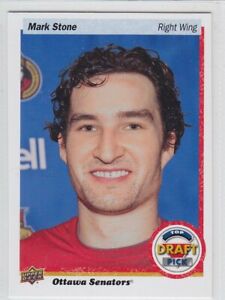
Sixth Round Talent (1-1) Wins: Mark Stone (10) Losses: None Pluggers (0-6) Wins: None Losses: Corey Cowick (09), Darren Kramer (11), Max McCormick (11), Chris Leblanc (13), Quentin Shore (13), Markus Nurmi (16)
Seventh Round Talent (1-7) Wins: Ryan Dzingel (11) Losses: Emil Sandin (08), Brad Peltz (09)*, Bryce Aneloski (10), Mikael Wikstrand (12)**, Kelly Summers (14), Francis Perron (14) Pluggers (0-2) Wins: None Losses: Michael Sdao (09), Jordan Fransoo (11) *There’s some indication that picking Peltz was a favour for Melnyk’s close friend (his father) **Refused to play in the league
Total Talent 5-17 (29%) Pluggers 4-19 (21%)
What’s clear in the numbers is that the org (up through 2017) was no better at identifying quality pluggers than talent. Obviously some of the scouting staff has changed over the years (three remain from 08, one from 09), but certainly Dorion’s history doesn’t betray evidence to support the change in philosophy. I’ll also briefly touch on the goaltenders over this period: Successes Robin Lehner (09, 2nd round) Failures Francois Brassard (12, 6th round), Jordan Hollett (17, 6th round) Uncertain Chris Driedger (12, 3rd round), Marcus Hogberg (13, 3rd round),* Joey Daccord (15, 7th round) *Given that he signed a four-year deal in Sweden it’s unlikely he’ll return to the league, but we don’t know the terms of the deal and goaltending careers are against the grain anyway, so for now he lands in the uncertain pile
Before we dive into the two drafts, let’s recall that the scouting consensus (so not the opinion of some, but the opinions of the vast majority of those paid to scout) is that the Sens left talent on the board when they made their picks–this isn’t a matter of debate or discussion, simply a fact, so the team is betting on the fact that they know better–do they? Time will tell, but not only does the past does not support that idea, it’s simply unlikely that Ottawa has better scouting acumen than the consensus overall.
Let’s address a response to criticism of individual players (those drafted or playing) that I’ve heard from people like Gord Wilson and others: these players are better than you are, ergo STFU (the most recent comment was in reference to Scott Sabourin, if you’re wondering). I’ve heard this sentiment many times from people covering the team and it’s profoundly absurd. Hockey is entertainment run by a cartel–it’s not making the world a better place–and as such it relies on the investment of its fans–no one is as invested as someone frothing mad about how a player is performing. That passion doesn’t excuse poor behaviour, but Gord (& others) tends to associate any criticism as being uncalled for. Making assessments is human nature (how many voters actually understand what they are voting for or could hold a political position?). Discussion and opinion is not only a normal part of human behaviour, but absolutely necessary to keep the sport alive, so any attempt to kill it is inherently pernicious. Let’s wrap this up to point out that this kind of thing only comes up regarding good-in-the-corners, salt-of-the-earth players–criticizing those with skill is never called out or questioned. Why this is the case in hockey I have no idea (perhaps the long standing way of differentiating Canadian hockey from everywhere else has made it part of self-identification). During the dead puck era I think players like that were useful, as were enforcers when they were required, but now? It’s a terrible opinion, but I don’t expect it change.
2020 1-3 Tim Stuetzle, C/LW, 6’0, Jan/02, DEL, 20-21 NHL 53-12-17-29 The pick was Ottawa’s via the Erik Karlsson trade in 2018. There are plenty of scouting reports to read about him (Pronman, Wheeler, summaries, etc) and with a full season in the NHL one can dig into his stats and have a good old time. He’s a skilled player, so of course I like the pick 1-5 Jake Sanderson, DL, 6’1, July/02, USDP, 20-21 NCAA 22-2-13-15 Son of former NHLer Geoff (who was one of the best skaters in the NHL); reading Pronman’s recent article that included him, he sounds like all the recent high Sens picks on the blueline: a lot of hustle, a lot of competitiveness, solid defensively, but with limited offense–you get the feeling Dorion/Mann are putting all their eggs in the Chabot basket to drive the play. My reaction to him is the same as the rest: show me at the pro level and I’ll become a believer 1-28 Ridly Greig, LW, 5’11, Aug/02, WHL, 20-21 21-10-22-32 The pick was Ottawa’s via the Jean-Gabriel Pageau trade in 2020; he’s the son of former NHLer Mark; like Jarventie below, he’s among the youngest eligible selected; there were concerns about his ability to play disciplined hockey and his skating (cf), but the former seems to have improved; because of his age it’s either the WHL or NHL for him and I think the latter is what’s on the menu; given his size and style of play there has to be a concern about his body breaking down earlier in his career (he makes me think of 2011 pick Stefan Noesen) 2-33 Roby Jarventie, LW, 6’3, Aug/02, Ilves, 20-21 48-14-11-25 Son of former Liiga veteran Martti. There’s a good breakdown of him pre-draft from Ary and Colin which provides the proper context for him (among the youngest eligible for the draft, playing against men in the Mestis, being used as a third-liner and defensively while breaking the rookie scoring record, etc); we again have the concern about his skating, but Ottawa (long before Dorion) has always believed that’s fixable 2-44 Tyler Kleven, DL, 6’4, Jan/02, USDP, 20-21 NCAA 22-5-2-7 The pick via Toronto (in exchange for 59th and 64th picks, Roni Hirvonen and Topi Niemela); there’s an amusing little profile of him from A & C (who don’t care for him at all, but sniffed out the Sens would like him); in his first year as a prospect Pronman projects him as a bottom-pairing player; it’s very much a wait-and-see attitude for me 2-61 Egor Sokolov, RW/LW, 6’4, Jun/00, QMJHL, 20-21 AHL 35-15-10-25 The pick is from Dallas via the Mark Stone trade in 2019; an overager where the concerns for him were whether his talent and skating would translate at the next level; at the AHL-level Sokolov showed no impediment with playing his game–will it translate? It’s hard to say, although given his size the Sens will certainly give him the opportunity 3-71 Leevi Merilainen, GL, 6’2, Aug/02, Karpat, 20-21 .934 The pick is via the Dylan DeMelo trade in 2020; an off-the-wall pick because in his draft year he was stuck behind other Finnish netminders, so he didn’t play internationally; he had an outstanding first year as a prospect and this caused folk to upgrade their estimates to potential NHL backup levels; I think the Sens under Dorion have been solid in projecting goaltending talent (although their pro evaluations remain, in all areas, underwhelming) 5-155 Eric Engstrand, LW/RW, 6’4, May/00, Malmo, 20-21 SHL 45-1-4-5 The pick is via the Mike Condon trade in 2019; an overager, you can see a brief profile of him from A & C pre-draft, but there’s not a lot of material on him (on the surface he reminds me of Filip Ahl in 2015 and Markus Nurmi in 2016, both big European power forwards who failed to develop) 6-158 Philippe Daoust, C/LW, 6’0, Nov/01, QMJHL, 20-21 21-6-22-28 The pick is via the Mike Hoffman trade in 2018; there’s not a lot of material on him (cf) and he’s taken the Hoffman route of being waived out of the OHL only to find a home in the Q (I’m not saying he has that kind of ceiling, just that he’s had that route to getting drafted) 6-181 Cole Reinhardt, LW, 6’1, Feb/00, WHL, 20-21 AHL 33-6-6-12 The pick is via the Chris Wideman trade in 2018; an overager who benefited from playing with Sokolov in Belleville, should he find pro success he’s taking a very unlikely path to get there (not just because he’s overage, but because of his middling production in junior)
They seem to have landed a complete stud in Stuetzle, so that’s fantastic (a lot of fans may not appreciate just how hard it is for a teenager to make an impact at the NHL-level). I’m not on the Sanderson train yet (how many Lassi Thomson’s do we need?), but I’d love to be surprised (his father was a fun player to watch). A number of the prospects intrigue me–both Finns, Sokolov, as well as Daoust (the Sens occasionally hit homeruns with late picks from the Q and who doesn’t miss J-G Pageau?). I feel like Kleven, Reinhardt, and Engstrand are much more likely to fail out in the AHL, but it’s far too early to say. All-in-all, this isn’t a bad draft from my perspective and I don’t feel like the Sens completely wasted their first round (at a guess, I’m thinking it will closely approximate the 2011 draft).
2021 1-10 Tyler Boucher, LW, 6’1, Jan/03, USDP 12-6-5-11 Son of former NHLer Brian; the scouting consensus is pretty simple: he’s hard to play against, but does he have the talent to make an impact as a pro? You get a sense of his issues via Ary; this has the whiff of another top-ten pick from years ago–Dylan McIlrath–a guy who was very hard to play against, but simply didn’t have enough talent to be an NHL pro (a Sens example is Jared Cowen); for the Sens sake, let’s hope they truly do know better 2-39 Zack Ostapchuk, LW, 6’3, May/03, WHL 22-7-9-16 The pick via the Erik Karlsson trade in 2018; looking at scouting reports it’s clear he’s a work-in-progress–a player with a lot of potential, but a big hill to climb; Pronman doesn’t believe in his hockey sense and the kind of changes he needs aren’t typically the ones that can be easily coached; that said, I’m happy to gamble on skill 2-49 Benjamin Roger, DR, 6’4, Nov/02, OHL DNP The pick acquired in exchange for the 42nd (Francesco Pinelli); there’s not much information about the player, but he trained with Belleville staffer Jeremy Benoit in the offseason, which is likely how the Sens became attracted to him (historically a number of Dorion’s picks are via connections); the concern is how much talent he actually has behind his big, mobile frame (does he have the limitations of a Ben Harpur, or is there more to him?) 3-74 Oliver Johansson, CL, 6’0, July/03, Timra Allsvenskan 5-3-0-3 One of the younger players picked in the draft; scouting reports are few and far between, but he performed well across three leagues in his draft year and is a good skater who plays both ends of the rink (a hard worker, which is very much a theme in who the Sens pick); I expect the Sens to be patient about his development 4-123 Carson Latimer, RW, 6’1, Jan/03, WHL 22-5-11-16 The pick acquired in exchange for the 136th and170th (Robert Orr and Bryce Montgomery); everyone agrees he’s a great skater, but what’s not clear is what else he is (in part, perhaps, because of his usage) 7-202 Chandler Romeo, DL, 6’5, July/03, OHL DNP The big blueliner reminds me a lot of Ben Harpur–big, can skate, but what else can he do? The Sens think he has the hands to get the puck moving and not be a one-dimensional defender, but that’s typically what they say of every blueliner like this that they draft, so we’ll have to wait and see
What do I think of the 2021 draft? All of these players are wait-and-see types, with none inherently exciting. Because I wasn’t paying attention to the draft class, I’m not fulminating over what could have been, but the various flags about the prospects are worth keeping in mind–during Dorion’s time the Sens have completely failed during a draft before (2014). With that said, with two players who didn’t play the previous season and an obscure Swede, I am intrigued to see how those players develop.
One thing that’s changed under Dorion–and this is pre-Trent Mann–is the Sens no longer draft enforcers. The last fighter they picked was Darren Kramer in 2011, but since then (with fighting spiraling into oblivion) they’ve given up picking them. The team still signs players like that (Sabourin is an example), but at least have realized it’s not worth wasting a draft pick.
I should end this on what seems obvious to me, but perhaps isn’t to readers: I’d actually like all these players to turn out and for Ottawa to be an elite team. That’s always been the dream. I’m simply doubtful that will be the case given Dorion’s checkered track record, the team’s questionable approach at the draft, and an unlikable fool who owns the team.
This article is written by Peter Levi (@eyeonthesens)
Here are some bits & pieces: —Filip Gustavsson‘s new contract is typical of the Sens (a two-year deal with the second being one-way); I’m less certain about his abilities given that in the past he has struggled with being ‘the guy’ while doing very well in spot duty (cf)–has he turned the corner? It won’t matter if Mads Sogaard is ready for prime time, but it will be interesting to watch. –In retrospect I should have included Erik Brannstrom in my BSens lineup speculation; to inject him he slides into the top spot on the right side, shifting Thomson down to the second pairing, Bernard-Docker to the third, and Williams to the pressbox. I just don’t think that situation can remain tenable throughout the season and trading a blueliner must be on the menu for the Sens. –I stopped reading The Athletic around the same time I stopped writing this blog, so returning to it almost two years later I was surprised to find that only Ian Mendes covers the Sens (RIP articles from Nichols, who moved to Substack–you can read a bit of a word salad from him on the draft, which can be boiled down to “Will it pan out? Time will tell,” which feels like Nichols resting his behind firmly on the fence–read him at his best here and here–I like the latter particularly). –I skipped covering the last two Sens draft, but I’m not surprised that the conservative, grit-loving Trent Mann has continued his philosophy (cf; the hiring of Pierre McGuire, an anti-analytics guy, is yet another conservative move by the org). As I mentioned when reviewing prior drafts, it’s simply too soon to assess Mann’s work–maybe he’s a genius, but Occam’s Razor says he’ll do no better than his predecessors (what’s genuinely in question is how many stars he lands). I wanted to cover The Silver Seven‘s annual prospect ranking, but the caliber of writers from the site is so uneven I don’t think it’s feasible. –There’s a great article from Scott Wheeler about how scouts assess players (there’s no real surprises, but he goes over the importance of context–ie things like how playing with Daniel Sprong inflated Filip Chlapik’s value). I’m gratified to see that my old idea of using third party rankings to create a scouting consensus for draft picks has become normalized and is widely available–it’s a simple idea and I have no idea why it took so long to proliferate–however much some may poopoo the idea, it’s the only tool fans have to access professional assessment. –You can watch/listen to an interesting interview with Sens prospect Egor Sokolov. –I think in my next post I’ll do a review of the Sens 2020 and 2021 drafts, as it will help me familiarize myself with the prospects. I’ve noticed the fan insanity over Jake Sanderson is almost at the same fever pitch as Brady Tkachuk and we’ll see if that falls as flat with me as it does with the later. –For those interested in assessing the Sens at the draft, check out my review of the Sens 2008-14 draft record–there’s some fascinating things to be observed in the data (as well as the relative value derived from them). I think I should have included my old review of the Sens AHL tendencies which overlaps that period of time and shows the shifting philosophy from Tim Murray to Randy Lee.
The Sens ECHL affiliate, the Atlanta Gladiators, have been busy signing players in the off-season. A few of these players could see time in Belleville, so I thought I’d briefly take a look at them.
Defense Tim Davison, 27-28, DL, ECHL 0.38 (ECHL 0.44) The undrafted NCAA grad spent most of last season with Greenville; this will be his fourth pro season Dalton Thrower, 27-28, DR, tier-3 Sweden 0.16 (ECHL 0.20) A second-round pick by Montreal back in 2012, he hasn’t seen AHL ice since 2015-16, but as a gritty player he may have some appeal as a call-up Greg Campbell, 26-27, DL, DNP (ECHL 0.14) The undrafted NCAA grad took last season off and returns for his sophomore attempt as a pro. Josh Thrower, 25-26, DR, SPHL 0.18 (ECHL 0.11) The brother of Dalton, the former WHLer has established himself as a depth ECHL blueliner and wouldn’t be on the BSens radar Malcolm Hayes, 26-27, DR, SPHL 0.08 (ECHL 0.11) Another undrafted NCAA grad, he’s spent most of his short pro career in the SPHL (a feeder league into the ECHL) Zach Yoder, 27, DR, SPHL 0.13 (ECHL 0.50) The undrafted NCAAer spent his first (brief) pro season in the SPHL; he’s a local kid (to Georgia) and he’s big, for whatever that’s worth
Forwards Derek Nesbitt, 39-40, LW/RW, DNP (ECHL 0.89) An effective AHL producer (0.60) who has played in Atlanta five straight seasons prior to his year off; at 39 I’m not sure how much to expect from him, but I don’t think the BSens will call him up (he hasn’t had a call-up since his last full-time season in the AHL in 2013-14) Cody Sylvester, 29-30, C/LW, ECHL 0.81 (ECHL 0.80) Undrafted WHLer has spent most of his pro career in Germany (failing out of the DEL, so it’s mostly in tier-2); as a productive ECHL scorer there’s a small chance he could be called-up Kamerin Nault, 26, LW, ECHL 0.15 (ECHL 0.77) Canadian university grad is entering his fourth pro season; each year he’s received call-ups to the AHL, so that makes the odds of the same happening this season higher than most of the other players Michael Pelech, 32, CL, ECHL 0.55 (ECHL 0.75) Former 6th-round pick by LA, he’s had a very long and productive ECHL career; his last AHL call-up was in 2015-16 Luke Nogard, 27-28, CL, ECHL 0.39 (ECHL 0.56) Undrafted NCAA grad his entering his fourth pro season; he’s never received an AHL call-up Hugo Roy, 24, CR, ECHL 0.46 (ECHL 0.45) Undrafted QMJHLer is entering his third full pro season; as a middling producer he’s not likely on the BSens list of call-ups Matthew Wedman, 22, ECHL 0.24 (ECHL 0.24) A 7th-round pick by Florida in 2019, last season was his first as a pro and he was unable to translate his WHL production to that level Tommy Besinger, 27, CR, SPHL 0.68 (SPHL 0.69) The undrafted NCAA grad his entering his third year as a pro and will be looking to avoid the SPHL
I’ll reiterate, it’s unlikely we see many if any of these players, but stranger things have happened (due to injuries or other circumstances), particularly with older, failed prospects (cf).
This article is written by Peter Levi (@eyeonthesens)
Pierre Dorion became the Sens GM in the 2016-17 season, but prior to that event he ran the drafts beginning in 2008 and I wanted to take a look at the older drafts which can be properly assessed to see what we can glean (those players in bold below played at least 200 NHL games). All of these drafts had Bryan Murray serving as the GM.
2008 (12 scouts; Sweden 3, WHL/BCHL 2, USHL 1, CJHL 1) 1-15 Erik Karlsson (D) Sweden-Frolunda 788-143-482-625 (San Jose) Trade (2018): Chris Tierney, Rudolfs Balcers, Dylan DeMelo, Josh Norris, and the picks used for Tim Stuetzle and Zach Ostapchuk 2-42 Patrick Wiercioch (D) USHL-Omaha 268-16-58-74 (tier-2 Europe) 3-79 Zack Smith (C) WHL-Swift Current 662-98-106-204 (UFA) Trade (2019): Artem Anisimov 4-109 Andre Petersson (F) Sweden-HV71 1-0-0-0 (successful KHL career) 4-119 Derek Grant (C) BCHL-Langley 310-37-48-85 (Anaheim) 5-139 Mark Borowiecki (D) CJHL-Smith Falls 397-15-37-52 (Nashville) 7-199 Emil Sandin (F) Sweden-Brynas DNP (tier-2 career in Sweden)
A very successful draft with five of seven players hitting the 200-game threshold. We can argue over the caliber of these players, as all save Karlsson merely provide depth, but Karlsson is a genuine star. Both of the misses in the draft were undersized skilled players from Sweden.
2009 (12 scouts; USHL/USHS 3, Sweden 2, WHL 1, QMJHL 1, OHL 1, NCAA 1) 1-9 Jared Cowen (D) WHL-Spokane 249-15-31-45 (retired due to injury) Trade (2016): Dion Phaneuf, Cody Donaghey, Casey Bailey, Matt Frattin, and Ryan Rupert; Phaneuf was subsequently traded (2019) for Marian Gaborik and Nick Shore; Gaborik was then traded (2020) for Braydon Coburn, Cedric Paquette, and a 2nd-round pick in 2022; the 7th-round pick acquired for Shore was included in the Duclair trade 2-39 Jakob Silfverberg (F) Sweden-Brynas 605-146-161-307 (Anaheim) Trade (2013): Bobby Ryan 2-46 Robin Lehner (G) Sweden-Frolunda .918 (Vegas) Trade (2015): The pick that turned into Colin White 4-100 Chris Wideman (D) NCAA-Miami 181-16-29-45 (Montreal) Trade (2018): Pick that turned into Cole Reinhardt 5-130 Mike Hoffman (C/W) QMJHL-Drummondville 545-189-206-395 (Montreal) Trade (2018): Mikkel Boedker, Julius Bergman, and the pick that turned into Philippe Daoust; Bergman was included in the Abramov trade 5-146 Jeff Costello (F) USHL-Cedar Rapids DNP (retired after one ECHL season) 6-160 Corey Cowick (F) OHL-Ottawa DNP (short minor league career) 7-190 Brad Peltz (F) USHS-Avon DNP (retired after one ECHL season) 7-191 Michael Sdao (D) USHL-Lincoln DNP (ECHL career)
Another five players hit the threshold (I’m assuming Wideman will do that this season), so it’s another good draft. We see the beginnings of a Dorion tendency to roll the dice on gritty players which doesn’t work out in this sample–of the four players who never made it, three are in that category (Peltz is the exception). There’s no question that Cowen was a poor top-ten pick and that the Sens received little value for the other quality draftees before they were moved. We continue a tendency for the org to give-up on goaltenders early (Brian Elliott was drafted in ’03, but turned pro right when Dorion joined the org–I’m not saying that decision was his, simply that the impatience began during his tenure).
2010 (11 scouts; Sweden 1, QMJHL 1, WHL 1, USHL 1) 3-76 Jakub Culek (F) QMJHL-Rimouski DNP (brief minor league career) 4-106 Marcus Sorensen (F) Sweden-Djurgardens 226-31-33-64 (UFA) 6-178 Mark Stone (F) WHL-Brandon 504-170-276-446 (Vegas) Trade (2019): Oscar Lindberg, Erik Brannstrom, and the pick that turned into Egor Sokolov 7-196 Bryce Aneloski (D) USHL-Cedar DNP (brief minor league career)
The success ratio remains good, although the org gave up on Sorensen early and it was San Jose who made use of him. Stone is the obvious ‘win’, although the org benefited from just four full seasons with him before discarding him as part of the rebuild.
2011 (11 scouts; OHL 3, Sweden 2, WHL 2, USHL 2, QMJHL 1) 1-6 Mika Zibanejad (C/W) Sweden-Djurgardens 604-200-234-434 (NYR) Trade (2016): Derick Brassard and the pick that turned into Luke Loheit; Brassard was traded (2018) for Filip Gustavsson, Ian Cole, a pick flipped to draft Jacob Bernard-Docker and Jonathan Tychonick, and a pick flipped to draft Mads Sogaard 1-21 Stefan Noesen (C/W) OHL-Plymouth 205-31-23-54 (long minor league career) Trade (2013): part of the Silfverberg/Ryan trade above 1-24 Matt Puempel (F) OHL-Peterborough 87-11-5-16 (long minor league career) Waiver Claim (2016) 2-61 Shane Prince (C) OHL-Ottawa 128-12-26-38 (successful KHL career) Trade (2016): for a pick that was flipped as part of a deal to draft Logan Brown 4-96 Jean-Gabriel Pageau (C) QMJHL-Gatineau 489-103-109-212 (NYI) Trade (2020): pick used to draft Ridly Greig and another used in a trade that saw them draft Tyler Kleven 5-126 Fredrik Claesson (D) Sweden-Djurgardens 161-7-21-28 (lengthy minor league career) 6-156 Darren Kramer (F) WHL-Spokane DNP (long minor league career) 6-171 Max McCormick (F) USHL-Sioux City 83-8-5-13 (long minor league career) Trade (2019): J. C. Beaudin 7-186 Jordan Fransoo (D) WHL-Brandon DNP (played Canadian university hockey) 7-204 Ryan Dzingel (F) USHL-Lincoln 372-82-98-180 (Arizona) Trade (2019): Anthony Duclair, a second that was part of the Matt Murray deal, and another second used to acquire Derek Stepan; the org re-acquired him in 2021 for Alex Galchenyuk and Cedric Paquette
This draft was meant to be the start of a re-build and the org batted well above average in having four players hit the 200-game threshold, but it’s undeniable that they wasted Zibanejad as an asset and received a poor direct return; they also bombed out on their other two first-round picks.
2012 (12 scouts; OHL 2, USHL/USHS 2, WHL 1, QMJHL 1, Sweden 1) 1-15 Cody Ceci (D) OHL-Ottawa 549-37-106-143 (Edmonton) Trade (2019): Nikita Zaitsev, Connor Brown, and Michael Carcone 3-76 Chris Driedger (G) WHL-Calgary .929 (Sea) 3-82 Jarrod Maidens (F) OHL-Owen Sound (retired due to injury) 4-106 Timothy Boyle (D) USHS-Prep DNP (short minor league career) 5-136 Robbie Baillargeon (F) USHL-Indiana DNP (brief minor league career) 6-166 Francois Brassard (G) QMJHL-Quebec DNP (Canadian university to minor leagues) 7-196 Mikael Wikstrand (D) Sweden-Mora (refused to play)
While Driedger may eventually hit the threshold, this was an abysmal draft as Ceci was highly overvalued (as witnessed by the poor return when traded). Unlike in prior years, there was an attempt to target skill in the later rounds, but nothing worked out (although one could argue that Wikstand might have been an NHL player–we’ll simply never know).
2013 (12 scouts; Sweden 2, WHL 1, OHL 1, QMJHL 1, EJHL 1, NCAA 1) 1-17 Curtis Lazar (C) WHL-Edmonton 334-27-47-74 (Boston) Trade (2017): Jyrki Jokipaaka and the pick used for Alex Formenton 3-78 Marcus Hogberg (G) Sweden-Linkoping .894 (back in Sweden) 4-102 Tobias Lindberg (F) Sweden-Djurgardens 6-0-2-2 (tier-2 Sweden) Trade: part of the Cowen/Phaneuf trade above, then reacquired him in a minor league deal in 2018, then included in the Stone trade above 4-108 Ben Harpur (D) OHL-Guelph 137-1-13-14 (UFA) Trade (2019): part of the Ceci trade above 5-138 Vincent Dunn (F) QMJHL-Rimouski DNP (short minor league career) 6-161 Chris LeBlanc (F) EJHL-South Shore DNP (minor league career) 7-168 Quentin Shore (F) NCAA-Denver DNP (short minor league career)
An equally horrendous draft, as Lazar is an even bigger miss than Ceci (someone who struggled at the AHL-level, but whose pedigree has allowed him to fumble around the NHL for years). The rest of the assets were a mix of grinders and skilled players, none of whom panned out.
2014 (13 scouts; USHL/USHS 2, Sweden 1, QMJHL 1, CCHL 1) 2-40 Andreas England (D) Sweden-Djurgardens 33-0-3-3 (minor leaguer) 3-70 Miles Gendron (D) USHS-Prep DNP (minor leaguer) 4-100 Shane Eiserman (F) USHL-Dubuque DNP (brief minor league career) 7-189 Kelly Summers (D) CCHL-Carleton DNP (tier-2 Germany) 7-190 Francis Perron (C) QMJHL-Rouyn-Noranda DNP (tier-2 Sweden)
The worst draft in the sample size. It’s very rare for an NHL team to have no successes, but Ottawa managed it here. The picks were a mix of grinders and skill, but none are even quality AHL players. You’d expect consequences in the scouting ranks after such a result (not just for this, but the prior two drafts), but that’s not the case.
2015 (13 scouts; QMJHL 3, USHL/USHS/USNTDP 3, Sweden 2) 1-18 Thomas Chabot (D) QMJHL-Saint John 254-35-115-150 1-21 Colin White (C/W) USNTDP 200-33-55-88 2-36 Gabriel Gagne (F) QMJHL-Victoriaville DNP (minor leaguer) 2-48 Filip Chlapik (C/W) QMJHL-Charlottetown 57-5-6-11 (released) 4-107 Christian Wolanin (D) USHL-Muskegon 61-5-13-18 (LA) Trade (2021): Michael Amadio 4-109 Filip Ahl (F) Sweden-HV71 DNP (tier-2 Europe) 5-139 Christian Jaros (D) Sweden-Lulea 83-1-13-14 (NJ) Trade (2021): Jack Kopacka and a 7th-round pick in 2022 7-199 Joey Daccord (G) USHS-Prep .894 (Seattle) Taken in the Expansion Draft
The analysis of this draft is still still up in the air, although there are two obvious successes. Wolanin, Jaros, and Daccord could potentially hit the threshold, although it’s unlikely all of them will. The mix of players echoes the previous two years, but the quality of the picks are better (despite a big miss on Gagne). We again see the common trend of the org not getting value back for prospects–none of the assets remain for trading the two blueliners, which means they were simply given away.
Let’s summarize excluding 2015’s results (since they are still in flux). Here are the hits to misses from 2008-14: 2008: 5-7 (74%) 2009: 5-9 (55%) 2010: 2-4 (50%) 2011: 4-10 (40%) 2012: 1-7 (14%) 2013: 1-7 (14%) 2014: 0-4 (0%
That’s a linear decline under Dorion to that point. We know 2015 was a better draft and there is an organization change between 2014-15: Tim Murray’s departure to Buffalo. Can we put this all at Tim’s feet? I think that’s too simplistic, but it is worth noting. Let’s take a look at success by region (highlighting the significant players): US systems (3-14/21%): Wiercioch, Wideman, Dzingel Sweden (5-12/41%): Karlsson, Silfverberg, Lehner, Sorensen, Zibanejad WHL/BCHL 8 (5-8/62%): Smith, Grant, Cowen, Stone, Lazar OHL/CCHL/CJHL (4-9/44%): Borowiecki, Noesen, Prince, Ceci QMJHL (2-6/33%): Hoffman, Pageau
What’s fascinating is how heavily Ottawa invested in the American junior system despite no serious payoff. The org scored very highly in Sweden while completely ignoring the rest of Europe (no one drafted from any other European league). If you’re wondering, in terms of raw selection, here’s what’s happened from 2015-21 (the numbers represent the number of players from that system per draft): US systems: 13 (2.0 > 2.1) WHL/AJHL: 11 (1.1 > 1.8) QMJHL: 9 (0.8 > 1.5) Sweden: 6 (1.7 > 1.0) OHL: 4 (1.3 > 0.6) Finland: 3 (0 > 0.5) Germany: 1 (0 > 0.1)
The American fetish continues unabated, while the primary change is a decrease in Swedish/OHL prospects matched by an increase in QMJHL and WHL contributions. I think the scattering of Finnish prospects is related to Mikko Ruutu becoming the director of European scouting (Stuetzle, as a top-five pick, is irrelevant in terms of the org’s normal scouting preferences). It remains an oddity that despite being in Ontario the team has only dipped its toe into the local pond over the last 13 drafts. It’s also strange how consistently the Sens devalue European scouting–on average they have only two scouts based in Europe, which is a deplorable amount to cover the various leagues (meaning they have to lean heavily on tournament performances, which is a questionable guide). I get the feeling that the main reason for ignoring Europe is cost.
Another way to look at success is by round and we get some interesting results: First round (6-7): 2 of their best 6 picks are from this group (Karlsson and Zibanejad) Second round (4-5): 2 of their best are from here (Silfverberg and Lehner) Third round (1-6): extremely poor success rate with none of the best appearing Fourth round (4-9): better averages (although that success is early) with Pageau being the standout Fifth round (2-6): Hoffman is the standout (so again, early) Sixth round (1-6): you expect things to be more difficult later; Stone is the standout Seventh round (1-9): swinging for the fences is understandable
We have to take the results for first-rounders with grains of salt, since there’s pressure to play those players before giving up on them–I think this is illustrated by the number of best picks being even with the second-rounders. In theory the success ratios should be an inverted pyramid (reflecting the quality and consistency of the scouting group), but that’s not the case. It’s also worth keeping in mind that this period see’s the beginning of a rebuild (2011) that was rushed by a cash-strapped owner (sounds familiar, doesn’t it?). Pressure by ownership forces trades for success now and clearly that’s part of the problem with asset retention (along with being a smaller market). That should not, however, impact the quality of picks.
Finally, let’s ride one of my favourite hobby horses: relative success between skilled and truculent players (we have to exclude goaltenders from this discussion, along with Maidens, as injury prevented him from performing): Skilled (11-24, 45%) – This number includes all the best players Truculent/defensive (6-19, 31%) – Features the team’s biggest busts/disappointments (Cowen, Ceci, Lazar)
My argument for skill has always been the same: it’s rare and thus much harder to acquire–prohibitively expensive for Ottawa most of the time. The NHL is full of grinders and defensive players, so drafting for that is a waste of time. Clearly the team does not share my opinion.
I’m not sure there’s a clear conclusion to draw here. It’s interesting that Tim Murray arrived with Pierre Dorion and success at the draft declined until Murray’s departure. I hesitate to say that’s the only reason for the change, although going through the many scouts who have appeared throughout this time period provides no meaningful insight. I wish there was better evidence for the drafts from 2015 onward, but it’s quite simply too early to judge (for instance, 2016 might turn out to be a complete bust, or Logan Brown could turn a corner and it’s suddenly not as terrible). Regardless, food for thought and opinions are welcome.
This article is written by Peter Levi (@eyeonthesens)






/cdn.vox-cdn.com/uploads/chorus_asset/file/21938003/GettyImages_1228900120.jpg)




/cloudfront-us-east-1.images.arcpublishing.com/tgam/XWCTJXFMMJH2RER2WFPXZVGZDE)


/cdn.vox-cdn.com/uploads/chorus_image/image/46623876/usa-today-8669066.0.jpg)
 eyeonthesens