The make-or-break road trip for the team was a disaster, with both Buffalo and Washington passing them in the standings and the Islanders, Pittsburgh, and Florida having (slightly) better records over their last ten games. The young goaltenders have not been up to the task (this is no surprise with Mandolese, whose AHL-numbers regressed to his rookie season, while Sogaard has struggled much like he did in his sophomore season in Belleville). The team in front of them hasn’t made their lives any easier. I don’t think the losses themselves are what’s troubling to the fanbase, but rather how bad they’ve been. This isn’t doom and gloom for the future, but the path forward for this season seems out of reach (Dom Luszczyszyn has them at just 2% and Ottawa has the toughest schedule in the entire NHL for the rest of the year). If the Sens continue to falter, Dorion’s trades (recent and not) are going to come under scrutiny within the fanbase (as we can see below). The Sens have sacrificed so much draft capital (their first pick this year is in the 4th round) it means there’s no arriving hope to sell from prospects (the high-end players are already in the organization). I think the Sens are too good to tank completely, but the playoff dream has been shattered.
It’s not quite schadenfreude, but the current debate over Alex DeBrincat‘s future reflects what I said when they traded for him in the first place (echoed in September by Sean McIndoe of The Athletic): that he turns into merely a 1-2 year rental or underperforms (and in either case at great cost–1.5 seasons of Matt Duchene cost the Sens Bowen Byram, after all). Ottawa has cap issues that will particularly impact the future blueline (something the fanbase recognized six months later), so as I posed in the summer and Ian Mendes is asking now: what do you do with DeBrincat? His point production has been fine (a decline, but not a huge one), but his goal scoring has cratered (he’s on his worst goals-per-game pace since his third season in 2019-20). Pierre Dorion has a lot of pride and he struggles to admit mistakes–did he make one here? He’s not a 9 million dollar player, so if you want to keep him you have to sign him long term, but is he a long term solution? Three players have scored more than he has this season (Stutzle, Tkachuk, and Giroux), with Batherson essentially on par and Pinto would be there with different usage (not to mention Norris missing the season). If you have plenty of goalscoring, how many forwards can you pay top dollar for (does it makes sense to pay 32 million to just four forwards)? It will be interesting to see what happens over the next few months.
The Sens finally came to the realization that signing FA’s Kristians Rubins and Jayce Hawrlyuk was a pointless exercise. Both have been shipped out for a bag of peanuts (to Calgary and New Jersey respectively). I’ve seen it suggested that this is to make room for FA signings, but I’m not convinced by that (with Anton Forsberg and Josh Norris on injured reserve, the Sens had 3 contract slots open before they hit the ceiling of 50 already). Neither player counted towards the AHL-veteran cap, so I think it’s simply shipping out players who failed to meet expectations. The org has a desperate need in net in Belleville, so they had previously signed Dylan Ferguson (7-194/19 Dallas; who has been excellent after bombing out in Toronto). The bag of peanuts in return from New Jersey became Dylan Blujus, who was a second-round pick back in 2012. He has to be an improvement on Rubins, although to what extent remains to be seen.
We have bonafide good news with the Jakob Chychrun trade. As someone who loves picks, the Sens did give up a lot abstractly (the eleven herbs and spices: likely a 2023 1st, Washington’s 2nd in 2024, and Ottawa’s 2nd in 2026), but less than experts expected. For a team that desperately needs depth in all areas and possibly a starting goaltender, their draft cupboard is bare, especially this year. That being said, Chychrun is an excellent asset on a good contract (two more full seasons at excellent value) so he’s not just an acquisition for this year (like DeBrinkcatcould be) and he addresses one of the teams major concerns: the D. By some miracle he’s not another aging, lumbering blueliner of the type that Ottawa brass has been in love with for the last 25-years. Chychrun knows what a puck is and can even pass it to other players, so I like this move and while there’s always a chance for failure, thumbs-up to a GM who has been generally awful over his term. This deal has received universal praise (from the analytics and eye-test crowd), so Dorion deserves his due.
We have to re-visit my concerns when the Sens picked up DeBrinkcat: specifically fears that his production in Chicago was largely a byproduct of playing with Patrick Kane. While his pace is lower than with Chicago (the last two seasons he was 1.07 and 0.95 ppg, whereas this season he’s 0.86), there’s been no collapse or sign that he was something other than a contributing top-six player. Other concerns remain, but at least on the production side he’s been as-advertized.
We get a much more typical move when it comes to Nikita Zaitsev. I raised the Sens upcoming cap situation in September and it seems as though Dorion realized the only way to avoid the cost of buying him out was to trade him. However, a 2nd-round pick (2023) is a steep price (the 4th in 2026 I can live with). Am I glad Zaitsev is gone? Yes. But I think a better deal should have been made…last season (there was no reason to keep and devalue him into this year).
When the Sens signed Motte I had no idea what the point of it was. Apparently after most of the season Dorion didn’t either, as he jettisoned the depth forward to the Rangers for a cheaper depth forward (Julien Gauthier) and a late pick (7th or 6th, depending). Signing the forward wasn’t terrible by any stretch of the imagination, but seemed pointless for the Sens at this stage so I’m glad they moved on and have the option of walking away from Gauthier (perhaps he can replace the why-the-hell-did-they-retain-him Gambrell). We could get into a discussion about whether Parker Kelly is an actual NHL-player and so on, but by and large fourth-liners don’t matter much until you’re an actual Cup contender.
As the season progressed we hit the point where the media started asking the basic questions I had during the off-season. It had gone beyond coaching to roster construction, particularly the paper thin blueline and uncertain goaltending coming into focus. Given the deals above–jettisoning the useless Zaitsev and acquiring an excellent blueliner in Chychrun–helps change that narrative, as when healthy the Sens finally have a solid top-four. The bottom-six pairing is a mess and while the org likes JBD I have doubts and think Thomson is better, but neither seem to be ready right now. We can also quibble with Dorion’s bottom-six, but the trades, at least the Chychrun deal, are going to change the conversation for Dorion.
Dorion aside, the team remains fun to watch and I’m enjoying the fight to make the playoffs (actually making it isn’t my concern for this season).
What a disaster this season has been for the BSens. Plagued by injuries and the utter failure of free agents brought in to shore up their weak blueline. Despite all their problems, the team has been able to score, but they can’t defend and that’s despite stocking up the team with big, lumbering defenders. Firing the coach is simply deflecting blame, although assuredly Mann had impute on the kind of players they brought in. Here’s how things stand (the separation is division/conference):
Belleville Senators 22-26-5 7th/15th GF 4th/4th GA 5th/15th PP 5th/8th PK 5th/12th PIM 2nd/2nd I’ve marked players who missed significant time with injuries in red, with their age in brackets along with their career average where applicable or else their prior season if in the AHL; those performing above expectations would be in green, but none are
Forwards Jake Lucchini (27) 42-14-26-40 0.95 [NHL 11-1-0-1 0.10] avg 0.57 Coming off an AHL-contract last season with the BSens; originally undrafted but signed by Pittsburgh Egor Sokolov (22) 53-16-29-45 0.84 avg 0.79 Drafted 2-61/20 via the Mark Stone trade; this is the final year of his ELC Ridly Greig (20) 30-12-12-24 0.80 [NHL 11-1-3-4 0.36] WHL Drafted 1-28/20 via the Jean-Gabriel Pageau trade; this is his rookie season Philippe Daoust (21) 9-2-5-7 0.77 0.33 Drafted 6-158/20 via the Mike Hoffman trade; this is his rookie season Rourke Chartier (26) 28-14-6-20 0.71 [NHL 6-0-0-0] avg 0.60 Coming off an AHL-contract last season with the BSens; originally a San Jose pick (5-149/14) Roby Jarventie (20) 21-8-6-14 0.66 0.47 Drafted 2-33/20; this is his sophomore season Scott Sabourin (30) 46-16-13-29 0.63 avg 0.31 Brought back by the Sens after an injury-plagued season in Toronto; has a high-end AHL salary; undrafted, originally signed by LA Angus Crookshank (23) 52-19-13-32 0.62 0.84 Drafted 5-126/18; technically his rookie season, as he missed the last due to injury Cole Cassels (27) 45-6-22-28 0.62 avg 0.35 Signed to an AHL-deal, having played for the BSens in 20-21; yes, he’s the son of Andrew; originally drafted by Vancouver (3-85/13) Viktor Lodin (23) 28-6-9-15 0.53 0.80 Drafted 4-94/19; this is his rookie season Brennan Saulnier (29) 30-6-9-15 0.50 0.14 Acquired in an AHL-deal from Laval for a bag of peanuts (aka, future considerations); undrafted Cole Reinhardt (23) 53-8-17-25 0.47 avg 0.43 Drafted 6-181/20 via the Chris Wideman trade; while it’s his third season, because of the Covid shutdown he has one year left on his ELC Jayce Hawrlyuk (27) 18-3-5-8 0.44 avg 0.62 FA signing in the summer; originally a Florida pick (2-32/14) Matthew Boucher (25) 37-4-8-12 0.32 ECHL Signed to a PTO early in the season; undrafted Jarid Lukosevicius (28) 39-6-6-12 0.31 avg 0.28 Signed to a PTO early in the season; undrafted Matthew Wedman (23) 24-1-5-6 0.25 0.24 Signed an extension to his AHL-contract from last season
Defense Lassi Thomson (22) 37-3-20-23 0.62 [NHL 2-0-0-0] 0.59 Drafted 1-19/19 via the Duchene trade; this is his sophomore season Maxence Guenette (21) 53-2-24-26 0.49 0.39 Drafted 7-187/19; this is his sophomore season Jonathan Aspirot (23) 24-4-6-10 0.41 avg 0.40 Signed an ELC after one season on an AHL-contract; undrafted Jacob Larsson (25) 37-2-8-10 0.27 [NHL 7-0-0-0] avg 0.29 Signed as an FA after failing out of Anaheim; he spent five seasons with the Ducks Dillon Heatherington (27) 42-3-5-8 0.19 [NHL 3-0-0-0] avg 0.27 Coming off a one-year deal after a stint in the KHL, Dorion signed him to two; originally picked by Columbus 2-50/13 Kristians Rubins (25) 40-2-4-6 0.15 avg 0.20 Signed as a FA after failing out of Toronto; undrafted, the Leafs signed him Jacob Bernard-Docker (22) 27-1-2-3 0.11 [NHL 13-0-1-1 0.07] 0.15 Drafted 1-20/18 via the Brassard trade; this is his sophomore season Xavier Bernard (23) 17-0-1-1 0.05 0.09 Signed an extension to his AHL-contract from last season; originally drafted by New Jersey (4-110/18)
Goalies Mads Sogaard (22) .898 3.30 6-9-2 [NHL .919 2.65 3-0-1] .908 Drafted 2-37/19 as part of a pick-swap with the Rangers; this is his sophomore season Antoine Bibeau (28) .894 3.43 9-8-1 .905 Signed as a FA; originally drafted by Toronto (6-172/13) Kevin Mandolese (22) .882 3.49 5-7-2 [NHL .938 2.46 1-0-0] .901 Drafted 6-157/18, this is the final year of his ELC
It’s been an unfortunate season for Lodin, who has been repeatedly hurt and is unlikely to remain with the org because of it. I remain baffled at the hype surrounding Bernard-Docker, whose inability to move the puck at this level imposes severe limits on what he can do at the next. The mystery of why Aspirot was given an ELC remains (his AHL-season is fine, but he’s shown no sign of improvement in the four years he’s spent with the org). As I’d feared (link above) Rubins has been a lumbering, weaker version of Heatherington; the defensecorps in general has been a nightmare, even if it had remained healthy–Thomson is the one bright spot, but the org is obsessed with JBD. Finally healthy, Crookshank could not maintain the torrid pace he set when he first turned pro and that puts expectations of what he might be at a much more reasonable level (a more talented Max McCormick, perhaps). I’m as baffled by the Hawryluk signing now as when it was made–injuries aside, what does he bring to the team that it needs? The goaltending, unprotected by its lumbering blueline, has struggled and I suspect Mandolese has played his way out of the organization (Leevi Merilainen has had a good season in Finland).
A bit of trivia, but I find it funny that two former BSens are at or near the top of the AHL scoring pile: Michael Carcone, who had a terrible 2019-20 year with the BSens, leads the league, while Logan Shaw, who underperformed in his two seasons with Belleville (2020-22), is having a career year with Toronto.
Speaking of trivia, how are the two big European prospects the Sens gave up on doing? Markus Nurmi (with Nashville) has put up an unremarkable season for a 24-year old (48-12-12-24 to this point), so letting him go seems to have been the correct decision. Eric Engstrand is still in Sweden and the 22-year old is having a miserable year in the SHL (35-0-5-5). Thus far, no mistakes ala Marcus Sorensen (2010), besides having drafted them in the first place.
I haven’t posted in awhile, but unlike previous years I have been watching occasionally (both the NHL and AHL). Win or lose the org is more entertaining to watch. Prior to the season’s open I’d started writing about D. J. Smith and I wanted to continue on with those thoughts since they are so relevant right now. Let me quote myself from prior to the season:
I was glad to see people talking about D. J. Smith’s poor starts & how he makes his gravy when the team is already irrelevant. I say this not because of a specific animosity towards Smith, but because it’s a reality that ought to be discussed and kept an eye on (is he the victim of circumstances, or is there an underlying problem–this season will make that clear).
And, indeed, as the season progressed there isn’t a noticeable difference in results between this year and last (4-8-1). The team has scored more, but otherwise they are statistically very similar to last season. Dressing Zaitsev was bad enough that he was put on waivers, but this is something Smith shouldn’t have needed to experiment with to know. However, one bad blueliner isn’t enough (we also can’t know how much pressure Dorion put on Smith to attempt to use the overpriced veteran).
I raised the alarm about this possibility in the summer, but the rest of the fan sites and local media were silent–pumped up by various signings and re-signings. I was hardly a lone voice in the wilderness however, as outside the marketplace caution was raised and the poor start has barely impacted impressions at The Atlantic for the team (as Shayna Goldman says, “Trendy picks from preseason like the Senators have dropped off, too, because their defense is still awful“), as their various odds have shifted only a little (pre-season/now): Finish last place: 0% > 8.3% Playoff Team: 25.6% > 2.8% Stanley Cup Contender: 15% > 0% First Coach Fired: 17.9% > 19.4%
The most interesting category relates to D. J. Smith, whose assumed future for The Atlantic‘s staff has barely been impacted by yet another horrific start.
There’s a lot to unpack about the early season, from losing Josh Norris to Artem Zub‘s being irreplaceable (going back to the lack of defensive depth in the org) to Anton Forsberg‘s struggles to carry the team. All roads, however, point to the blueline and that’s as much on Pierre Dorion as it is on D. J. Smith. Dorion could have got out of the Zaitsev business this off season or last, but he remains like a pustule on the buttocks of the org. That said, I’m not intending on a deep dive into the numbers, since I think the big picture problems are so obvious we don’t have to wade into the weeds to figure it out.
The Derick Brassard signing has proven largely meaningless, although at least the org understood he’s simply a fill-in. My question is whether his depth (at forward) was really worth an NHL contract, but it’s not an impactful enough choice to get excited about.
On the AHL side of things the BSens have been plagued with injuries making them hard to judge. The three most notable things to me are: 1) Cole Reinhardt might be on the verge of breaking out at this level (11-2-6-8, 3rd on the team), something I would not have predicted going into the season, 2) Jacob Larsson‘s acquisition has been a train wreck thus far, 3) the goaltending cannot save the team from its weak blueline (echoing the NHL team; and let me re-emphasize a point I made in July, that the BSens went all-in on big, defensive blueliners–maybe a few more puckmovers, eh Dorion?). We might have expected more production from Angus Crookshank and Ridley Greig, but as it turns out they did need some games to re-adjust (both coming off injuries and for the latter it’s his rookie season). The team’s middling record (4-6-1) matches their special teams and their primary problem is they give up a ton of goals (the most per-game in the conference) and are scoring less than expected (middle of the pack in the conference).
As a fan I want both iterations of the org to turn it around (I don’t think the sale of the team is much of a distraction). However, I think Smith is going to be a sacrifice to save Dorion from a fate he created for himself and there’s a decent chance he’ll continue to sail along until new ownership or the off-season arrives. Time will tell!
The positivity continues as the Sens re-signed all but one of their pending RFA’s: diminutive Erik Brannstrom returns on a one-year deal (900k); Mathieu Joseph (see below) chimes in with 4-years at 2.95; and the electric Tim Stutzle signed an eight-year extension at 8.35. The only player currently left on the docket is Alex Formenton. The moves were well received (I don’t count Nichols worrying over Stutzle‘s defensive play, is that’s a by rote concern with offensive players), as the hype train continues. I’m apparently the only voice of caution at the moment, so is there a fly in the ointment with these signings? The one that occurs to me is the salary cap–not for this year, but for the 23-24 season.
The Sens have 61 million committed to 23-24 (minus Formenton). That’s 74% of the cap. If we imagine keeping Debrincat at roughly what he makes now (unlikely, but let’s be generous) and toss in Formenton (let’s ballpark 2.5), that’s 70 million committed (85%) when the team will need new contracts for Shane Pinto, possibly a goaltender, and half their blueline (Zub, Hamonic, Holden, and Brannstrom—Lassi Thomson taking a spot doesn’t change much).
That’s very little cap space to work with, which likely means Dorion will be forced to move someone from the forward group. The Sens are disproportionately committed to their forwards, a gamble that did not produce playoff success last year (as Travis Yost notes, “No team with a below-average top four on defence reached the postseason [last year]“). Even if the Sens move Formenton without taking salary back, they’d still have just 15 million to work with (assuming Debrincat stays near his current salary). The Sens blueline has been awful (cf Nichols), so simply locking-up what’s in place will not suffice [after I posted this Ian Mendes echoed the point].
This scenario is one of the reasons why I brought up the potential cost of overpaying in the deals they’ve signed (I think both Giroux and Norris could have been signed for less). The odds are that at least one of the new deals will turn sour and the Sens will struggle to move the player (Zaitsev is still here, which is the perfect example of how hard it is to get rid of underperforming cap problems). I’ve seen no reflection of this issue either in the press or from fans–some of that is due to it being an issue for next season, but cap management is a key component for success, so it will be interesting to see when it does start getting debated (how the season starts will likely determine it).
Cap aside, I’m happy with the Stutzle deal–I’ve always been in favour of paying for skill and that’s what he brings. While we can’t know how he’ll project out (cf), there are no high end center prospects within the org and they are practically impossible to trade for, so it’s essential to keep him.
Nichols bent over backwards to praise the re-signing of Mathieu Joseph whose brief, meaningless late season numbers undoubtedly impressed Sens’ brass. The reason I’m dismissive of Nichols’ analysis is because he only looked at the numbers in Ottawa–Joseph has played 232 NHL games, so I’d rather see the whole picture for a breakdown. As for the deal itself, I don’t like its length, although Dorion avoided giving him Colin White money. While I don’t expect Joseph to perform like he did at the end of the season, if he truly underperforms (which I’m not saying he will, it’s just a potential) at least his salary is reasonable enough that he can be moved.
Erik Brannstrom is at a turning point in his career (Ary argues that’s not necessarily the case–link below–and while he’s right abstractly, I don’t think the org has patience for him). He’s only 23, but his numbers are underwhelming. When drafted he was compared to Victor Mete (ouch) and Timothy Liljegren (whose curve seems better). He’s undeniably fourth on the chart on the left side at the pro level (behind Chabot, Sanderson, and Holden), so outside of injury or someone playing their off side, it’s hard to know how much he’ll play. I think the Sens had to re-sign him (for depth reasons and to pump up his value), but I doubt much enthusiasm remains for him–I don’t think the coach is a fan.
I mentioned that we’d have to wait for sources outside of Ottawa to see words of caution about the Debrincat trade. That caution has arrived via an article by Sean McIndoe (which is ostensibly about Matthew Tkachuk), where he talks about how rarely trades like this (when the player is resigned long term) work out.
“…the dreaded Shiny New Toy. It’s a category of bad contract that I first proposed in a piece I wrote six years ago. … The scenario is in play when a team acquires a star player in a major trade, usually to great fanfare, and then has to immediately contend with an extension. … That puts the team in a bind. Sure, it’s great that they added a new player, but now they have to keep him. Their fans are excited. The GM is reading media coverage about what a great job he’s done. They may even be selling a few more season tickets. But all that positivity disappears if they let this new star walk away for nothing in a year or so.”
McIndoe then includes a long list of such failures (Seth Jones, Jeff Skinner, Erik Karlsson, Jacob Trouba, Jonathan Drouin, Justin Faulk, Ryan McDonough, Corey Schneider, 2012’s Jordan Staal, Ottawa’s own Bobby Ryan, and 2014’s Jason Spezza). The Sens have not yet signed Debrincat long term, but the expectation from both the fans and media seems to be that they will lock him up long term.
Travis Yost had an interesting look at goaltending performance. In it you can see some warning signs about Cam Talbot (using Goals Saved Above Expected, or GSAE); the newly acquired ‘tender hasn’t been above average in his last five seasons and below it twice. We know the Sens don’t believe in analytics, so this wouldn’t factor into their decision to trade for him, but it’s something to keep in mind for the upcoming season. This doesn’t concern me too much, since Talbot is here as a short-term back-up, but if there are injuries it’s worth keeping in mind. I don’t want the org to have to lean on Sogaard if things go wrong, as the Dane is very young and we’ve seen how pushing young goaltenders can turn out poorly (Lehner, Elliott, Hogberg, etc).
In a minor league deal the Sens added winger Jayce Hawryluk. This is his second tour of duty with the org, as he was a waiver pick-up in 2020. At that time the former 2nd-round pick put up solid season ending numbers (11-2-5-7) which was enough to convince Vancouver to sign him (he proceeded to bomb out completely). He spent this past season with Skelleftea in the SHL, where he was unimpressive (39-8-11-19, finishing 10th in scoring). While Hawryluk isn’t an NHL player, his AHL numbers are adequate (148-27-68-95 0.64). On the surface it’s an unimpressive addition to the BSens, but it’s not an obvious fail like some of last summer’s signings (cf).
Put aside the cynicism, forget the past (kill it if you must, right Rian Johnson?), and embrace yet another summer of optimism for your Ottawa Senators! I’m reminded so much of last summer (whose marketing wonk appears to have been largely forgotten in the fanbase), but this time even people like Shawn Simpson are drinking the Koolaid (and in fairness to him, in relative terms the hype has more substance than is typical for the franchise). That’s not to say I don’t understand why people are excited or that I think they shouldn’t be excited, just that I’ve seen this movie before (including under Dorion–summer 2017 comes to mind), and I’ve learned to look for substance before I buy into the hype.
This article is not all doom and gloom (it’s astonishing how many people just skim the opening paragraph or two). There is criticism because that’s a good part of any assessment process, but also because it’s completely absent right now.
I mentioned some time ago that the vocal fanbase, like most fanbases, has no appetite for constructive criticism until after things have started to go off the rails. Remember when Filip Gustavsson was the goaltender of the future (cf)? Yost has given a little caution at the end of his Debrincat article (and about the defensecorps), but we’ll have to wait for someone like Dom Luszczyszyn to get our moment of clarity outside this space.
What is fascinating to me (and why I wrote my last article), is how easily people forget the parallel’s to the Matt Duchene trade in 2017. Then, as now, Dorion believed he was on the hunt for playoff success and made moves to shore up the forward group (giving up valuable picks to do so). In doing so he moved a useful forward who was nearing decline (Turris/Brown) and a failed goaltender he’d overvalued (Hammond/Murray)–sounds familiar, doesn’t it, even if the parallel’s aren’t exact? One difference I didn’t mention in the article is that it was an older Sens team–the 2017 team’s average age was 28 (in Dorion’s mind, peaking after the 2011 rebuild), while the roster at the end of this season was a full two years younger (its rebuild beginning in 2018). The whole point of this exercise is Dorion has tried this before and failed, so caution should be exercised in judging the moves.
How do we assess the various moves? I thought the simplest way was this: 1) Does it improve the team? (I’m not concerned with how much in individual terms, just in relative terms), 2) How impactful is what was sacrificed for the move? Here we’re thinking both about the immediate impact as well as down the line.
I talked at length about Alex Debrincat (link above), but to sum it up: he should be a significant contributor, but we have to keep in mind how much his performance has been enhanced by playing with Patrick Kane (he’s not Warren Young, but plenty of players drop off when removed from their elite partner), that he’s likely a two-year rental (barring being badly overpaid), and that he’s adding where the Sens are already strong (at forward, rather than fixing their blueline).
Buying out Colin White received mostly positive coverage, but this is Dorion spending money to escape yet another error in judgement (something many, including me, foresaw when it happened). There was no reason, other than marketing, to sign White to the ludicrous deal at the time and it illustrated poor judgement in assessing what kind of player he was (a chronic problem for Dorion, as it seems like every season he has to get himself out of a dumb contract he signed). White‘s impact on the lineup wasn’t huge, but I certainly don’t think he hurt the team.
Buying out Del Zotto was another self-own by Dorion, as literally no one outside the org understood why they signed the vet. The buyout was necessary, but spending your way out of trouble is not a sign of astute management. Moving him helps the team (his presence was a distraction), but having put him on the roster in the first place is a fail (that’s money spent that ought to have gone somewhere else).
Trading Matt Murray isn’t a ‘success’ but (again) making up for another Dorion error that cost the team a 3rd in 2023, 7th in 2024, and money (the latter pick won’t haunt them, but a high pick in the third round could, albeit that cost is years away). Let’s keep in mind the team gave up a second-rounder to get him in the first place (Joel Blomqvist)–that’s three picks and money for someone who neverhelped the team. The unknown of Murray‘s performance (and the picks) could turn this into a loss, but the immediate positive is getting rid of him. The fail is obvious–virtually no one outside the org liked the deal he made for the ‘tender and it failed as badly as was feared.
Picking up Cam Talbot from Minnesota as insurance for Anton Forsberg is a good idea; this is the former’s last season under contract and if Forsberg goes full Andrew Hammond and collapses there’s security from the declining veteran. Giving up Gustavsson is probably the right move, but as a young ‘tender, there’s always a chance he lives up to the hype.
In dumping Filip Gustavsson, the Sens have given up the last meaningful piece from the Mika Zibanejad trade (the ‘tender being the holdover from dealing Derick Brassard the next season). If you look at the assets, moving the future Ranger star has landed the Sens Talbot and failed prospect Luke Loheit–Dorion wins again! We’ve already graded the move for Talbot above, but just wrap your head around Dorion starting with Zibanejad and ending up with an old goaltender and failed prospect in return for one playoff run.
Descending down from the heavens comes Claude Giroux–good local guy and everything like that. At 34, Giroux is still an effective player, although he’s on the downward side of his career. There’s no question he will help the team and the deal is not unreasonable in length, albeit the cost is high. The fact he wanted to sign with Ottawa should have kept the price lower, and again we have to keep in mind he helps where the team needs it least (at forward). I understand how much he helps marketing and ticket sales and I don’t think that’s a consideration to be ignored, but I think this (like the Norris-deal) is paying more than necessary.
Speaking of Josh Norris, the deal seems very reflective of the Brady Tkachuk contract signed in the fall. In each case I think the Sens slightly overpaid (assuming production remains at a good level). The possible downside is if Norris declines (there’s no sign of that, but it can happen) and how much it may effect the cost of re-signing Stutzle.
Dumping Connor Brown for a 2024 2nd-rounder to Washington isn’t a bad return, depending on what they do with the pick (the pick is likely to be mid to late in that round). I’d much rather the team move an asset before letting them walk for free. Brown is a very useful player (most TOI on the team). As for the return, it’s up in the air (I have a suspicion Dorion will package the pick in a trade), but it has the potential to be very good (this kind of deal is always a conundrum for the fans who say picks don’t matter when Ottawa surrenders them, but then trumpet picks when acquired).
Someone will have to explain to me why the Sens think Dylan Gambrell helps the team–numerous people have stated flatly that he’s not an NHL-caliber player.
I’m not a fan of Dillon Heatherington and he got a two-year deal, but that dislike isn’t based on his capabilities in the AHL (I just thought a better addition could be made). There was an initial fear when CapFriendly indicated he was a one-way in the second year, but they’ve since fixed that, so I can live with the contract. The BSens coach is a fan (as are a few in the fanbase). My lack of enthusiasm is because players like him are a dime-a-dozen–big blueliners with limited talent clog up the bluelines in the AHL, ECHL, and Europe. While I think there’s better ways to approach building the team, having him isn’t a problem and he’s someone easily traded should the need arise.
Speaking of big blueliners, the Sens added Rubins Kristians from Toronto’s system. The big Latvian is virtually a clone of Heatherington (AHL career PPG 0.22 vs 0.28; they even play the same side). I love Latvian players (I have fond memories of Kaspars Daugavins and Sergejs Zoltoks), but there ought to be a limit to the number of lugs needed to fasten your wheels. While he’s technically an RFA at the end of his contract, I don’t see a future for him and I’m not sure that he adds much to the BSens–on the flip side, there are worse decisions they could have made.
A few other minor league deals I want to applaud (regardless of how their seasons go): Jacob Lucchini, who was vital to the BSens last year; Rourke Chartier, for the same reason (albeit to a lesser degree); also Scott Sabourin for how he played in the AHL (he seems to thrive under Mann). I’m all about rewarding players who actually impacted the team and are not given absurd deals. All players could regress and in Lucchini/Chartier‘s case that would hurt much more than Sabourin‘s, but signing the deals makes sense based on their performance.
I don’t expect many forward signings for the BSens, considering that Angus Crookshank should be back after missing the entire season, Viktor Lodin is here full-time, Philippe Daoust won’t be loaned back to the Q, and Ridley Greig has arrived. Both Tyler Boucher and Zack Ostapchuk are signed, but I expect them to be returned to junior (it doesn’t seem worth it for them to play third or fourth line minutes). Jakov Novak is going back for a fifth year in the NCAA, so isn’t on the horizon.
It seems like the Sens are leaving Tyler Kleven in the NCAA (which is fine). With the aforementioned pair of blueliners and Leslie on an AHL-deal, I’m not sure any further additions will be made in the AHL. [After writing that, the Sens signed failed former 1st-rounderJacob Larsson, the former Duck having played his way onto their AHL-squad with unremarkable numbers, 55-2-13-15 0.27–the 25-year old is another lefthand shot (all three prospects on the team, minus Aspirot, are righthand shots: Bernard-Docker, Thompson, and Guenette).]
For goaltending, a veteran will be signed, but whether the team wants to go with Sogaard-Mandolese as the starting tandem isn’t clear to me. Leevi Merilainen is signed, but I expect him to spend another year preparing for the pro game. [After I wrote this the Sens signed vet Antoine Bibeau, the 28-year old former Leaf pick split last year between the AHL and ECHL in Seattle’s system, so poses no threat whatsoever to the prospects, while being capable of filling in as necessary. I like the signing, as both young goaltenders need to play regularly.]
I read that the Sens let Eric Engstrand‘s rights expire [apparently confirmed]–if that’s true it’s odd and I wonder if that’s on the player as much as the org. If correct he’d be the third European power forward the org has drafted who has failed to turn out for them. Speaking of those players, 2016 pick Markus Nurmi signed with Nashville and it will be interesting to see how the 24-year old does (the Sens clearly didn’t see a future for him).
Assessing the Team
How does the team compares to what it was when the season ended? Let’s take a look (I like to organize by age; I’ve included how they arrived on the roster, how many years remain on their contract, their prior season, their career average, and where they are in their career (RS=re-signed; the number in brackets is their career PPG; green are new to the lineup), and declining or improving if evident (this trend needn’t be catastrophic, just to be noted):
We could argue that maybe Tkachuk has hit his normal production, but as this past season marked a significant improvement, I think there’s an equal argument to be made that he can still improve. We also need to keep in mind, for all the numbers, that the NHL had an unprecedented bump in scoring which could easily regress to boring levels. Most of the group is young (other than Giroux), and valueless players like Watson and Gambrell can be moved or buried at minimal cost–which is to say, there’s nothing barring younger players from being added to the mix. I’m unsure if Formenton has another gear or if we’ve reached his peak–he was never projected to be a top-scorer and his numbers are quite comfortable for his role.
The deletions don’t include 62 ineffective games from Sanford or a solid 59 from Paul. The only missing player who will be missed and has difficult minutes to replace is Brown.
Prospects who may crack the lineup include Greig, Crookshank, and Sokolov, but I think it’s unlikely to start the season as there’s limited ice time available so that dominating in the AHL makes more sense. We’ll get to the prospect pool later.
Zaitsev isn’t a useful player on a bad contract (ala White), instead he’s a terrible player on a bad contract and the Sens are either going to have to buy him out or be forced to package something useful to get rid of him. The team isn’t committed to either of the other older defenseman, which means moving them (or moving on) is easy to do if they struggle or there’s younger players who deserve to play.
I’m deeply suspicious of Forsberg‘s year as I’ve seen this movie before (Hammond among others), so having the option of Talbot to take over is a good one, although I think when you look at the latter’s numbers there are hints that he struggles behind teams that aren’t strong defensively (which is a description that suits the current Sens). Regardless, I think he’s a solid addition and helps shore up the crease and prevents prospects from being rushed.
Summary
There is no doubt that the Sens are a better team now than when they ended the season. In my estimation they’ve only lost one useful player (Brown) and added three (Giroux, Debrincat, and Talbot—Sanderson too if you count top-prospects). Their top-six is solidified and they can arguably handle one or two injuries to that group in the short-term from within. The team’s goaltending has also improved, albeit with question marks attached. What arguably isn’t much improved is their blueline, which was terrible last season and, for the moment, dependent largely on internal progression. Will Zaitsev still be here? Is Sanderson ready for prime time? The depth can’t handle serious injuries, even if a prospect or two can handle limited minutes in the NHL.
Is this a playoff team? I sincerely doubt it, but if it is, the core players have to remain healthy. That said, there’s less need for prospects to perform than previously (outside the blueline), with most of the core locked in to avoid Dorion fittering away another Zibanejad for nothing. It’s certainly a more competitive and (possibly) entertaining team.
Should fans be optimistic? Sure, I just think expectations need to be tempered.
Prospect Pool
I’m including this as an ending because there’s a great deal of uncertainty in terms of where players are at and (therefore) what impact they can have. Most of the time they are not ready for the NHL, so keep that in mind. I’m going to go over the signed prospects who are going to be playing pro hockey. They are in order of age (this is not a player-by-player assessment, as I did that recently, here and here; keep in mind I have Kastelic on the NHL-roster above, a situation that’s not set in stone): Forwards Viktor Lodin, C/LW, 23, 4-94/19, 1 yr, SHL 44-12-15-27 0.61 Angus Crookshank, LW, 23, 5-126/18, 2 yrs, injured (0.84) Cole Reinhardt, LW, 22, 6-181/20 (Wideman trade), 2 yrs,* 70-15-15-30 0.43 (0.41) Yegor Sokolov, W, 22, 2-61/20 (Stone trade), 1 yr, 64-19-31-50 0.78 (0.76) Philippe Daoust, C/LW, 20, 6-158/20 (Hoffman trade), 3 yrs, QMJHL 38-24-23-47 1.23 Ridley Greig, LW, 19, 1-28/20 (Pageau trade), 3 yrs, WHL 39-26-37-63 1.61 Roby Jarventie, LW, 19, 2-33/20, 2 yrs, 70-11-22-33 0.49
*Both players have played two years in the AHL, but CapFriendly has them with two years left on their contracts–this is probably in error, although it might be due to Covid-related exemptions
Several of the forwards (Lodin, Crookshank, and Greig) seem like they could slot in below the top-six and be useful at the NHL-level, which isn’t to say it will happen or should happen, just that I don’t think they can only succeed in a scoring role. Other prospects, like Sokolov and Jarventie, should only ascend if they can have that top-end opportunity. The odd man out to me in the forward group is Reinhardt–I just don’t know what he’s supposed to do for you.
On the blueline, other than Thomson, I don’t think anyone is ready for time with the big club. This is a make-or-break year for JBD and if he busts that’s a sad end to the deal Dorion made to get him (K’Andre Miller looks like a good player). The org has brought in a lot of defensive protection for this group, but if they fail to produce the BSens will struggle with their transition game.
For goaltenders, this is a make-or-break year for Mandolese; I prefer the org not pressure or rush Sogaard and leave him in Belleville unless he’s having a breakout season (the org has a bad habit of rushing young goaltenders).
That wraps it up for me. All thoughts/comments are welcome. I am hopeful for the team going forward, but more cautious than the rest of the fanbase.
Let me begin by making it clear what prospects I’m looking at: those not already in the system (so not already in Ottawa or Belleville). I make this distinction because I think the data available for the latter is so different that they occupy different categories of analysis. It’s also important to recognize that most of these players will never be significant NHLers, but that doesn’t mean we can’t have fun looking and assessing. Speaking of which, I do not have access to the minute data that scouts do (or those willing to pay for it, ala Ary etc), nor have I seen most of these players play this season, so I’m purely analyzing from pre-existing scouting reports and statistical comparisons (both immediate and in relative terms).
I like to divide players by age, since that makes comparing where they are in the development curve easier (keeping in mind goaltenders almost always take longer to pan out), so the players below are in order of oldest to youngest. I’m going to link my thoughts on the players when they were drafted (and you can see where I was right or wrong interpreting scouting data). For the most current season I’ve included (in brackets) how they performed on their team in relative scoring (forwards vs forwards and defensemen vs defensemen).
Novak switched from Bentley to Northeastern in his final season and saw his steady increase of progression halt as he played behind other drafted players. Because of the league he was drafted from, there was precious little scouting information about him when drafted, but he compares to another Sens pick (pre-Mann) Todd Burgess (2016), who came from the same league. Burgess was never signed and spent most of this season playing with Manitoba in the AHL (35-7-6-13). The two players aren’t clones, as offensively Novak has better career NCAA numbers (0.63 vs. 0.49), Burgess spent an extra year in college, and so on. Will/should the Sens sign Novak? It’s hard to say–looking at the stats isn’t enough given his change in schools and it’s less clear to me what role the Sens envision for him–his size is in his favour. As a fan I’d like to see him perform better than sixth on his team in scoring, but that’s not the be-all, end-all for all prospects.
Son of long time Swedish defenseman Hans, Lodin was an off-the-board pick I couldn’t find much information on at the time. What little I could find made me think he was yet another grinder, but that impression was false (such that my reaction, link above, was off). At least at the minor pro level, Lodin is a point producer. The Sens signed him after the 20-21 season, but loaned him to Timra and that seems to have been beneficial to him. His minor pro sample size is small (ten games), but it seems like he can play at that level. Can he be an NHL regular? I think that’s up in the air and I suspect he has to make space for himself in the bottom six and be a specialist like an Erik Condra or Peter Schaefer (which is to say, provide some offensive punch in a depth role).
The offensive defensemen the Sens picked in the 2018 draft has not been able to maintain that production at the college level (you’d like to see is an arc that steadily increases). The org is unlikely to leave a high pick unsigned, but the expectations of what kind of pro he’ll be has to have changed and Tychonick will need to be a good defender to carry forward his pro career (if we’re looking for an Ottawa prospect comparable it would be a borderline player like Max Lajoie–similar size and okay but not great offensive numbers).
Eric Engstrand, LW, May 00, 6’4, 5-155/20 2019-20 SuperElit 37-23-35-58 1.56 2020-21 SHL 45-1-4-5 0.11 2021-22 SHL 41-7-3-10 0.24 (12th)
Already re-signed by Malmo for the next two seasons, Engstrand won’t be in an arena near you any time soon. An overage pick in the mold of a Filip Ahl (2015) and Markus Nurmi (2016)–a big, physical European winger–he’s the second youngest on the roster and his progression is in the right direction. I believe the way it works with Swedish draft picks is you have 4-years to sign them, so the org can be patient and watch how his play evolves. Incidentally, speaking of Nurmi, I think there’s a chance he could make it as a depth NHLer (albeit the Sens no longer have his rights), perhaps ala Marcus Sorensen who the Sens never signed but spent five years with San Jose.
Always intended to be a long term college prospect, I think my analysis at the time he was drafted is spot on. He has one more NCAA season to show his mettle, but at this point it’s difficult to imagine anything will change. This is a player who can only become a pro through great defensive play and/or being an agitator, but from what we can see the skillset just isn’t high enough for that to ever happen.
Philippe Daoust, C/LW, Nov 01, 6’0, 6-158/20 (signed) 2019-20 QMJHL 58-7-22-29 0.50 2020-21 QMJHL 21-6-22-28 1.33 2021-22 QMJHL 38-24-23-47 1.23 (3rd via ppg)
I like gambling on skill and while Daoust isn’t going to be a world beater, he was able to put in some time in Belleville (15-games) and has solid QMJHL numbers. What’s his ceiling? Probably not high, but he should help the BSens and could be a top-nine player (the hope for a pick like this is always another Pageau (2011), but getting players of that caliber late rarely pans out).
His goal to assist ratio for a defenseman is bizarre; he was Sanderson’s teammate on a team stacked with draft picks (9 in total). How good is he? I think that’s very much up in the air–the Sens tend to get blinded by size and so the question remains if he can fulfill their plans for him. With that said, in theory he has another two seasons in the NCAA to develop, so there’s no rush to judgement on him.
Son of NHLer Geoff, his production curve is exactly what you want to see from a high pick and while it doesn’t guarantee greatness at the NHL level, it is nice to see a Sens top pick perform as expected. There’s always less to say about a player who is properly on the curve, so at this stage we just have to wait and see–is he ready for prime time in the NHL, or will he need (like Chabot) to spend some time in the AHL? I’m perfectly fine if he needs that seasoning–there’s no reason to rush.
Son of marginal NHLer Mark, like Sanderson above, he has the curve you want in a prospect. How will his agitating game translate at the NHL level? I have no idea, but that edge means if his production doesn’t translate there is another role for him. I’m not sure if he’s ready at the NHL-level (Sens marketing in the summer will tell you he is, but that doesn’t mean much). He’s definitely capable of helping in the AHL and I’ll be interested to see what the Sens do with him. Just like Sanderson above, I’m happy with a patient approach.
An off the wall pick from Finland, he crossed the pond to play in the OHL this season where he was middle of the pack among goaltenders (which is completely fine). The Sens amateur scouting for goaltenders has been pretty good–not great, perhaps, but in finding players who can play pro hockey. Goalies can take forever to develop and the Sens can be impatient, but there’s no rush with him at this point.
Ben Roger, DR, Nov 02, 6’4, 2-49/21 2020-21 did not play 2021-22 OHL 55-1-12-13 0.23 (5th)
The mystery is: can he be more than a big body (ala Ben Harpur, who could not stay in Nashville’s lineup this year)? There’s plenty of time to find out and I don’t think we’re close to answering that– his size will give him time to prove himself with the org, but I’m generally pessimistic about players who don’t produce at the junior level, so I need to see that before thinking he can make it.
Tyler Boucher, RW, Jan 03, 6’1, 1-10/21 2020-21 USDP 14-9-5-14 1.00 2021-22 OHL 24-7-7-14 0.58 (4th by ppg)
Son of former NHL goalie Brian, he bailed from Boston U mid-season to join the OHL, where he did not produce like a top-pick (keeping in mind the 67s were a low scoring team). I was underwhelmed by the selection when it was made and I’m still pessimistic about it, but there’s time for Boucher to prove me wrong.
When drafted his main claim to fame was he is fast; the questions was if he was anything else and that remains unanswered at this stage. I think he’s entering the make-or-break stage as a prospect and he needs to break out offensively or be dominant as a PK/specialist to move forward.
Enjoying a great playoff and I’m always happy when the org gambles on skill. How good can he be? I think that’s up in the air–we need to see more before we can truly gauge that (given that his production didn’t jump expectations should be tempered). The brass are satisfied, so when it’s time we’ll at least see him at the AHL-level.
Chandler Romeo, DL, Jul 03, 6’5, 7-202/21 2020-21 did not play 2021-22 OHL 67-2-16-18 0.26 (4th)
Normally I’d complain about picking a player purely due to size, but the seventh round is the place to swing for the fences–will Romeo pan out? Probably not, but I won’t be too critical if not. At his age there’s plenty of time to let him marinate and develop.
Oliver Johansson, CL, Jul 03, 6’0, 3-74/21 2020-21 Allsven 5-0-3-3 2021-22 J20 33-19-22-41 (1st by ppg)
An excellent skater who is still finding his way in the junior leagues in Sweden; there’s plenty of time to wait and see if Johansson can turn the corner to be good enough to cross the pond, but this season doesn’t change my opinion of him one way or another. I’d expect at least another couple of years in Sweden (barring a breakout), where he tests himself in the Allsvenskan/SHL.
Final Thoughts
There’s less to tease out with the prospects from the most recent draft, but a year of development does add to the body of evidence we have for them. Most of these prospects, as mentioned at the top, won’t make it and the expectations of most are modest–they are depth players. That’s not inherently a flaw so long as a few could be something more. Let’s categorize them for convenience:
Top-nine F/top-six D/back-up Viktor Lodin Jonny Tychonick Philippe Daoust Tyler Kleven Leevi Merilainen Tyler Boucher Zack Ostapchuk Oliver Johansson
Fourth-liner/6-7 D/minor starter Jakov Novak Eric Engstrand Ben Roger Carson Latimer Chandler Romeo
No Future Luke Loheit
I’m curious what lessons, if any, the Sens scouting staff has learned from the last few years, where a very skilled Tampa has won and only teams with deep talent pools have made it to the conference finals this year. I’d like to think at least some awareness of that has seeped into the org–Mann seems aware that speed is important enough to invest in, at least. I don’t know how myopic Dorion is–we have to remember that coming into the 2021-22 season he thought Ottawa would compete for a playoff spot, so will he spend a lot of capital for some perceived final piece to get them over the hump? That’s a fear I have, as Dorion’s pro deals are generally disasters. Time will tell. Regardless, I’m happy to hear thoughts or corrections in the comments and I’m looking forward to the draft.
Back in August I took a look at the BSens lineup and with the regular season over it’s time to look back and reflect. The players below are organized by age, followed by points-per-game in their previous season, their career average ppg in brackets, and then this season after the dash. Those in red are either no longer with the team or missed the season due to injury, while those in green were added after the original article.
Veterans – Forwards
Andrew Agozzino 0.77 (0.77) – 0.65 The now 31-year old vet played in most of the team’s 72-games; his drop in production is perhaps a sign that he’s in decline, but it’s still a solid season and he was a worthwhile acquisition.
Scott Sabourin 0.33 (0.25) – 0.43 In terms of points-per-game this was a career year for the veteran (just a nudge over his 0.37 rookie campaign); he also had the most fights since the 2016-17 season (granted, he had just one less in 18-19). For Trent Mann he’s been a regular contributor and performed better than I expected.
Tyrell Goulbourne 0.11 (0.20) – traded CGY Mar.21 0.06 One of the puzzling off-season acquisitions–how many ‘tough’ fourth-liner veterans can an AHL team afford? It took the org quite some time to offload him–he only played in 9 games (in which he had no points).
Pontus Aberg 0.38 (0.68) – released Dec.5 0.65 This is one of the weirder situations (I couldn’t find any comments about acrimony, so the parting was presumably mutually agreeable); the Swede’s numbers are within his averages, but he returned to Timra after just 17-games with Belleville.
Logan Shaw 0.62 (0.49) – 0.66 My prediction that Shaw wouldn’t see much time in Ottawa was wrong (17 games), but otherwise he continued the production he demonstrated last season and managed to stay healthy for the first time in three years.
Jake Lucchini 0.21 (0.31) – trade MTL Oct.12 – 0.71 I’m often critical of the trades the org makes, but this was an inspired move, as acquiring him from Laval cost the team nothing and paid huge dividends (leading the team in scoring). The NCAA grad had failed to find his footing with either Pittsburgh or Montreal, but with Belleville, outside a rough 8-game streak mid-season (8-0-1-1), his production remained excellent. Full credit to those behind the acquisition.
Clark Bishop 0.62 (0.31) – 0.34 Managed to get back to his career average at the end of the season, but I still have no idea why the Sens signed the AHL fourth-liner to a two-way contract (presumably they thought his brief spike in production last year was meaningful; mercifully they are off the hook after this season).
Rourke Chartier 0.36 (0.55) – PTO Oct.4 – 0.76 Another inspired pick-up, even though he’s been limited to 33-games (Chartier has only played a full AHL season once in his 5-year career). Like Lucchini above, he had a cold spell (in February, 7-0-0-0), but otherwise contributed regularly when healthy.
Kole Sherwood 0.38 (0.38) – traded NSH Nov.30 0.25 Much like Goulbourne above, I have no idea what the point of signing him was and the BSens seemed to realize their error fairly early, as Sherwood was gone after 13-games.
Chris Wilkie 0.59 – trade CHI Nov.13 – 0.54 A solid pick-up whose production fell off as the season progressed (7-0-1-1).
Zach Senyshyn 0.72 (0.45) – trade BOS Mar.21 – 0.51 An asset I doubt the Sens were interested in, but acquired as part of the process of getting rid of Josh Brown. Senyshyn has been awful with Belleville (16-0-3-3) and I suspect isn’t a lock for regular play in the playoffs (nor will he be around next year).
Cedric Pare 0.59 – PTO Oct.3 – 0.24 Clearly the Sens were expecting more from Pare, who suffered from horrendous cold spells (18-1-1 to end the season). Whatever hope the former Boston pick might have had to carve a niche for himself has failed.
Matthew Wedman 0.23 (ECHL) – PTO Oct.2 – 0.24 An Atlanta Gladiator signee (and former Florida pick) who was invited to camp and, despite horrendous skating, carved a niche for himself playing on the fourth line–he’s not part of the future in Belleville.
This is primary area of roster change. Coming into the season, Sens brass had eagerly added grinders to the roster who underperformed and were thankfully moved. The injury to Crookshank (below), as well as Aberg returning to Sweden, is part of the reason why so many players were added (both would have been penciled in as top-six forwards). Of those additions, the most significant was Lucchini (it’s difficult to imagine the roster making the playoffs without him), and to a lesser extent Chartier (keeping in mind he only played 33 games). It wasn’t all wins for the org, as both Pare and Senyshyn performed below expectations. Beyond additions, most of the performances were within expected parameters, albeit clearly the Sens did not think Bishop would regress to the mean.
Veterans – Defensemen
Zac Leslie 0.33 (0.35) – 0.42 A full season from the veteran saw a modest improvement on his typical production; he was an adequate addition.
Colby Williams 0.37 (0.26) – 0.16 The ‘truculent’ blueliner saw his production completely crash after a career year with the BSens (some of the drop would be due to usage, but that change alone wouldn’t explain over a 50% drop).
Dillon Heatherington0.17 (0.28) – 0.29 I didn’t think much of the addition, given his limitations, but he is what he is and produced at that rate (only playing 45-games).
Broadly there’s nothing to get excited about here, as Leslie slightly overachieving is more than balanced by Williams underachieving. There’s an excellent chance none of these players are back next season.
Prospects – Forwards
Mark Kastelic 0.32 – 0.44 Ottawa journalists and the org are big fans; he saw a solid statistical bump and his 5-fights are second only to Sabourin’s; I think he’s overvalued, but growth is growth.
Viktor Lodin 0.85 (Allsvenskan) – 0.80 I was not overly impressed when he was drafted in 2019–lacking scouting reports, his numbers did not stand out; however, the Sens let him get plenty of seasoning in Sweden and it seems to have paid off in AHL-terms, with Lodin playing a key role in the playoff run.
Angus Crookshank 0.84 – injured What an unfortunate turn of events for Crookshank, who was poised for a huge season in the AHL and missed it all with an injury.
Parker Kelly 0.54 (0.37) – 0.42 Another player the Sens are very high on; he played only 33-games in Belleville as he bounced back and forth between it and Ottawa; his numbers shrank, but some of that is usage.
Cole Reinhardt 0.36 – 0.43 As in my preview, I have no idea what sort of player he’s meant to be. The modest increase in production suggests he’s not going to be a producer, but he also isn’t much of a grinder, so what is he?
Yegor Sokolov 0.71 – 0.78 I think fans expected a breakout from the affable Russian, but the modest increase isn’t a disappointment. Sokolov isn’t a dynamic player and his skating still needs work, so there’s nothing wrong with spending another season in Belleville.
Roby Jarventie 0.52 (Liiga) – 0.47 The 19-year old slowed considerably at the end of the season (11-0-1-1), which isn’t surprising given the length of the season, his age, and a change in usage during the playoff push. I think it’s been a good year for him and there’s plenty of time left for growth.
For the forward prospects there were no surprises other than Lodin being better than expected.
Prospects – Defense
Jonathan Aspirot 0.41 – 0.38 I’m still not sure why the Sens signed him to an ELC, as there’s no room for him in the NHL (now or in the future). With that said, he echoed his production from last season (playing a little over half the season, 47-games).
Jacob Bernard-Docker 0.66 (NCAA) – 0.16 Fans and the org expected a lot more from the high pick, but he was not ready. That doesn’t mean his season is a disappointment, just that it’s unlikely he’ll be a contributor for the Sens next year.
Lassi Thomson 0.37 – 0.59 This is excellent growth from Thomson who, in terms of points-per-game, lead the blueline; I don’t think there’s anything left for him to prove at this level and I’d expect him to be with Ottawa next season.
Maxence Guenette 0.61 (QMJHL) – 0.40 A solid season from the rookie who carved a path into a clogged blueline. It’s too early to guess his trajectory at this stage, although as I pointed out in my preview, there are similarities to Max Lajoie.
The things that jump out most are Thomson taking a significant step forward and Bernard-Docker not being ready for prime time (the latter was part of the discussion for the blueline during the summer). The evolution of Thomson will make buying out Zaitsev easier, since they play the same side.
Prospects – Goaltenders
Filip Gustavsson .910 (.894) – .915 (11-6-1) Coming into the season, Gustavsson was supposed to challenge for the back-up spot in Ottawa or be the default starter in Belleville–neither of those things occurred, as he struggled in the NHL and fell behind Sogaard in the AHL. I’ve long held that Gustavasson has always been inconsistent–brilliant in small doses, but over time his numbers regress.
Kevin Mandolese .888 – .901 (9-5-0) Came into the season as the third-wheel in Belleville and that hasn’t changed; in limited action his numbers saw some improvement (including in the ECHL, .916).
Mads Sogaard .917 – .908 (19-14-1) The big Dane surpassed Gustavsson as the starter for the team (and, seemingly, on the depth chart with the brass), although there’s no need to rush him into the NHL next season.
For the goaltenders there’s no real surprises here–I correctly predicted that Mandolese would spend time in the ECHL, Gustavsson‘s erratic play would continue, and that Sogaard‘s development would be positive.
Team Performance
I didn’t spend a ton of time on projecting the team in my summer assessment, but I will go over what I did bring up (primarily offense in comparison to the rest of the league). Andrew Poturalski lead the league in scoring again, with T. J. Tynan also repeating as the ppg leader (1.58 vs 1.30 last season); within the BSens division rookie J. J. Peterka was the leader in total points (10th overall), but behind ppg champ and teammate Jack Quinn (1.36, 3rd overall). The top-scoring blueliner was Jordan Gross (who also lead ppg 1.07), while the tops in the division was Toronto’s Joseph Duszak (2nd, who also lead in ppg 0.85, 4th). In both cases, the BSens top performer (and we’re ignoring Del Zotto’s brief appearance) was well down the list. As for the team, which struggled offensively last season (2.9 goals per game), they saw only a slight increase (3.04), remaining second worst in their division and 17th overall. Their goals against improved vastly (13th vs 26th) and is largely the reason why they made the playoffs (that can be put down to better goaltending and defensive play overall).
Final Thoughts
To sum up, I think the org created its own problems prior to the start of the season with questionable signings, however, unlike the NHL side of the operation, it was able to right the ship enough to make progress (not all the moves worked out, but enough did). In terms of the prospects, there was broad improvement, albeit no standout (Thomson comes close; Lodin simply didn’t play enough to be judged). It sounds like a broken record, but pro scouting remains a giant weakness in the org (the acquisition of Lucchini and Chartier clearly leaned on prior amateur scouting).
[May 11th update: Spencer has put out his own grades for the BSens, but unfortunately there’s nothing in depth provided for the grades, so there’s no information I can use to tweak my own opinions. The only significant variance, perhaps, is how much weight he gives Heatherington‘s impact on the team.]
If my memory is correct, be it a trade or the draft, Pierre Dorion’s response to fan backlash about a roster move is don’t judge me now…and if the move remains a disaster, hey, let’s not talk about the past, let’s move forward. I’m not suggesting all his moves have failed, but that on the pro side there are a lot of issues. Given that I discussed the trade deadline last time, let’s talk about Dorion’s overall moves post-draft to now, keeping in mind what the Sens are trying to accomplish long-term (becoming playoff contenders):
Evgeni Dadonov for Nick Holden and a 3rd (Van) ~ 3rd (Van) for Travis Hamonic Largely a money move, but the Russian has been better with Vegas (0.55) than he was with the Sens (0.36). As for Ottawa, Holden is a solid, bottom pairing defender, but the soon-to-be 35-year old isn’t part of the future, so what does having him for a couple of seasons actually do for your roster? Dorion used the 3rd-round pick to add a money dump from Vancouver (Hamonic). The veteran blueliner has one more year left on his deal which, much like Holden, begs the question, how does this build your team for the future? The Sens won’t be in contention next year, so where this take you? Unless Hamonic is retained and remains an important piece or is moved for something better, Dorion loses out on both deals.
Logan Brown and a conditional 4th (retained) for Zach Sanford ~ Sanford for a 5th (Win) The former first-rounder wanted out and the Sens opted for a rental while risking a pick to move him; fortunately, the Blues voided the condition, but ultimately Dorion gave up Brown for a 5th-round pick, something unlikely to yield anything for the future. That’s terrible management of the asset that was Brown (who had much more value a year or two ago).
7th (SJ) for Dylan Gambrell I have no idea why the Sens wanted the player, who isn’t an NHLer, or why they gave up an asset (even if it is a 7th) for him.
Kole Sherwood for a bag of magic beans (Nsh) When he was signed I had no idea why (as has long been the case for the BSens, their signings are often baffling). I won’t give Dorion credit for figuring out that it was a bad idea, as he should have known that beforehand, but we can be thankful Nashville took him.
Nick Paul for Mathieu Joseph and a 2024 4th (TB) This isn’t a bad trade, as long as Joseph‘s garbage time production doesn’t go to Dorion’s head–Paul wasn’t staying, so it was important to move him, and a pick in 2024 is probably better given how late TB’s picks will be this year and next. How good Joseph actually is remains to be seen (and he has to be resigned), but this is the best move on this list.
Josh Brown and a conditional 7th (retained) for Zach Senyshyn and a 5th (Bos) A player the Sens needed to dump (lest we forget, Dorion gave up a 4th to acquire him), but they picked-up a terrible prospect in Senyshyn in return, so what the Sens have really done is get two unremarkable NHL seasons from a depth blueliner and a 5th rather than keep a 4th in 2020.
Bag of magic beans (Ott) for Michael McNiven (Cgy) The Sens did Calgary a favour acquiring the dead asset (who got him from Montreal for their own bag of magic beans), and he’s been awful with Belleville in limited appearances. Acquiring him cost the team nothing, so it’s an irrelevant move for assessment.
Assessment: we have to hold final judgement on Dadanov/Hamonic, but the odds strongly lean one way more than the other. We have four clear fails and an irrelevant pickup from Calgary, leaving just the Joseph acquisition as a wait-and-see. There are no definitive wins here, so it’s an 0-4-2 record as it stands. I’ve said it before and I’ll say it again: the Sens pro scouting is terrible as are Dorion’s pro deals.
Let’s offer some balance to this, just to be fair, and look at some prospects I thought had potential that the team flipped and haven’t panned out: Christian Jaros – While the Sens acquired a useless player in return and the 7th they flipped for Gambrell, it does seem like Jaros is not going to be an NHL regular. Now 26, he couldn’t stay in San Jose’s lineup when moved and has seen limited action with New Jersey. Did they maximize the asset? No, but they did make the correct determination on his potential. Christian Wolanin – Here again the Sens acquired nothing worthwhile for him, but the 27-year old hasn’t been able to establish himself in LA’s lineup.
Just Dorion Things
–Remember those articles about how great Victor Mete was before the start of the season? Not so much –I have no idea what the logic of keeping Mads Sogaard in the NHL for a couple of weeks was when the BSens are trying to make the playoffs (speaking of that race, shoutout to Viktor Lodin‘s performance for the BSens since coming over from Timra) –What was the point of trading for Clark Bishop? He’s now patrolling Belleville’s fourth line–it’s one thing if the logic was simply moving Max Lajoie, but re-signing Bishop is another example of poor asset management
Goals Goals Goals
I’ve been surprised by the offensive explosion in the NHL (one of the impediments to popularity for the league), but I’m not the only one. TSN (Yost) offers this:
“One of the key evolutions of the sport in the past two decades or so is a realization that talent and skill at depth positions isn’t just nice to have; it’s of critical importance and what separates genuine Stanley Cup contenders from the rest of the pack. Teams have, over time, hunted the opportunity to displace specialists with more skill.”
This wasn’t a difficult conclusion to arrive at, but be that as it may, I think Yost’s other point (that some teams have separated themselves out significantly in terms of talent, thus having more skilled depth) is probably the most relevant factor. NHL brass have spent decades suppressing scoring, so I’m curious to see how long the trend lasts, but it’s a good trend for the sport and we can hope that it will continue.
Boring Playoff Races
The NHL hasn’t expanded playoff spots since it was a 21-team league, such that for many there are no meaningful games to play for months. This season has lacked dramatics in the playoff race, illustrating just how badly the NHL is in dire need for something to make the long regular season worth investing in. I’m all for expanding the playoffs in general (as in, more teams make it), but if that’s off the table, giving the 50% who are not participating something else on the line to keep fans interested. Every major sport outside of baseball does it better than the NHL right now, so it’s high time for the league to figure this out.
I got stuck listening to TSN 1200 recently and was forcibly reminded of how dull Chris Stevenson is–if the man has a thirty-second opinion it’s going to take him fifteen minutes to spit it out and not be worth the listening regardless. I realize radio is for old people, but outside of Shawn Simpson it feels like the program director has given up. I’ve complained about media coverage of Ottawa since I started writing about the team, but throughout most of that time there were shows on the radio that were worth listening too. Is legacy coverage simply in its death throes, or are we at a pivot point where the need to attract listeners creates changes? Not surprisingly you can get more interesting coverage on Youtube and elsewhere.
One thing that’s been clear about the org since Trent Mann was promoted in 2017 is, above and beyond seeking certainty over potential, looking for character and truculence. We can (and I do) make fun of the latter–something I associate with Brian Burke and an approach that failed him after its solitary success with Anaheim in 2007 (a team largely built by his predecessors, Al Coates and Bryan Murray). Putting aside its efficacy, what I do think drafting and trading for players like this does is appeal to the fanbase–not casual fans (who are interested in wins and scoring)–but the hardcore. In a strong hockey market, focusing on these fans is a bit like MMO’s targeting whales–the big spenders, the people who commit. To that end, I think it’s a good economic strategy. The concern that remains is production–they can agitate, they can hit, but can they score? It remains an open question.
When you go against the grain there’s always resistance. I’ve briefly discussed the high opinion (shared by the org) of Jake Sanderson and I think my comments have been misunderstood by some. I compared him to players like Lassi Thomson and Jacob Bernard-Docker, not because I think they are literally the same kind of player, but in reference to the potential they were given by scouts when drafted (there’s rarely universal agreement and you can see the opposite opinion here, but I mean the consensus of what I’ve seen). All three prospects had worries about their offensive upside and were slotted as top-four blueliners–that’s all I meant by the comparison. This isn’t my opinion of the player (I’ve haven’t seen any of them play), but a reflection of worries held by scouts–that doesn’t make them right, it’s simply food for thought. Does Sanderson have more potential than the other two? I would hope so, because he was picked far higher in the draft (meaning his talent is considered better), but that wasn’t the point. I’d like nothing better than the guy to be a hall of fame defenseman for Ottawa, but the org habitually over praises their prospects (Jared Cowen comes to mind–someone we now know was riding the coattails of Jared Spurgeon), so I take a wait-and-see approach.
While it’s clear the Sens want to move Logan Brown (something that may prove impossible), more and more I wonder if the same fate awaits Erik Brannstrom. There’s no chance at that they want Brannstrom and Mete in the lineup at the same time, so either the former is intended for the BSens or will get traded (perhaps in an effort to fill one of Pierre McGuire’s 7-man formula).
Speaking of the BSens, one of the fascinating things about the upcoming season is how much the team’s success will depend on their record against just four teams. While almost 70% of their season is played within their division, most of that will be taken up by Laval and Toronto (each 12 games), and Syracuse and Rochester (8 games each). That’s 40 of 72 games (55%). When it comes time to preview the BSens, I’ll take a look at what’s expected for those teams as well.
Scoring in the NHL has started to increase the last four years [based, it seems, on coaching more than anything else], which is an obvious good thing after remaining stagnant for seven (an unprecedented length of time in the NHL to lack variation). This small change comes long after other major leagues took steps to ensure their own games became more entertaining. With that said, it remains below where it needs to be, still lagging behind all historical eras save the primordial pre-Original Six (specifically 23-24 to 40-41). The ten highest scoring games in NHL history are within a twenty-year period (1977-1996), with nine of the ten in the first half of that; the most points recorded in a season stretch from the 70-71 to 95-96, again clustering from the late 70s into the early 90s. This isn’t to say the NHL needs to consistently hit the highs of that era, but a league where major records can’t be challenged has no chance of breaking through the static of the other high profile sports they compete with (outside the homerun chases in the 90s, the MLB has been sliding towards oblivion for decades, cf). Where is the sweet spot for hockey? It’s hard to say, but let’s look at the numbers: Original Six (42-43 to 66-67) 2.93 Expansion (68-69 to 78-79) 2.96 (+0.03) 1980s to Pre-Lockout (79-80 to 93-94) 3.71 (+0.75) Dead Puck Era (94-95 to 03-04) 2.76 (-0.95) Post Lockout Era (05-06 to present) 2.85 (+0.09) The first era was long enough that it has its own internal structure, with higher scoring both at the beginning and end, with a ten-year long Dead Puck Era of its own (from 48-49 to 57-58). The actual high point is 1981-82 (not for the league however, as 43-44 holds that record for the eras we’re sampling). The most popular time for hockey was during the 70s and 80s and, despite continual expansion, the NHLs unwillingness to open the game up has lead to it sinking back down into a regional phenomena heavily impacted by winning. With only 50% of teams playoff bound (unlike the 66% in the Original Six or 76% of the 1980s), soft fanbases quickly checkout when their team is going nowhere–there are just so many other options for their entertainment dollars. I’m happy that the NHL is finally trending in the right direction, but entropy is a powerful force and I feel like a renewed slide towards low scoring affairs could be just around the corner.
I’m surprised HFBoards is still around. A website from an Internet era of two decades earlier, many of the same people post on it and I suppose that fits the older demographic associated with sports. The boards are something that made an impact on me back when I started writing about hockey (for The Hockey Herald in 2007), although I rarely visited the site once I started writing here.
Another Atlanta signing, as goaltender Chris Nell has been signed. The 27-year old NCAA grad failed out of the Rangers organization as an FA-signing and has put up poor numbers in the ECHL.
This article is written by Peter Levi (@eyeonthesens)
The rookie tournament is always fun and with the roster released we can take a peak at the ATOs included (one PTO as well). While it’s not often ATOs make their way into the org, it does happen from time-to-time (I’m excluding Xavier Bernard and Mitchell Hoelscher, because they have already signed an AHL-deal and you can find them here; I’m also excluding PTO Matthew Wedman, because he is on an ECHL-deal and you can find my blurb on him here): Zachary Paputsakis, GL, DOB 2001, OHL Oshawa DNP (prior season .899) The classic local kid; I think he’s simply a fresh body to help fill out the goaltending position for the tourney Ty Hollett, DR, DOB 2003, CCHL Pembroke DNP (prior season 31-3-1-4) Yet another local; as a big, righthand shot blueliner, he’s someone who will be given a lot of rope by scouts (presumably he’s headed to the NCAA); the Sens could have interest in him; no relation to former Sens pick Jordan btw Ben Allison, LW, DOB 2002, QMJHL Acadie-Bathurst 33-9-18-27 From Halifax, but he spent a brief amount of time with Gatineau, so let’s call him local; the son of former Edmonton first round pick Scott (1990), there could be some interest (the Sens aren’t afraid of overage players and like skill from the Q)
This is largely just for fun–it’s unlikely any of these players will become significant pros even at the AHL-level–the Sens simply need bodies to fill out their lineup–but it’s interesting to see who the org brings in.
The re-signed Pierre Dorion, echoing his owner, has declared the rebuild over (forced on the org in 2017, which is just six years after the Bryan Murray rebuild that began in 2011). The Sens now want to contend, so that means spending young assets to acquire proven commodities. Historically Dorion badly overpays, being an abysmal wheeler and dealer when it comes to pro assets (cf, he does better with prospects–the Sens amateur scouting has always been better than their pro scouting), so I’m expecting various painful deals to come (can he trade for Derick Brassard again?). Given that, don’t get too attached to talented prospects currently in the system (the muckers and grinders are, of course, safe). Surely Pierre McGuire’s 7-player profile is being considered for contending, and in July McGuire indicated the Sens were 3-players short of achieving that model. I’m not going to go over how little McGuire was regarded as an NHL coach, or his distrust of analytics (something he doesn’t actually understand–which fits the Sens org perfectly), because the reality is that he’s with the org and a major influence. Here’s what his model looks like: -Two elite centermen (we know the Sens are seeking #2 and good luck with that) -One power forward (presumably Tkachuk) -One specialist forward–PP, PK, or faceoffs (this is such a vague criteria you have to question its worth) -Elite puck-moving defenceman (presumably Chabot) -Elite shutdown defenceman -Elite goaltender (meant to be Murray) Ian Mendes (link above) thinks Connor Brown is the specialist and that Jake Sanderson is the future shutdown D (anyone remember when Cody Ceci was going to be that guy?)–this is certainly Dorion’s opinion of the blueliner. If the Sens want to win now they can’t wait for Sanderson and acquiring three significant assets is very expensive–draft picks can cover some of the cost, but it means giving up well-regarded assets. The org would happily part with Logan Brown, but his value has never been lower. They also seem ready to give up on Erik Brannstrom, but it’s not clear his value is much better than Brown’s. There’s also the issue that very few teams trade elite players and that, when they do, it’s towards the end of their careers. While the Sens have plenty of cap space, they have an internal cap and I can’t see them getting any of the players that might spring to mind for these kinds of positions, so think tier-2 or tier-3 options for each of them (it’s unlikely they would acquire three such assets anyway–one for sure, but at most two).
One thing I should have brought up for context with draft coverage–the Sens believing they know better–is that this opinion is held (broadly) by every organization. Each group, be it an independent scouting service or particular teams, believe that their list is the list. We know from draft assessments that they are all wrong and statistically the picks that work out best are those that fit consensus views. A lot of fans who write about the teams tend to duck the potential flaws in the picks by saying either ‘time will tell’ or pointing to isolated successes in the past–I feel like this is mostly done in ignorance, but clearly some just don’t want to say anything negative.
We’ve had two Atlanta Gladiator signings since my post covering them: Tyler Kobryn, 24, RW, with this being his second year as a pro (coming out of NCAA III, he played with Tulsa last season, 33-3-3-6) Derek Topatigh, 24-25, DR, going into his second year as a pro (coming out of the NCAA, he spent most of last year in the SPHL) Neither player is going to be on the BSens radar, barring an unexpected breakout at the ECHL-level.
This is just an observation about fan-coverage of the team: it’s blindingly homogeneous (exactly the same as MCU fandom). What’s interesting to me is this goes beyond the narrow range of the hobby and is echoed by political leanings–all the individuals seem to come from the same class and express the same views. It makes the coverage repetitive and shallow, as traditional media is already stuffed with this material. For me, Nichols (even if he seems to have shifted over to positivity these days–‘hey, it could work out’ seems to be his new maxim), Ary, and Travis Yost are who I consistently read. It seems like Colin Cudmore has also transitioned into this category (judging by how seriously he tackles prospect assessment), but I’m not familiar enough with his recent material to be sure (although I approve of the rigorous approach). I don’t read everything, so there are undoubtedly nuggets of good coverage scattered around the fandom, but I remain baffled by the large percentage of people who write about the sport without an angle or focus to make it stand out.
This article is written by Peter Levi (@eyeonthesens)

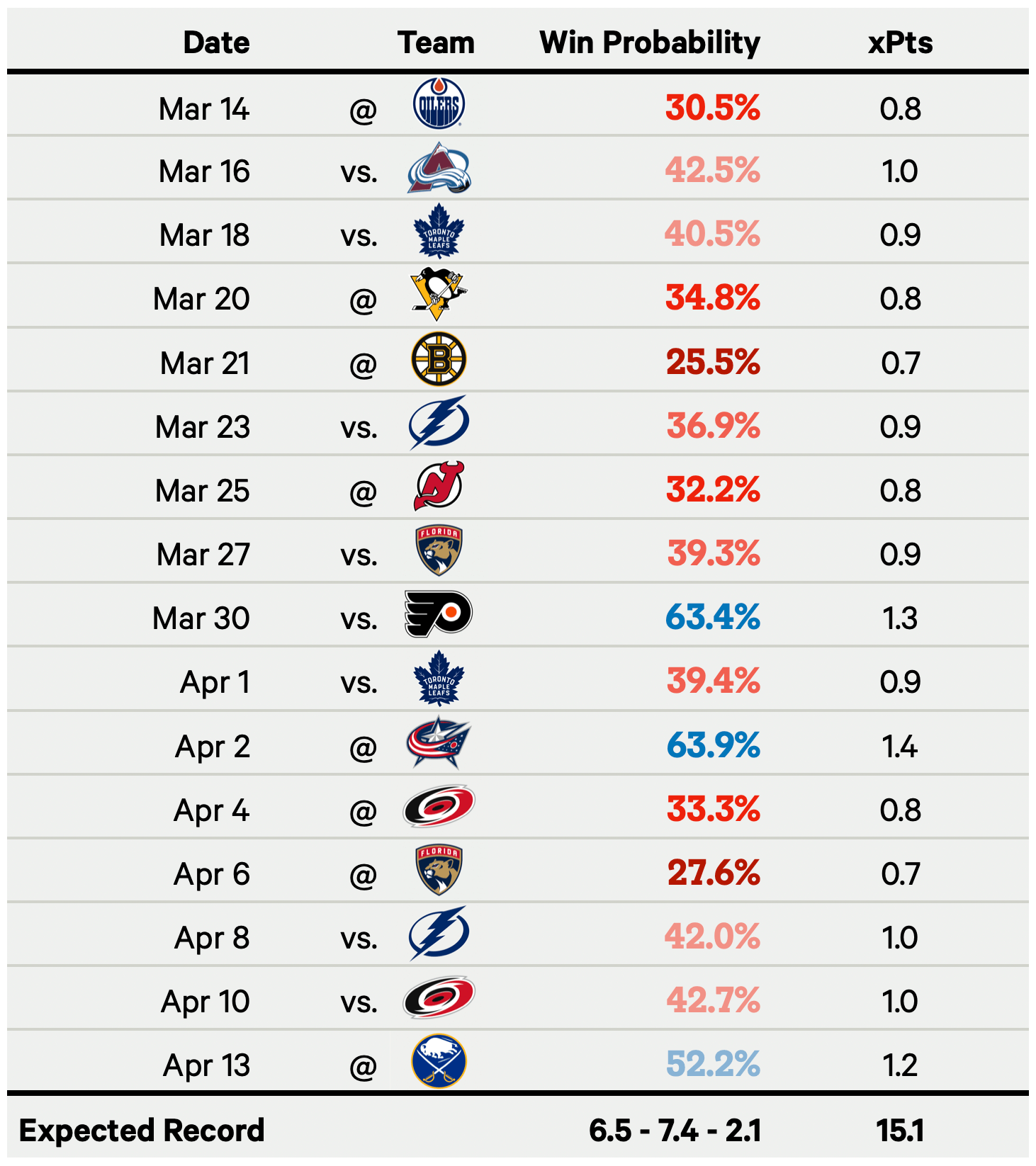
















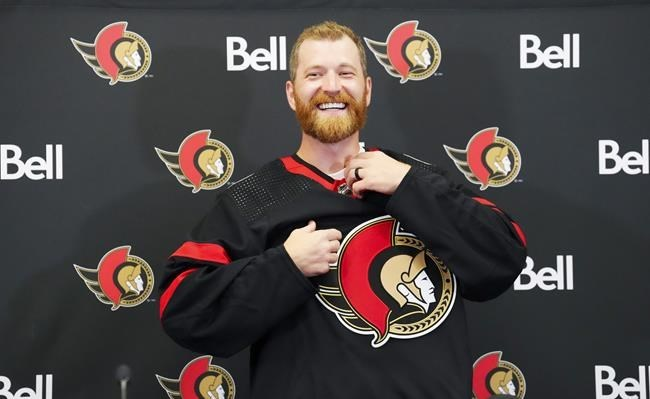

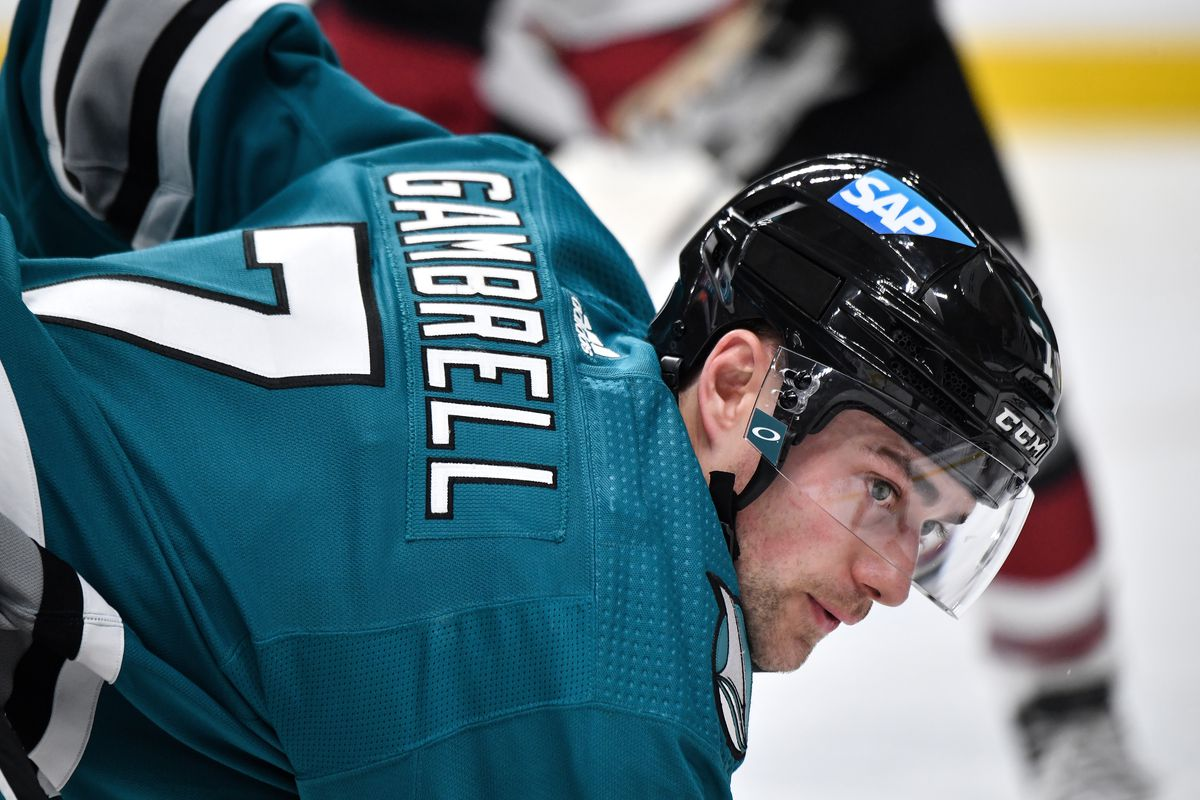











 eyeonthesens