Senators News & Notes

Melnyk Boro

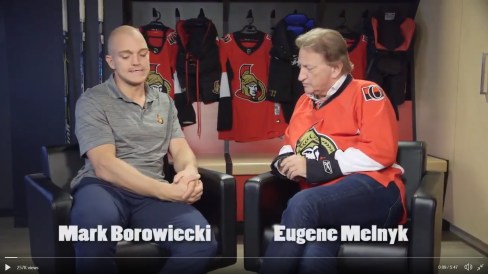
Christmas does come early sometimes and Eugene Melnyk offered us an early present with a delightfully awkward ‘promotional’ video featuring everyone’s favourite local boy/character guy/good-in-the-corners Sen Mark Borowiecki. For some fans this ridiculous spectacle might be the straw that broke the camel’s back in terms of their perception of Melnyk/the org, while for myself it’s simply another in a long line of examples of his issues as an owner. Chris Stevenson (paywall) breaks it down and among the hilarity is this from Eugene:

I think this coming year, we’re going to have 10 out of the 22 players are going to be new, meaning they’re either rookies or they’ve played maybe under 10 games last year. Then the following year, it’s going to go up to about 15 of the 22, maybe 16.

Forgive me if I don’t recall, but when did Melnyk announce himself as GM? Since he’s making personnel decisions, his lackey (Pierre Dorion) must be working the phones hard to clear space for ten rookies. When I went over the potential BSen lineup like a sane person I was assuming only Colin WhiteLogan Brown and Christian Wolanin (among those with AHL-eligibility) would play regularly with the Sens and while it wouldn’t be difficult to imagine Brady Tkachuk and (possibly) even Alex Formenton on the team, arriving at ten rookies isn’t easy. Admittedly, I’m confident Melnyk made up both numbers on the spot (he wouldn’t be cap compliant with sixteen), and what does ‘either rookies or under ten games’ mean anyway–if they’ve played ten games they are still rookies. It’s the kind of stupid (audacious?) statement that routinely comes out of his mouth. He then added:

you are not going to win

That has to buoy ticket sales. I agree with him, incidentally (see below), but I’m not sure the Sens marketing folks are going to jump for joy at hearing that. Stevenson is correct, I believe, in translating Melnyk to mean he’s dumping his expensive players and going cheap for a rebuild (or sorts) while expressing it in the worst way possible. This isn’t a surprise and I’m glad it shatters any illusions the fanbase might have had that we were going to get a sensible way out of this clusterfuck. This does, btw, fit Steve Lloyd and Gord Wilson’s ebullient prospect praise as they fall in line with where the org is going. I suspect TSN 1200 is going to be pumping the tires of prospects as hard as they did in 2011 to provide some hope (for those interested in a perspective founded in the scouting material go here).

Funnily enough I actually approve of the idea of a rebuild in abstract, but it requires a better scouting apparatus, a better GM, and a better owner.

analysis

The Athletic‘s Dom Luszczyszyn previewed (paywall) the Sens and ripped them apart–great analysis that has no local bias impacting it. Dom projects them to finish the season with a meager 77 points (which is slightly higher than the other methodologies he references, providing a range of 71-77 points). He’s not a fan of org favourties Tom Pyatt, Max McCormick, Borowiecki, Ceci, or the goaltending (nor am I). It’s fully worth the read, although for those who’ve been paying attention I don’t think you’ll find his analysis or conclusions surprising.

Image result for final countdown

The Silver Seven completed its countdown of the top Sens prospects and I wanted to comment on it (you can see my list here). My intention is to both assess it and make suggestions for how it can be improved. As I’ve mentioned previously I wish prospect analysts would cite scouting reports and (where available) statistical data in their assessment, but The Silver Seven doesn’t have a universal approach–each writer does their own thing (I’m not a huge fan of the under-25 format either, since there’s a big difference in a known pro quantity like Cody Ceci and a college free agent like Andrew Sturtz). Some of the writers are more or less unfamiliar with players who haven’t appeared at the NHL level–this is understandable, but if that’s the case, why not divide the prospects up to suit the comfort level of the writer? Let’s briefly go the material:

  • Ary (Joel Daccord, Francis Perron, Markus Nurmi, Alex Formenton) – thoroughly researched and analyzed, hunting down information that isn’t easily accessible; they are among the best of the articles written for the series
  • Ross A (Parker Kelly, Ben Harpur, Jacob Bernard-Docker, Brady Tkachuk) – he’s inconsistent; a largely descriptive piece for Kelly rather than analytical (when I mentioned it would help to have included scouting material he subsequently added it); his Harpur piece is good, albeit none of the AHL or amateur scouting material is used; the JB-D article is solid, but more scouting material would help (multiple reports offer a clearer picture); the Tkachuk piece is well-rounded (although it includes notes from development camp which isn’t something I’d bother with)
  • Beata Elliott (Andreas Englund, Nick Paul, Thomas Chabot) – her Englund scouting link is actually an Ottawa Citizen article where Englund talks about himself (which isn’t that useful); she does better with Paul’s NHL-side, but the complete lack of amateur scouting material or AHL-elements means the content doesn’t add much to our picture of him; her Chabot material has neither scouting or analytics material whatsoever which is very disappointing (Beata’s comment that she doesn’t pay much attention to prospects makes me wonder why she’s writing about them)
  • Colin Cudmore (Jonathan Gruden, Jonathan Tychonick, Filip Chlapik) – he’s very thorough on Gruden with statistical data included; the Tychonick piece is also good, although I would have liked more than just one scouting report to work on (for a balanced picture); Chlapik’s is quite thorough (and includes the AHL data)
  • B_T (Cody Ceci, Colin White) – his Ceci piece is excellent and packed with analysis; the White post is strong on the limited NHL sample, but has nothing useful from his many games in the AHL (his comment that he doesn’t really follow prospects makes me question why he’s writing about them–and if you are, at least put the effort in to be thorough)
  • Spencer Blake (Maxime Lajoe, Gabriel Gagne, Logan Brown) – starts off as descriptive with Lajoie, but does use the AHL-material (amateur scouting would have been nice as well, but it’s not a crippling absence); his Gagne piece is only descriptive, which sadly means it adds very little (there’s no AHL material or amateur scouting material); conversely the Brown piece is very good, featuring very useful statistical analysis
  • NKB (Aaron Luchuk, Marcus Hogberg) – Luchuk is only descriptive with no scouting material; his Hogberg profile is better (I’m happy he linked my AHL stuff, but it would have been nice to see it used for analysis)
  • N_Dew (Christian Jaros, Drake Batherson, Filip Gustavsson, Chrisian Wolanin) – purely descriptive for Jaros & Batherson with the only insights via SensProspects about Development Camp (!)–there’s no scouting reports used for Wolanin (not even the SensProspects treatment); there’s a scouting report for Gustavsson (although as I’ve said earlier, you want multiple when you can get them), but not much else

The content of the list is wildly inconsistent–among absolute gems is useless fluff (descriptors with highlights). The latter approach would be fine if that was the aim, but the point of the list is assessing players to justify their place on it and as it is I don’t think it works. My suggestion to The Silver Seven is to provide guidance to the contributors and help them out with material–the scouting reports aren’t that hard to find (I have it all here, but Google is another good resource); the AHL material is harder to find (in many instances I’m the only source), but it is available. Statistical and/or comparative analysis would be wonderful as well (where it has been used it adds a great deal).

My favourite two profiles were on Nurmi (Ary) and Gruden (Colin); the worst were Wolanin, Jaros, and Batherson (all Dew) and Chabot (Beata), which are pretty big misses. I can’t fully compare their final list to my own because of our different methodologies, but we can put their rankings next to my own (for the ‘why’ of my list just follow the link):

Goaltenders
1. Filip Gustavsson – #8
2. Marcus Hogberg – #14
3. Kevin Mandolese – NR
4. Jordan Hollett – NR
5. Joel Daccord – #24

Defense
1. Jonny Tychonick – #12
2. Christian Wolanin – #6
3. Christian Jaros – #11
4. Jacob Bernard-Docker – #13
5. Maxime Lajoie – #17
6. Julius Bergman – NR
7. Andreas Englund – #23
8. Macoy Erkamps – NR

Forwards
1. Logan Brown – #2
2. Brady Tkachuk – #4
3. Filip Chlapik – #5
4. Drake Batherson – #9
5. Gabriel Gagne – #16
6. Colin White – #3
7. Alex Formenton – #10
8. Andrew Sturtz – NR
9. Aaron Luchuk – #15
10. Francis Perron – #21
11. Todd Burgess – NR
12. Markus Nurmi – #20
13. Parker Kelly – #25
14. Jakov Novak – NR
15. Nick Paul – #19
16. Adam Tambellini – NR
17. Johnny Gruden – #22
18. Angus Crookshank – NR
19. Filip Ahl – NR
20. Jack Rodewald – NR
21. Luke Loheit – NR

Due to my approach I don’t have Chabot (#1), Ceci (#7), or Harpur (#18) listed.

Free_Agent_logo_2

With training camps around the corner we can finally look at which free agent prospects were signed as well as how many were picked from my 2018 list of European free agents. It’s an auspicious year for me as 12 players from that list were signed, along with 5 from previous lists (2 from 2017, 1 from 2016, 1 from 2015, and 1 from 2012–Kovar, although the Islanders are getting him on the decline after he spent his best years in the KHL). This year see’s a decline in NCAA signings, once by far the largest pool of FA talent for NHL teams (last year it was 24 NCAA, 21 Europe, and 9 CHL). The pendulum has swung to Europe this year, which might be due to improved scouting. I’ve highlighted those from the 2018 list in bold and added italics for those from earlier lists:

Europe (35): Vincent Praplan (SJ), Niclas Westerholm (Nsh), Lukas Radil (SJ), Yannick Rathgeb (NYI), Miroslav Svoboda (Nsh–originally drafted by Edm), Dominik Kahun (Chi), Michael Lindqvist (NYR), Juuso Ikonen (Wsh), Ville Meskanen (NYR), Filip Pyrochta (Nsh), Maximilian Kammerer (Wsh), Carl Persson (Nsh – attended Ott’s development camp in 2018), Lawrence Pilut (Buf), Igor Ozhiganov (Tor), Par Lindholm (Tor), Joel Persson (Edm), Saku Maenalanen (Car–originally drafted by Nsh), Juuso Riikola (Pit), Yegor Yakovlev (NJ), Kevin Lankinen (Chi), Patrik Rybar (Det), Ilya Lyubushkin (Ari), Michal Moravcik (Mtl), David Sklenicka (Mtl), Jacob Nilsson (Chi), Bogdan Kiselevich (Flo), Antti Suomela (SJ), Marcus Hogstrom (Cal), Yasin Ehliz (Cal), Brooks Macek (LVK), Martin Bakos (Bos), Michael Fora (Car), Veini Vehvilainen (Clb; drafted rather than signed), Jan Kovar (NYI), Sergei Shumakov (Wsh)
NCAA (18): Zach Frye (SJ), Zach Whitecloud (VGK), Merrick Madsen (Ari–originally drafted by Phi), Cooper Marody (Edm–originally drafted by Phi), Cam Johnson (NJ), Mitch Reinke (Stl), Eric Robinson (Clb), Andrew Sturtz (Ott), Daniel Brickley (LA), Sheldon Rempal (LA), Josh Dickinson (Col), Tony Calderone (Dal), Karson Kuhlman (Bos), Andrew Oglevie (Buf), Jordan Gross (Ari), Ross Colton (TB), Joel L’Esperance (Dal), Logan O’Connor (Col)
CHL (8): Patrick Bajkov (Flo), Hayden Verbeek (Mtl), Tanner Jeannot (Nsh), Alexandre Alain (Mtl), Brad Morrison (LA–originally drafted by NYR), Aaron Luchuk (Ott), Skyler McKenzie (Win), Vladislav Kotkov (SJ)

This article is written by Peter Levi (@eyeonthesens)

Ranking the Sens Prospects

prospects

I don’t think I’ve ever formally made a prospect list before–I’ve commented on them, but never put out my own. The lists can generate some interesting discussion, although there rarely seems to be a strong framework for why player X is higher (or lower) than player Y (one would assume higher is better, but that’s often difficult to discern especially the lower you go on the list–it comes across as a mishmash of ‘best potential’ to ‘best right now’ or even ‘most likely to be signed’). I also think comparing across positions is problematic–is a starting goaltender better than a top forward? The question isn’t asked. I prefer an apples-to-apples approach, so for my purposes I’ll be looking at players by position and potential.

Projected potential isn’t comprehensively covered in these kinds of lists–to my mind the guy who tops out as a #6 blueliner should not place ahead of someone who might be top-four regardless of relative performance at the time. To determine that potential I’m using the scouting consensus (when available) and performance (stats), tweaked by my own observations when possible.

I’ve removed players who have 50+ games of NHL experience because at that point there’s access to much better statistical breakdowns, leaving less room for speculation; I’ve also cut out those with four or more AHL seasons (by which time they are no longer truly prospects). Given those parameters I won’t be discussing Thomas Chabot, Ben Harpur, Patrick Sieloff, Chase Balisy or Ben Sexton (you can find breakdowns via The Silver Seven or my own). I’ve also excluded players on AHL-contracts (Boston Leier, Ryan Scarfo, Joseph LaBate, and Jordan Murray–I’ve detailed them in various places previously–for example)–until they sign ELC’s they aren’t true prospects. Despite all these cuts it still leaves us with thirty-four players to look at and I will detail them all below.

Some general comments about scouting: while the prejudice against size is slowly eroding away, there’s an overabundant affection for physical play that colours perception: the weaknesses of physical players aren’t seen as debilitating as a lack of physicality is seen in skilled players (Tkachuk is an obvious example of this, but there are many more). This is why we see an avalanche of ‘character’ players drafted despite most bombing out as prospects. There’s an impression many scouts have that a player who hits people is providing something a player who scores is not. In addition to this, scouts continue to struggle to project goaltenders and this means much of their material is difficult to parse (Ary talks about that here).

The scouting material included below focuses on potential and flaws (generally speaking we’re aware of what each player is supposed to be). Acronyms: HP: Hockey Prospects, FC: Future Considerations, ISS: International Scouting Service, RLR: Red Line Report, CP: Corey Pronman (via his Athletic article from this summer [paywall])–I use CP selectively because some of his breakdowns don’t contain enough specifics to be useful.

A final note: there’s less to say about players who have just been drafted–there’s no new information to discuss so we’re completely dependent on scouting and their statistical output.

Goaltenders (5)

Potential Starter (4) [None project as elite starters]
1. Filip Gustavsson 2-55/16 Pit
2016-17 SHL .911 2.70 4-10-0 4-10-0
2017-18 SHL/AHL .918 2.07 9-11-0/.912 3.01 2-4-0
2018-19 AHL
Draft: HP thought he was the best ‘tender in a weak class, having good fundamentals, but they had some concern over his rebound control; FC saw his potential as an NHL-starter; ISS mostly echoed the above, but expressed concerns about his blocker play; RLR gave him the same potential, but added the caveat that this applied if he were on ‘an upper echelon team’ (ie, with good defensive support)–they also questioned his play with the puck; there was a general consensus that he played too much on his knees.
Gustavsson enjoyed a career year in Sweden last season (playing backup to Joel Lassinantti–someone who appeared on my European FA list a couple of times, but has been passed over due to size), so why did the Penguins let him go? They have a young starter in Matt Murray (only 24) and two young prospects (Tristan Jarry and Alex D’Orio) on the way up, making him an option for the Derick Brassard trade. When he came over to play with Belleville for the final stretch of the season he looked good, although as I pointed out he was beginning to regress to the mean (his last two starts he was .865 and .867; with three of his six starts in that range). This means I can’t be sure he’s better than the other goaltenders who played for the BSens last season, but as a 20-year old there’s breathing room for him to grow and he’s expected to get more opportunity than Hogberg did last year.
While his Swedish numbers have never been as good as Hogberg’s, projections for him are better and he’s only 20 years old (Hogberg posted .917 when he was that age). This and the latter’s struggles in Belleville are what land him in the top spot.

2. Marcus Hogberg 3-78/13
2016-17 SHL/AHL 19-14-0 .932 1.89/.865 4.34 0-3-0
2017-18 AHL/ECHL 6-12-0 .899 3.27/.915 3.10 8-7-1
2018-19 AHL
Draft: RLR liked his size, but thought he lacked mobility and confidence; FC said he needed to improve his lateral quickness and confidence; McKeen’s profile is effusive, but they note excessive movement (something I noticed in Belleville); he was not ranked by HP/ISS. In general he was seen as great raw material that needed work.
The Sens left Hogberg in Sweden for four full seasons and after a bit of a wonky start in the first he posted solid numbers with Linkoping: .917, .911, and .932; good for 8th, 10th, and 4th in the league (splitting duties with David Rautio initially before earning the starting role his final season). There was nothing left for him to achieve in the SHL and he came over with considerable hype. His rookie AHL season didn’t meet expectations, but wasn’t as bad as the raw numbers make it appear (bad enough that CP simply ignored him in his list this summer). When you compare him to the other goaltenders in Belleville, his numbers are virtually identical (both Andrew Hammond and Danny Taylor were at .900, while Chris Driedger was down at .885)–only Filip Gustavsson, who barely played, is well above him (.912), but as I discuss above he could have benefited from the small sample size. The BSens were an awful team defensively and while that doesn’t mean Hogberg couldn’t do better, it does mean his numbers have to be taken with a grain of salt. I really wonder how much he was affected by being part of the ridiculous four-goalie rotation for months until the Sens finally moved Hammond and demoted Driedger. The biggest criticism from me about Hogberg is his consistency–in both the AHL and ECHL he was all over the place. He has plenty of talent, but his technique needs work and there may be confidence issues (not helped, I think, by starting this upcoming year as part of a three-headed monster in goal).

3. Kevin Mandolese 6-157/18
2017-18 QMJHL .884 3.46 15-13-0
2018-19 QMJHL
Draft: RLR thought he had starter potential, but thinks he stays too deep in his net; ISS was more effusive (offering the same potential); FC liked him but said sometimes he over commits and can lose focus if he’s not facing a lot of shots; HP repeats that he stays too deep in his net and isn’t aggressive enough, but has pro potential.
His numbers in the Q aren’t particularly impressive, so he skates by Hollett because he hasn’t had a down season after being drafted.

4. Jordan Hollett 6-183/17
2016-17 WHL .901 2.83 15-2-0
2017-18 WHL .896 3.43 16-13-0
Draft: FC liked his potential, but noted he struggled to follow the puck on broken plays; RLR thought he had huge upside, but was a boom or bust prospect; ISS/HP didn’t rank him (HP didn’t even discuss him, despite having comments on many players they don’t rank).
His season after being drafted wasn’t impressive, although he was (marginally) better than his goaltending partner (Michael Bullion); finishing 24th in the league in save percentage is worrisome. He needs to be much better this upcoming season if he wants the Sens to sign him (his struggles are undoubtedly part of the reason Mandolese was picked).

Backups (1)
5. Joel Daccord 7-199/15
2016-17 NCAA .892 4.03 3-8-1
2017-18 NCAA .909 3.51 8-19-5
2018-19 NCAA
Draft: no one ranked him, but HP had one game report which was positive but pretty generic.
Since he was picked he’s played for a very poor Arizona team where his underlying metrics are improving, but what is his ceiling? I have to think the best hope for him is as a backup in the NHL, as there’s nothing that I’ve seen or read that suggests he has more potential than that. I’d expect further improvement this year and he’ll need to do so in order to get signed when his college career is over (which won’t be this year but next).

As a group the goaltenders aren’t particularly impressive. There’s no elite talent–no one flashy like Robin Lehner–and while having either Gustavsson or Hogberg achieve their potential is fantastic neither goaltender projects as the kind that can put a team on his back. Since the Murray regime took over in 2007 the org has struggled to either draft or sign goaltending prospects who reach their potential (Lehner remains the best in either category and he never did fully evolve as expected–being bipolar and having addiction issues being a huge reason for that).

Defense (8)

Top-Four [None are projected in the top-pairing]
1. Jonny Tychonick 2-48/18
2017-18 BCHL 48-9-38-47 (0.97)
2018-19 NCAA
Draft: RLR thinks he’s purely offensive (comparing him to Shayne Gostisbehere); ISS has him as a top-four blueliner with a need to get stronger; FC is effusive, but does reference defensive inconsistency; HP saw him as both offensively gifted and tenacious/aggressive, but agreed his defensive play is average.
In the absence of him having played since there’s not much we can add to this (the offensive potential is certainly exciting–I’d take a Gostisbehere if that’s what he really is).

2. Christian Wolanin 4-107/15
2016-17 NCAA 37-6-16-22 (0.59)
2017-18 NCAA/NHL 40-12-23-35 (0.87)/10-1-2-3 (0.30)
2018-19 NHL/AHL
Draft: no one ranked him, but HP had one game report that’s positive but vague (McKeen’s profiled him, but it’s vague suggesting that he needed to improve his defensive play). CP doesn’t think much of him–his hands aren’t high end and he’s not a great defender–this opinion isn’t shared by The Silver Seven (sadly their profile includes zero analytics from his NHL games). Brad Phillips thinks he’s a deep sleeper for fantasy hockey folks.
In his final (third) season in college he was second on his team in points-per-game (just behind forward Nicholas Jones) and tenth in the NCAA among defensemen. It’s difficult to parse his numbers because someone like Patrick Wiercioch also had very good college numbers (with much more scout-hype) and never established himself as an NHLer. Clearly the expectation for Wolanin is as a top-four defender who produces points.

3. Christian Jaros 5-139/15
2016-17 SHL 36-5-8-13 (0.36)
2017-18 AHL/NHL 44-3-13-16 (0.36)/2-0-0-0 (0.00)
2017-18 AHL/NHL
Draft: FC was effusive–their only criticism being he was sometimes overly physical, projecting him as a top-six, two-way defender; ISS put his potential as a top-four, shutdown defender, believing his primary weakness was offensive consistency; HP noted he’d improved his skating since his initial draft year (2014), but would never be an offensive defenseman despite a powerful shot; RLR’s only comment was they didn’t think he could skate and that criticism seems rooted in his 2014 impression.
Arriving in the AHL Jaros was fantastic–his production didn’t drop in transition and despite injury issues he was among the best defensemen in Belleville (the team was much better when he played); he was strong on the powerplay and spent most of his time carrying around the dead weight known as Andreas Englund. CP’s comments about him illustrate that he didn’t to watch him very often (“there was an adjustment period to the AHL in terms of pace and knowing when to try and make a certain offensive play”)–the only adjustment for Jaros was getting used to some of his useless partners whose failings meant his play varied considerably depending on who he was paired with. My concern coming into last season was that Jaros would waste time running around looking for big hits, but by and large he was careful and picked his spots. The guy is built like a truck so requires no adjustment to the physicality of the next level.

4. Jacob Bernard-Docker 1-26/18
2017-18 AJHL 49-20-21-41 (0.83)
2018-19 NCAA
Draft: RLR saw him as a top-four blueliner; ISS has him as a top-pairing, two-way defender, but questioned his consistency; FC/HP liked him, but questioned his creativity. Much like Tychonick until we see more of his play we are reliant on the scouting opinions and his numbers, but certainly his ceiling seems lower than those above (since defense-first blueliners are a dime a dozen). The question for Bernard-Docker going forward is how well he distributes and moves the puck (since we can presume he’s solid defensively already).

5. Maxime Lajoie 5-133/16
2016-17 WHL 68-7-35-42 (0.61)
2017-18 AHL 56-1-14-15 (0.27)
2018-19 AHL
Draft: RLR saw him as a top-four, two-way defender or bust; ISS put his potential as a 4-5 two-way defender (with concerns about his defensive consistency); FC was effusive and had him as a top-four, two-way; HP was very positive and liked his hockey-IQ. The org was also excited about him, signing him far earlier than necessary.
His rookie pro season was disjointed and hampered by Kurt Kleinendorst’s coaching (his usage was bizarre). His excellent puckmoving was often hampered by incompetent partners and with limits to his TOI it wasn’t easy for him to truly get into the flow of the game. It wasn’t a wasted season entirely, but it skewed his numbers. How much opportunity he’ll get to play in an overstuffed BSen lineup I don’t know, but hopefully it will be more.

Marginal Pros/AHLers
6. Julius Bergman 2-46/14 SJ
2016-17 AHL 64-3-27-30 (0.46)
2017-18 AHL 65-10-10-20 (0.30)
2018-19 AHL
Draft: ISS thought he could be a top-four player, but needed to work on his shot and physicality; FC saw his potential as a top-six blueliner with a pretty generic description of his abilities; RLR didn’t rank him; HP didn’t rank him because they thought he was too soft for the next level.
Three years in the San Jose system have shown he has solid AHL-talent, but not enough to move beyond that. Last season the Sharks’ AHL-team saw a 20% drop in total offence, meaning his drop in production (30%) has some context. While it’s not impossible for Bergman to show NHL talent at this stage, it’s getting very late in the game for that to happen and it’s certainly not what I expect.

7. Andreas Englund 2-40/14
2016-17 AHL 69-3-7-10 (0.14)
2017-18 AHL 69-1-9-10 (0.14)
2018-19 AHL
Draft: RLR liked his mean, physical play and compared him to Alexei Emelin; ISS questioned his skills with the puck, but projected him as a top-four shutdown blueliner; FC saw him as a top-six shutdown blueliner and liked his outlet passing; HP questioned his hockey sense (as do I).
Needless to say most of these estimations are overly optimistic as Englund struggles to be an effective AHL defensemen, much less an NHL blueliner. The org still likes him, but that’s purely because of his physicality. His zone exists are either lobbing grenades up the ice or pounding the puck off the boards–in both cases forwards are forced to adjust to prevent turnovers because he can’t make a pass; his supposed defensive acumen is overblown (this was most apparent on the penalty kill), so other than his physical play he doesn’t excel at anything. He’s shown no sign of improvement since turning pro and the org would do well to shuffle him along at the first opportunity.

8. Macoy Erkamps CHL FA 16
2016-17 AHL/ECHL 11-0-2-2 (0.18)/58-6-19-25 (0.43)
2017-18 AHL/ECHL 46-1-3-4 (0.08)/2-0-0-0 (0.00)
2018-19 ECHL/AHL
Draft: FC said he was an efficient puck-mover who isn’t consistent; HP liked his physicality, but questioned his vision and hockey IQ; RLR thought he was underrated; ISS and McKeen’s didn’t rank him.
When the Sens signed him I pointed out that a lot of his production was likely due to his partner (Flyer first-round pick Ivan Provorov), who would make any partner look good. This thought proved entirely accurate as Erkamps is at best an adequate ECHL defenseman and his lengthy tour with Belleville last season was comically bad; he doesn’t do anything well at the AHL-level. The org needs to move on from him.

Because I removed Chabot from the equation this list doesn’t jump out with elite talent; what it has is a lot of useful potential, but all capped at a relatively low ceiling. The org is going to need a couple of guys to push beyond expectations to truly flesh out their future blueline.

Forwards (21)

Top-Six [None are projected as first-line players]
1. Logan Brown 1-11/16
2016-17 OHL 35-14-26-40 (1.14)
2017-18 OHL/NHL 32-22-26-48 (1.50)/4-0-1-1 (0.25)
2018-19 NHL/AHL
Draft: RLR had him as a second-line playmaker, wanting him to be more assertive; ISS/FC also saw him as a top-six player who needed to shoot more; HP puts him in the top-six.
CP questions his conditioning and ability to keep up with the pro pace.
One thing the Sens do routinely is shove top picks into the NHL and use them as part of their marketing (Curtis Lazar, Jared Cowen, Mika Zibanejad, Cody Ceci, etc), so I think regardless of whether Brown is ready or not he’ll be on the roster. He was a very good junior player (with improving metrics) and would produce in the AHL, but how well will he do in prime time? The concern here is the long haul and at least thus far fears over ‘assertiveness’ and physicality haven’t mattered, just his overall durability. If he actually has a conditioning issue that can absolutely hurt his ability to perform, but otherwise even if his skating is average as a puck distributor there’s no reason to doubt his ability to achieve his potential.

2. Brady Tkachuk 1-4/18
2017-18 NCAA 40-8-23-31 (0.77)
2018-19 NCAA/NHL/OHL
Draft: RLR has him as a top-six, physical winger; ISS has him as a second-liner with questions about his quickness and consistency; FC also wonders about his speed, defensive play, and him overhandling the puck; HP brings up his skating, but likes his defensive play; CP bends over backwards to make his own caveats come across as acceptable: “His skill isn’t dynamic … I saw the occasional [my emphasis] high-end flash of vision … he’s never going to wow you with his speed”–this is all okay because of his physicality.
One of the painfully obvious things about the scouting reports is how enamored they are by his physical play, something we’ve long known has little impact on the game, but this appreciation clearly colours their view of him. What I need to see is him dominant offensively in whatever league he’s playing in–he’s a top-five pick and there shouldn’t be these kinds of questionmarks about his ability. There’s a very real fear that Tkachuk won’t live up to expectations and if he doesn’t no guarantee the Sens will get the chance to roll the dice on another top-five pick for quite some time. There’s also the question: why use the #4 pick for someone who tops out as a second-liner? It’s a rare opportunity to truly swing for the fences and the Sens decided to bunt instead–as fans we can only hope it all works out.

Middle-Six (second or third line)
3. Filip Chlapik 2-48/15
2016-17 QMJHL 57-34-57-91 (1.59)
2017-18 AHL/NHL 52-11-21-32 (0.62)/20-1-3-4 (0.25)
2018-19 AHL/NHL
Draft: FC had his potential as a top-nine, two-way forward, liking his hockey sense, playmaking, and defensive ability; RLR saw him as a dynamic third-line forward whose only concern was his skating; ISS saw him as a third-liner who can do spot-duty on the second (their only issues were his physicality); HP was concerned with his skating. CP continues to be concerned about his skating and his defensive play.
I don’t share the latter concern, but certainly some of his AHL tendencies offensively will have change at the NHL-level (he tends to hang on to the puck longer than you can get away with at that level). With that said, his AHL-achievements are remarkable when you move beyond the raw numbers–no one was jerked around the lineup more than he was and despite spending nearly half the season in the bottom six he was second on the team in production (points-per-game). I really like Chlapik’s game and I hope he can translate his skills at the next level.

4. Drake Batherson 4-121/17
2016-17 QMJHL 61-22-36-58 (0.95)
2017-18 QMJHL 51-29-48-77 (1.51)
2018-19 AHL
Draft: HP praised him and called him a legit prospect, liking his hockey IQ and offensive instincts; FC/ISS/RLR didn’t rank him.
Batherson eluded most scouts because he’d sailed through one draft already and it was a strong second half that put him on the radar (there’s only so many times he’s going to be seen by scouts–HP seems to get more reps than most, which is why they almost always have scouting feedback on prospects who are drafted or otherwise).
Needless to say his final junior year was a monster one where he dominated (fourth highest points-per-game in the league, which dropped somewhat when he was traded mid-season). How do we project him? His background puts him in Tanner Pearson-territory–maybe a poor man’s Pearson (Pearson was another player skipped over in his initial draft year who put up monster numbers subsequently and enjoyed a strong WJC). I expect him to be a productive AHL-player and the question is simply how far beyond that he can go.

5. Gabriel Gagne 2-36/15
2016-17 AHL/ECHL 41-2-4-6 (0.14)/19-6-5-11 (0.58)
2017-18 AHL 68-20-5-25 (0.36)
2018-19 AHL
Draft: FC put his potential as a top-six scoring winger, with their major concern being him filling out his lanky frame; ISS saw his potential as a scoring third or fourth-line winger, questioning his desire/competitiveness; HP said he needed more consistency and ‘jam’ in his game, but that the tools were all there; RLR didn’t like his character or work ethic, making him highly overrated (the character issues seem tied him being benched by his coach (Bruce Richardson) for a January, 2015 game). CP’s comments (“He gets a lot of goals hanging around the net”) are another indication he simply wasn’t able to see him play much, as Gagne is not a crash & bang rebound guy–he generally just beats goaltenders with his shot.
It was a strange sophomore campaign for Gagne, but one thing he established is that he can score at the AHL-level. He’s young, still hasn’t filled out, and the BSens were awful offensively, which makes judging his performance difficult (he spent much of the season playing with other shooters, meaning the usual formula of pairing a playmaker with a shooter wasn’t happening). He was horrifically bad his rookie season, but made a big jump from that last year, so it’s within reason that he could take another big step forward this year–it’s all very much in flux (he is a great example of a boom or bust prospect).

Top-Nine
6. Colin White 1-21/15
2016-17 NCAA 35-16-17-33 (0.94)
2017-18 AHL/NHL 47-11-16-27 (0.57)/21-2-4-6 (0.28)
2018-19 NHL/AHL
Draft: FC projected him as a top-nine, two-way forward, whose only weakness was his offensive upside; RLR saw him as a third-line character center with concerns about his size; ISS was effusive, but noted a lack of offensive consistency; HP’s sentiments are very similar (third liner with offensive limitations). CP offers “his puck skills for me are very average. I’ve come down a bit on his offensive expectations as he seems to project out now as more of a good third-line forward.”
I agree wholeheartedly about White’s offensive potential, which is echoed by B_T‘s breakdown of his NHL numbers. White was better in the AHL, but his production is still lower than it should be (and, unlike Chlapik, he wasn’t jerked around as much in terms of TOI/usage). Don’t take his ranking here as me being down on White, he’s a very good player, but until we see otherwise it doesn’t appear he has the offensive chops to contribute any better than at a third-line level.

7. Alex Formenton 2-47/17
2016-17 OHL 65-16-18-34 (0.52)
2017-18 OHL 48-29-19-48 (1.00)
2018-19 OHL
Draft: RLR didn’t think he could score, projecting him as a third-line checker; ISS saw him as a bottom-six energy forward with upside whose weakness was puck skills; FC saw him as a third-line winger with questions about his shot and creativity; HP had him within the third/second line category. CP’s analysis also slots him as a third-line checker.
So why hasn’t Formenton’s jump in scoring impressed the inestimable Pronman? For the draft guides he was buried on a talented London team, but not last year. Certainly older players in the CHL see their numbers boosted (he finished fourth on his team in points-per-game), but the knock is his creativity. We won’t know how well that will translate until he turns pro, but his post-draft season was excellent and everything remains on track for him to at least meet projections (I haven’t linked his brief AHL foray last year because he was hurt early in his second game, so there just wasn’t enough to glean from it).

8. Andrew Sturtz NCAA FA 18
2017-18 NCAA 37-22-15-37 (1.00)
2017-18 NCAA 37-14-26-40 (1.08)
2018-19 AHL
Draft: He was never ranked or discussed while draft-eligible (playing in the GOJHL and CCHL at the time). He attended Pittsburgh’s development camp in 2017 and there’s a profile of him as a free agent from Ben Kerr that describes him as aggressive and having discipline problems–otherwise there’s not much material on him.
The org, after years of drafting NCAA free agents (Bryan Murray’s notion I’d wager), has started to shy away from them as they’ve had virtually no success (one good year out of Andrew Hammond being the exception). This makes Sturtz signing somewhat unusual (as does his size for the org–he’s listed at 5’8). Good numbers in college (far and away the leader his final year at Penn State) tend to translate to good numbers at the AHL-level, but what about beyond that? As a smaller player it’s possible he was overlooked based on size and that has to be what the org hopes for–his offensive production has always been good, so there’s no question about where his talent lies. I didn’t see enough of him last year to make much of an assessment. Usually what keeps high scoring players out of the NHL (besides size) is speed, so that’s something to keep an eye on, but like Luchuk below his potential has to be as a scoring player (he earns the nod over the OHL star because of his more consistent production over his career and because I didn’t find the same level of criticism about his skating).

9. Aaron Luchuk CHL FA 18
2017-18 OHL 68-50-65-115 (1.69)
2018-19 AHL
Draft: While never ranked, HP profiled him in 2015 along with a vague game report in 2016–in the former they felt like his offensive potential was being stymied by the bodies ahead of him.
As a smaller player prejudice against size still exists (despite undrafted examples like Tyler Johnson and Jonathan Marchessault). With that said, big numbers in the CHL don’t always equate to success (Tyler Donati is a favourite example of this). CP indicates his issue is a lack of speed (echoed here, although I suspect CP is the source of that comment) and that indeed can kill a smaller player’s chances (since they can’t make up for slowness with strong board work or overpowering checkers). His production didn’t slip when traded mid-season, but the offensive explosion was in his final year of junior which rings the Tyler Donati warning bell. I’m not sure what to expect from him, but he wasn’t signed to check so the expectation is that he projects as someone who can chip in.

10. Francis Perron 7-190/14
2016-17 68-6-20-26 (0.38)
2017-18 44-4-11-15 (0.34)
2018-19 AHL
Draft: RLR projected him as a third-line winger with a good head for the game; ISS didn’t like his compete-level and saw him as a top-six or bust; HP liked his skill set but questioned his strength; FC had his potential as a top-nine forward, but shared the concerns about his strength.
The clock is definitely ticking for Perron who struggled last season (above and beyond Kleinendorst’s erratic coaching). He’s still very young and in neither season given the kind of opportunity he needs, so hope remains he can translate his talent to meet projections. He’s a smart player, but (judging from this past season) can’t translate that into PK-acumen–he needs to start putting up points this year or his time with the org will be over (how he’ll do that in an overcrowded lineup I have no idea).

11. Todd Burgess 4-103/16
2016-17 Injured
2017-18 NCAA 34-1-11-12 (0.35)
2018-19 NCAA
Draft: HP didn’t think his scoring would translate at the NHL-level, but that his playmaking could; they also thought his skating and defensive consistency needed work; RLR listed him as a sleeper; ISS/FC didn’t rank him.
He’s hard to assess because injury lost him an entire season (when the Sens drafted him he was the NAHL’s top scorer and put up a ton of penalty minutes). When he returned he put up solid numbers (only one player younger than him had better points-per-game, Jacob Hayhurst). His totals aren’t earth shattering, but for a team that didn’t score much they are fine for a guy who missed an entire year. It will be interesting to see what he’s able to do this upcoming season. Since no one projected him out I’d say that he tops out as a scoring third-liner (he certainly wasn’t drafted to check).

Bottom-Six
12. Markus Nurmi 6-163/16
2016-17 Finn Jr/Mestis 27-12-16-28 (1.03)/11-0-2-2 (0.18)
2017-18 Liiga 51-10-11-21 (0.41)
2018-19 Liiga
Draft: FC saw him as a top-nine two-way player; HP thought he topped out as a checker; RLR didn’t like his skating; he wasn’t ranked high enough for ISS to profile him.
He finished tenth in scoring for players 20 and under this past season, which is impressive given that he spent more than half the season on the bottom six. Projected as a checker (almost a default for bigger players who don’t put up monster numbers), it’ll be interesting to see how he does as he gets more opportunities to score in Finland. As it stands he continues to progress and remains on target to achieve his potential (he showed soft hands at the development camp, but that’s a poor place to judge anything).

13. Parker Kelly CHL FA 17
2016-17 WHL 72-21-22-43 (0.59)
2017-18 WHL/AHL 69-29-30-59 (0.85)/5-1-0-1 (0.20)
2018-19 WHL
Draft: HP liked his all-around game and while they weren’t sure his offensive skills would translate they thought he had enough intangibles to make him worth drafting; ISS/RLR/FC didn’t rank him.
He has good speed, but the question about his hands remain. His numbers don’t blow you away so he seems to slot into the bottom-six as a checker (barring some change). If he puts up even bigger numbers this season it could mean revising expectations for him.

14. Jakov Novak 7-188/18
2017-18 NAHL 56-32-41-73 (1.30)
2018-19 NCAA
Draft: No one ranked him, but HP does have a profile, calling him a power forward with good offensive tools who struggles with discipline.
There are a lot of similarities between the Novak pick and Burgess above–both are from the little regarded/scouted NAHL, both led the league in scoring and put up a ton of penalty minutes. He’s the epitome of a boom or bust player, even if we’re unsure of his range. He was drafted for his offense so that’s what he needs to produce.

Marginal Pro/AHLer
15. Nick Paul 4-101/13 Dal
2016-17 AHL 72-15-22-37 (0.51)
2017-18 AHL/NHL 54-14-13-27 (0.50)/11-1-0-1 (0.09)
2017-18 AHL
Draft: HP said he was physical with good hands, but a poor skater; ISS called him a shutdown forward with poor skating; RLR liked his skating; FC thought he was an inconsistent producer; McKeen’s didn’t rank him.
There’s little evidence to support those early ideas of him being a shutdown forward (often a default option for bigger players), but offensively he isn’t as the org hyped him to be either. Despite a wealth of opportunity he remains a very average producer at the AHL level who doesn’t particularly effect his team one way or another. He has decent hands, but every season he’s had enormous slumps and at this stage that lack of consistency seems systemic. I think we’ve hit the point where he’s simply a marginal pro, although he’s still young enough to have faint hope for more (at this stage he needs a monster season to shake off doubts).

16. Adam Tambellini 3-65/13 NYR
2016-17 AHL 68-13-22-35 0.51
2017-18 AHL 69-16-16-32 0.46
2018-19 AHL
Draft: HP great speed, not physical, questionable work ethic; ISS liked his overall game; RLR projected him as a second-line forward, but didn’t like his work ethic defensively; McKeen’s echoes these sentiments; FC noted he needs the puck distributed to him to be effective and that has been the case in his pro career.
Going through his numbers he’s reliant on teammates to produce and his usage doesn’t impact production much regardless (I compared him to Jim O’Brien in that respect and it continues to seem apt). This is not someone who is NHL-bound and is simply a regular, if unspectacular, AHLer.

17. Johnny Gruden 4-95/18
2017-18 USHL 61-28-32-60 (0.98)
2018-19 NCAA
Draft: ISS projects him as a third/fourth-liner with concerns over his defensive play; FC is effusive with their only concern being that he overhandles the puck sometimes; RLR calls him an intelligent, complimentary player; HP’s concern is whether his game translates at the next level; CP says his skill level isn’t that high.
That’s a lot of conflicting scouting opinion, something not uncommon with obscure players, but Gruden actually had a great deal of exposure because he played for the US development team, so it suggests true uncertainty. How he projects out isn’t that exciting, but Colin Cudmore slightly mollified my fears by citing positive underlying offensive numbers (although no one can say how dependent he was on talented teammates). My question is: do you need to roll the dice on a guy who projects this low?

18. Angus Crookshank 5-126/18
2017-18 BCHL 42-22-23-45 (1.07)
2018-19 NCAA
Draft: RLR calls him a great skating energy winger; FC is effusive, but questions his strength and defensive play; ISS ranks him, but doesn’t offer a profile; HP didn’t rank him or profile him, but have a few game logs that simply echo similar sentiments.
His BCHL totals were good for his team (2nd), and I like his speed, but we’re at a deficit of information so we’ll have to wait and see what he is. It’s a little unfair to him to place him so low, but with so little to work with it’s a safe estimation.

19. Filip Ahl 4-109/15
2016-17 WHL 54-28-20-48 (0.88)
2017-18 Allsvenskan/SHL 29-11-4-15 (0.51)/15-0-1-1 (0.06)
2018-19 Allsvenskan/SHL
Draft: FC put his potential as a top-nine power winger, but questioned his consistency; RLR questioned his character and work-ethic, despite liking his tools; ISS put his potential as a top-six power forward with concerns about his defensive play and agility; HP had worries about his conditioning and agility.
While he had an adequate season in the WHL after being drafted (7th in scoring), things came back to earth in Sweden where he was unable to stick in the SHL and wasn’t that great in the Allsvenskan (tier-2) either. Despite the tools he possesses you really have to wonder if he can put it altogether at the pro level (the upcoming season is his last chance for Ottawa and he’ll need strong numbers to intrigue them).

20. Jack Rodewald AHL FA 17
2016-17 AHL 66-18-9-27 (0.41)
2017-18 AHL/NHL 62-14-11-25 (0.40)/4-0-0-0 (0.00)
2017-18 AHL
Draft: While never ranked for the draft HP had a profile on him in 2012 where they praised his hustle and aggression, but didn’t think his offensive skills would translate at any level.
The Leafs signed him to an AHL-deal and then lumped him into the Dion Phaneuf trade. He pushed his way onto a very bad Binghamton team and that earned him another AHL-deal. A hot start this last season excited Randy Lee and he was signed to an ELC which resulted in absolutely no change in his performance. Despite being given every opportunity (with favourable usage) he produced at the exact same rate as the year before. He’s an incredibly inconsistent producer, which is something I suspect the org has finally realized (given the myriad of free agent forwards they’ve signed). At this stage whatever faint NHL hopes the org are gone–he’s just an okay AHLer (big, fast, but not much else).

21. Luke Loheit 7-194/18
2017-18 USHS 40-15-22-37 (0.92)
2018-19 NCAA
Draft: Only HP ranked him, calling him a two-way player, but one of the scouts they quote didn’t care for his hockey sense. There’s very little written about him and what I have seen bends over backwards to try to find something that suggests pro potential. He’s going to have to show a lot more for me to think he’s anything other than yet another Vincent Dunn/Shane Eiserman (a modestly productive pest who is useless at the pro level).

This is a large group of forwards, but none of them project as first-liners and that’s very concerning. The org has struggled immensely to draft elite forwards with top picks and the best they’ve produced have been traded away (Jakob Silfverberg and Mika Zibanejad). What the Sens do consistently is target character players–hard-nosed guys you need to win (not that any actually help them win)–the Curtis Lazar’s of the world. While the team stills struggles to draft skill they’ve started signing skill, as most of their free agents are players known for scoring rather than punching. Despite that I’ve had to slot guys like Sturtz/Luchuk in the top-nine category due to lack of information that suggests otherwise.

What the org has had is good luck with is late picks–skilled guys who fell through the cracks (Mike Hoffman, Ryan Dzingel, etc). There’s not much of that represented here, although Perron is a similar sort of hail mary. Despite that, there is talent–guys who might push beyond expectations–but the team needs a good success rate (both hitting targets and exceeding them) to fill out the org’s future in the years ahead.

Summary

What should our reasonable expectations be in terms of how many players turn out to be NHL regulars? My research (which needs updating) has an average of 1.5 players per draft playing at least 200 games, so between 6 and 9 should make it (I’m smooshing the 2013-14 drafts together since only a few prospects from those years remain). As for free agents, the Sens have never had much success on that end (with apologies to Jesse Winchester and Andrew Hammond), so if even one turns out that’s fantastic.

Clearly some of the players above (regardless of rank) are greater certainties than others. I have no doubt that Colin White will be a regular NHLer regardless of his numbers, but he’s a complimentary player not a dominant one–he is, in many ways, the defining characteristic of the prospect pool–a lot of solid pieces missing the high end parts they are meant to compliment.

There are many interesting storylines to watch for this season–how do Gustavsson and Hogberg perform in Belleville? What’s a full season of Wolanin like? Do we see growth from Jaros/Lajoie? Is Logan Brown the real deal? What’s Batherson like as a pro? Where does Chlapik wind up? Does Gagne take another step forward? How do the FA’s perform in the AHL? There’s a lot to watch for and without a doubt some of the estimations above (pro or con) will turn out to be incorrect. What I think this exercise accomplishes is placing each prospect in their proper context with the best comparable information available (avoiding, as much as possible, personal bias).

List Format

Goaltenders
1. Filip Gustavsson
2. Marcus Hogberg
3. Kevin Mandolese
4. Jordan Hollett
5. Joel Daccord

Defense
1. Jonny Tychonick
2. Christian Wolanin
3. Christian Jaros
4. Jacob Bernard-Docker
5. Maxime Lajoie
6. Julius Bergman
7. Andreas Englund
8. Macoy Erkamps

Forwards
1. Logan Brown
2. Brady Tkachuk
3. Filip Chlapik
4. Drake Batherson
5. Gabriel Gagne
6. Colin White
7. Alex Formenton
8. Andrew Sturtz
9. Aaron Luchuk
10. Francis Perron
11. Todd Burgess
12. Markus Nurmi
13. Parker Kelly
14. Jakov Novak
15. Nick Paul
16. Adam Tambellini
17. Johnny Gruden
18. Angus Crookshank
19. Filip Ahl
20. Jack Rodewald
21. Luke Loheit

All mistakes and errors are mine (please let me know and I will correct them) and if anyone out there has additional scouting information or data to share that will help revise these opinions I will happily incorporate them.

This article is written by Peter Levi (@eyeonthesens

Rookie Camp and Radio Encounters

Rookie Camp

The Sens have announced their rookie camp roster which, beyond prospects, includes a number of players from the development camp along with two other invites:

Prospects: Filip Gustavsson, Jordon Hollett, Kevin Mandolese; Macoy Erkamps, Christian Jaros, Maxime Lajoie, Christian Wolanin; Drake Batherson, Logan Brown, Filip Chlapik, Alex Formenton, Parker Kelly, Boston Leier, Aaron Luchuk, Ryan Scarfo, Andrew Sturtz, Brady Tkachuk, Colin White

Development Camp: Jonathan Aspirot, Charles-Edouard D’Astous, Brady Lyle, Chase Stewart; Luka Burzan, Robert Lynch, Gregor MacLeod

Invites: Nicolas Mattinen; Jordan Stallard

You can read breakdowns of the development camp invitees via the link (that they brought Stewart back boggles the mind while being exactly what I expect the org to do). How about the other two? Let’s take a look:

Nicolas Mattinen DR DOB 1998 6-179/16 Tor OHL (Flint/Hamilton) 64-8-22-30
Big blueliner was a late round flyer for the Leafs two years ago, but he wasn’t signed (I didn’t rank him for that draft–only Hockey Prospects did–an early third-rounder which, in retrospect, seems insane–they presented him as a physical blueliner with an NHL-caliber shot). The trade to Hamilton was a good one for Mattinen as outside undrafted Ben Gleason there was very little punch from the defense–despite that he was fourth in production for them. There’s nothing here to get excited about.

Jordan Stallard CL DOB 1997 5-127/16 Win WHL (Prince Albert) 72-44-47-91
Parker Kelly’s teammate did what an overager is supposed to do in his final year: dominate, but it wasn’t enough to impress the Jets (he was fairly highly regarded when drafted–only ISS didn’t care for him). Stallard was the top scorer for his team, but numbers like this aren’t always good indicators for overagers. In his case they didn’t come out of the blue for him (like they did for, say, Jermaine Loewen who was drafted this year)–he averaged 0.86 points-per-game in his previous two seasons. I’m a fan of talent, so I like that they invited a player whose core ability is producing–will it earn him a contract? It’s doubtful given how bloated the BSens lineup is, but maybe there’s room for him in Brampton.

Image result for the team 1200 logo

It’s not often a journalist or scout reaches out to me–typically when it happens it’s related to my draft or AHL coverage. Yesterday, after posting my thoughts on prospect hype I’d heard on The Team 1200 (or is it just TSN 1200 now?), John Rodenburg, a man I’ve literally never mentioned in eleven years of blogging, Tweeted at me in response. It’s as random as Lyle Richardson responding to an offhand comment I made back in 2012. Rodenburg didn’t seem happy with how I framed what I’d heard (maybe he thought he was being targeted?) and perhaps thought I was either being hyperbolic or misrepresenting what I’d heard given his comment:

Curious to know the host or show you heard “parroting” the org. hype and talk of “unprecedented crop of prospects”. Since you “generally don’t listen” it should be easy to remember. Thanks in advance

Understandably Rodenburg has no idea who I am or what the content of this blog is like (I very much doubt he consumes much blogging material). I don’t normally pay much attention to local coverage (be it in print or radio)–it largely disappears from this site after 2012. The kind of coverage that interests me is investigative journalism, analytics, and scouting material. That said, occasionally while driving I turn on the radio and get a dose of the local stuff–even after all this time the personalities haven’t changed much (RIP Jungle Jim).

Going back to Rodenburg: I remembered the context of what I’d heard (otherwise why comment on it?), although I didn’t mention the specific people involved other than Gord Wilson (whose comments were tangible to the discussion). As these things go because I mentioned Steve Lloyd by name in my response (he was hosting–researching it after the fact I discovered it’s the August 27th broadcast of “In the Box“), he has now responded:

Hi Peter. Nice context. Glad you listen to “Team 1200”. The jumping off point of the discussion was if Sens fans are looking for a little positivity in the avalanche of valid negativity, their pool of legit NHL prospects at this year’s rookie camp is as deep as its ever been.

I don’t recall that framing of the discussion because I missed the opening of the first segment (the third of the show) and conclusion of the second (fourth), but I’m sure Lloyd is correct. It’s a clever distinction to say both “as deep” and “at this year’s rookie camp” rather than simply “deepest ever” (as I subsequently responded to him, without the benefit of hindsight the 2011 camp was easily as deep as this one, but as I argued in my original post that’s not a comparison the org wants because virtually none of that potential came to fruition). To me the implication remains that it is the deepest prospect pool the Sens have ever had (or, for Gord Wilson, as deep as the late 90s/early 2000s) and I just don’t think that’s true for the reasons I detailed in the post. Without bonafide elite talent–a top center, a #1 defensemen, etc–it simply can’t hit that threshold.

To be clear: I’m very happy with the Sens group of prospects. While the org’s pro scouting has generally been awful, despite cutbacks their amateur scouting has continued to find quality players at the draft (with some notable misses in 2012 and 2014). My point isn’t that the sky is falling and the end is neigh (that sentiment would be about the owner and GM), but simply that the hype is overboard and there was no contrasting opinion given in the broadcast (the only caveats I heard were that not everyone will turn out, which isn’t really saying much). I’m not expecting either Rodenburg or Lloyd to reappear in reference to me, but if it means we get clearer context in these discussions then some good has come out of it.

If there’s enough interest, btw, we can go through a point-by-point comparison between eras to look at ‘the best’ prospect pool ever.

This article is written by Peter Levi (@eyeonthesens

Thoughts on Org Prospect Hype and on Randy Lee’s Departure

Image result for that's a bold strategy cotton

I was randomly listening to The Team 1200 recently (something I generally don’t do) and encountered the org narrative being parroted by the media: don’t worry about the failures, player changes, or drama, because the Sens have an ‘unprecedented’ crop of prospects and all will be well–if not now, in the near future. This is a card the Sens have played before and I wanted to explore that (those who don’t learn from the past are doomed to repeat it, after all, as I butcher George Santayana).

The summer of 2011 is what I immediately thought of when I heard the above. It’s not that long ago, but I remember the exact same hype being generated about the prospects at the time. The org had just picked three players in the first round (including Mika Zibanejad) along with local 67 Shane Prince; won the Calder Cup with 19-year goaltender of the future Robin LehnerDavid Rundblad, acquired for the pick that became Vladimir Tarasenko, was arriving from Sweden after breaking the SEL record for points by a defensemen; Jared Cowen was still a thing; Patrick Wiercioch and Derek Grant were being touted; Jakob Silfverberg was in the offing; Andre Petersson was coming over from Sweden; etc, etc. Look at all that talent–don’t worry about the 2010-11 season and promises of a Stanley Cup contender from the owner–all will be well soon enough.

This approach worked very well–at least in the fandom–but as we’ve seen none of the aforementioned players became elite talents (Silfverberg is arguably the best of the lot). In the subsequent seven seasons the team missed the playoffs three times and had just one good (very good) playoff run (when all the aforementioned pieces were gone). If the summer of 2011 is a story of anything it’s a story of missed opportunities and overblown expectations.

dean brown

I think because the above is well-remembered Gord Wilson (in his segment) didn’t make that comparison. Instead he reached far back in time to reference when Martin Havlat and Anton Volchenkov were playing in rookie tournaments (they only played one together, 2000). Despite the Sens ultimate failure with this crop of players, it’s a more successful group and touches on the greatest nostalgia for Sens fans. As strategies go for hyping the future, it is the best approach.

Both of these comparisons are problematic. In 2011, despite the ultimate failure of what was promised, the team had an all-world player on his way up in Erik Karlsson–there is no player of similar talent playing on the roster right now once EK is traded (as seems inevitable).  As for the turn of the millenia there was another established star in Daniel Alfredsson who was accompanied by arguably an even more elite talent in Marian Hossa. Today’s team? There just isn’t definitive elite talent like that. Comparing the quality of prospects is difficult, but it’s safe to say the ceilings of the talent assembled in the late 90s/early 2000s is above that of either 2011 or currently. As for the current crop (you can view scouting sentiments for 2015, 2016, 2017, and 2018 via the links–something I wish all the writers at The Silver Seven would do for their prospect profiles–as well as the AHL breakdowns where appropriate), it’s a collection filled with hope–hope that some might be good second-liners, average first-liners, or a solid, supporting top-pairing blueliner–there’s just no definitive elite talent. Maybe that will change–maybe there’s a Mark Stone out there waiting, but it’s very unlikely (for those who don’t remember the only reason he was such a late pick was because his draft-season was derailed by injury). Free agents are even less likely to pan out given the Sens abysmal track record with them.

I admit that I can’t think of any other way for the org to try to pump enthusiasm into the team or the upcoming season. While they’ve finally addressed the Randy Lee situation (see below), the specter of trading Karlsson remains and the general stink of negativity around the team remains. The point of the above was simply to take the rhetoric seriously and explore how justified it is–the valid comparison is, I think, to 2011, so the expectations for this collection of prospects should be along those lines rather than the heyday of talents from the days of yore.

Image result for randy lee arrest

On August 21st we learned that Randy Lee had resigned his position. The timing of the move seemed odd–he’s not due in court again until September 13th, and if he was going to resign because of the charges why wait so long? My guess is his resignation was forced or demanded by the org–the team doesn’t want his trial hanging over training camp and the regular season–there’s enough negative press as it is.

For those who haven’t kept tabs on Lee’s legal problems it’s worth keeping the timeline in mind:

  • May 30th – Lee was on a bus in Buffalo which is the source of the harassment charges against him (details can be found here)
  • June 1st – the Senators released a statement (revised the next day) about the charges, but neither they nor Lee took the obvious action of removing him from his position with the draft approaching (either temporarily or permanently)–instead Eugene Melnyk did what he did best by sticking his foot in his mouth and vigorously defending Lee (including hiring a lawyer to defend him)
  • June 15th – the Sens suspend Lee–speculation (see the link) that new COO Nicholas Ruszkowski was behind the move seems probable, given that he’s the only new voice in an org which was otherwise content to do nothing
  • June 27th – an additional charge of harassment was made against Lee (from the same incident)
  • July 5th – Lee tried to get the charges dismissed (which failed)
  • August 21st – Lee resigned his position with the Sens

I have no idea what the validity of the charges are–the courts will weigh in on them soon enough (on the positive side they haven’t been followed by an avalanche of accusations ala Jerry Sandusky at Penn State)–but the incoherent approach by the org is blindingly evident above. The limited (and late) damage control with his suspension seems even more pointless given his resignation. Until he resigned Lee showed no intention of reacting or responding to what’s happened (such as, on his own accord, removing himself from his position while the criminal process was ongoing), which is why I think his departure was forced.

One of the questions on my mind is: if he’s acquitted, do they immediately re-hire him? It would be a terrible PR move, but the org has shown no ability to judge public sentiment so if that happened I wouldn’t be surprised.


Image result for tide goes in tide goes out

Putting aside the criminal charges for a moment, for those of us who have watched Randy Lee’s bungling tenure as AHL GM (see here and here) there’s relief in seeing him gone. Unfortunately, those responsible for putting and keeping Lee in charge are the same ones replacing him, so we should expect roughly the same approach going forward. There’s likely no true evolution in BSens land until the people in charge are replaced en masse in Ottawa (something likely requiring a change in ownership).

Analysis

I wanted to tag this article covering the move away from Quality of Competition (along with the issues with Corsi) by the analytics community and why. It’s well worth reading and there’s no special knowledge is required to understand it.

This article is written by Peter Levi (@eyeonthesens


Belleville Senators Roster Speculation

With summer lumbering along I felt like speculating on the BSens lineup for this upcoming season. I wanted to begin with some positives:

  • Randy Lee’s suspension – it took longer than it should have, but the absence of the hockey dinosaur is reaping rewards in the AHL hockey ops–a lot of the foibles surrounding Lee’s tenure as GM have been avoided
  • No roster spot has been wasted on an enforcer [Joseph LaBate was signed after I initially posted this–see below] – the team has played at least two enforcers every AHL campaign with Lee in charge (Darren Kramer/Guillaume Lepine; Zack Stortini/Lepine; Stortini/Lepine; Tyler Randell/Eric Selleck)–these players have used up valuable ice time and done nothing to improve the team’s performance or protect the org’s assets
  • Avoided signing obviously declining/terrible players (ala Brad Mills; Stortini/Mark Fraser/Nick Tuzzolini; Mike Blunden/Chad Nehring; Randell/Max Reinhart)
  • Let Nick Moutrey walk – big guy with decent wheels, he’s the kind of raw material the org fawns over regardless of numbers (or lack thereof)
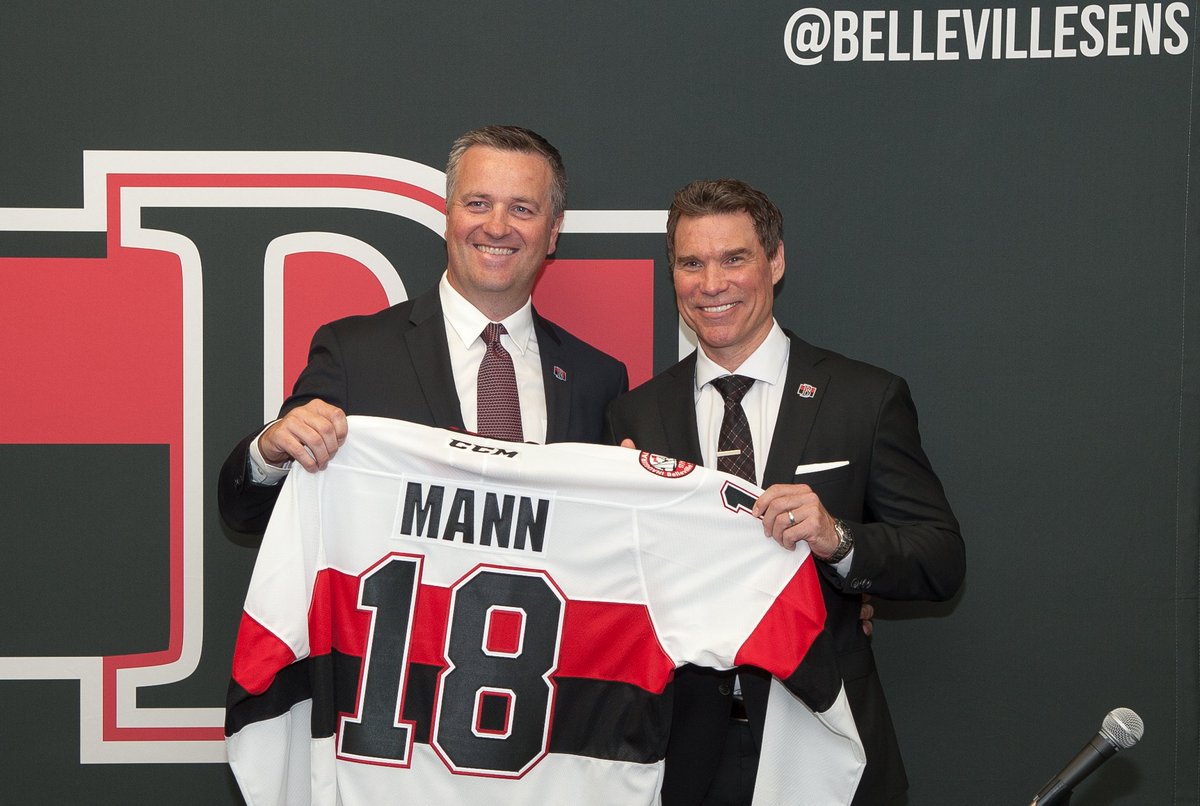
  • Hired a coach with a winning AHL track record – while I have some concerns about Troy Mann, he’s the first coach with these kinds of credentials hired since the Murray regime arrived back in 2007

Making/avoiding these choices is not how the org has operated in the past and I applaud them dodging their usual pitfalls.

What about the moves I’m not fond of–what’s happened in the off-season that we can concretely critique? There’s not much (yet):

  • Re-signing Patrick Sieloff–he has his uses, but they are extremely limited (32-game pointless streaks require a special kind of talent) and create artery-clogging congestion on the left side (he’s better than Andreas Englund, I’ll grant you, but that’s not saying much)
  • I’ve talked about the org’s risk-averse approach before and this is what’s behind the signing of Mike McKenna (see below)–he’s a half-measure that illustrates their fear of going with two prospects while not wanting to invest in an actual starting goaltender (I would much rather the org make a decision one way or another)
  • [Signing LaBate–while it’s an AHL-contract, so he’s easily benched or banished to the ECHL, he’s not a productive forward, he’s simply big]

Prospects Not Signed

There were a number of players–NCAA graduates and those playing in Europe–that the Sens could have signed to join the squad in Belleville and chose not too. It was a foregone conclusion that NCAA dud Shane Eiserman would walk (yet another “energy player“), but local kid Kelly Summers was more surprisingly allowed to walk (probably not an NHL talent, but potentially useful at the AHL-level). Swede Filip Ahl didn’t have a good season in the Allsvenskan, so has one final chance to impress, while Finn Markus Nurmi (who did have a good year) will be allowed more time to develop.

Rookies

I’ve been assuming Christian Wolanin and Logan Brown will be in Ottawa this upcoming season (along with BSen eligibles Colin White and Thomas Chabot) and if that assumption is correct the most exciting rookie in Belleville is Filip Gustavsson. The Pittsburgh pick is yet another in a long line of ‘saviours’ for the BSens and it will be interesting to see how well he adjusts given Marcus Hogberg‘s struggles last year (Gustavsson had a hot start before he began to regress to the mean, but he wasn’t here long enough to show if he would share the Jekyll & Hyde element that plagued Hogberg‘s rookie year).

Besides the Swedish goaltender there’s a plethora of rookie forwards: 2017 pick Drake Batherson, CHL FA Aaron Luchuk, NCAA FA’s Andrew Sturtz and Ryan Scarfo (the latter on an AHL-deal), and CIS FA Boston Leier (also on an AHL-deal). I’m a well-known fan of players with offensive acumen/potential, so I’m chuffed by the Luchuk signing (you can read scouting sentiments here and here) as well as seeing Batherson at the pro level (scouting thoughts here). I wasn’t impressed with Scarfo (about whom I have no scouting material to work with), but with an AHL-contract he’s not someone the team needs to rely on; I was happier with Leier, but the sample-size was very small (while never ranked for the draft Hockey Prospects did write a profile of him in 2012 which I’ll include below).

Non-Rookie Prospects

Hogberg arrived highly touted due to fantastic numbers in Sweden, but struggled in his rookie year (which wasn’t great, but not as bad as his numbers suggest). His performance played a role in the signing of McKenna. On the defensive side two disappointing players return: Englund, who despite org praise was a disaster this past season (see also here), and Macoy Erkamps, whom I’m sure the team will try to package in any future deal they make (as they did by dumping Cody Donaghey on San Jose, for example, or Vincent Dunn on Pittsburgh during the season, or Ludwig Karlsson on Dallas long ago). More positively, Max Lajoie returns and we can expect more growth from him; Christian Jaros (who was fantastic as a rookie) will hopefully stay healthy and give us a full season of play. Jordan Murray also returns–he played entirely too much this past season, but I’d expect him to ride the pine barring injuries (how much he plays is one of the litmus tests for Troy Mann).

At forward it’s a make-or-break year for Francis Perron, who missed almost half the season due to injury; Filip Chlapik, who is unlikely to spend an entire season in Belleville, is less likely to be jerked around by the coaching staff and it will be interesting seeing him given proper ice time/opportunities (despite bizarre usage he outperformed every other forward on the team besides oft-injured Ben Sexton); Gabriel Gagne is coming off a very strange sophomore season–scoring 20-goals on an offensively awful team is impressive, but producing only 25 points leaves the question open about his NHL-potential. Jack Rodewald is on an ELC I think the Sens wish they could rip up already–they had him on a safe, AHL-contract, but a hot start got Randy Lee excited and they gave him a true ELC–it’s clear the 24-year old is what he is at this point–I suspect he won’t play as much, at least.

The Rest

In an effort to shore up their goaltending the Sens brought back 35-year old McKenna (who played for the BSens in 2011-12). He’s coming off a poor regular season, but a hot playoff; clearly the vet’s best days are behind him. There’s no upside here–nothing unexpected–you just hope he won’t decline much more.

Julius Bergman arrives from San Jose via the Mike Hoffman trade–he’s coming off a down year (fueled in part by the Barracudas’ 20% drop in total offence)–he provides stability for the right side on defense which was dominated last season by turnover machine Erik Burgdoerfer. The aforementioned veteran remains, but we can hope Troy Mann will cut down on his TOI (he had him in Hershey in 2015-16). On the left side failed first-rounder Stuart Percy means the team won’t be forced to play Murray or Englund as much. That said, with Patrick Sieloff retained it’s difficult to see any room for Lajoie (mentioned above)–a move is necessary I think (were it up to me I’d dump Englund).

At forward Nick Paul returns, coming off a bizarre third-year where he was either hot or ice cold (as I go over here)–there’s plenty of talent there, so is he held back by linemates or is inconsistency what he is at this stage? The oft-injured but excellent Sexton remains, as does Jim O’Brien–the #1 center for much of last season for no particular reason. Jimmy is a solid penalty killer, but he’s offensively limited and I hope we see much less of him (Mann had him in Hershey, 2014-15, where he played a lot). Added this season are Adam Tambellini and Chase Balisy (profile below), along with potential #1 scorer Paul Carey (who couldn’t convert AHL-success into NHL-success with the Rangers). [LaBate brings us back to earth–a big player who hasn’t produced at any level–he’s absolutely a Randy Lee-type player.]

Here’s a list of all these players by position organized from youngest to oldest (rookies are green, prospects are blue, veterans-status players are bold; junior/European/ECHL stats are in italics; players with 4+ seasons in the AHL have their career PPG in brackets):

Goaltenders (3)
Filip Gustavsson DOB 1998 (t-Pit) SHL/AHL .918 2.07/.912 3.01
Marcus Hogberg DOB 1994 (3-78/13) AHL/ECHL .899 3.27/.915 3.10
Mike McKenna DOB 1983 (FA) AHL .909 2.64

Defense (9)
Maxime Lajoie (L) DOB 1997 (5-133/16) AHL 56-1-14-15 0.26
Christian Jaros (R) DOB 1996 (5-139/15) AHL 44-3-13-16 0.36
Andreas Englund (L) DOB 1996 (2-40/14) AHL 69-1-9-10 0.14
Julius Bergman (R) DOB 1995 (t-SJ) AHL 65-10-10-20 0.30
Macoy Erkamps (R) DOB 1995 (CHL FA) AHL 46-1-3-4 0.08
Patrick Sieloff (L) DOB 1994 (t-Cal) AHL 58-1-9-10 0.17
Stuart Percy (L) DOB 1993 (FA) AHL 67-7-27-34 0.51 (0.38)
Jordan Murray (L) DOB 1992 (CIS FA) AHL 58-8-15-23 0.39
Erik Burgdoerfer (R) DOB 1988 (FA) AHL 66-5-12-17 0.25 (0.25)

Forwards (16)
Drake Batherson CR DOB 1998 (4-121/17) QMJHL 51-29-48-77 1.51
Filip Chlapik CL DOB 1997 (2-48/15) AHL 52-11-21-32 0.61
Aaron Luchuk CL DOB 1997 (CHL FA) OHL 68-50-65-115 1.69
Gabriel Gagne RW DOB 1996 (2-36/15) AHL 68-20-5-25 0.36
Francis Perron C/LW DOB 1996 (7-190/14) AHL 44-4-11-15 0.34
Nick Paul C/LW DOB 1995 (t-Dal) AHL 54-14-13-27 0.50
Adam Tambellini CL DOB 1994 (FA) AHL 69-16-16-32 0.46
Andrew Sturtz RW DOB 1994 (NCAA FA) NCAA 37-14-26-40 1.08
Ryan Scarfo CL DOB 1994 (NCAA FA) NCAA 38-20-16-36 0.94
Jack Rodewald
 RW DOB 1994 (t-Tor) AHL 62-14-11-25 0.40
Boston Leier RW DOB 1993 (CIS FA) CIS 27-15-24-39 1.44
Joseph LaBate LW DOB 1993 (FA) AHL 39-6-5-11 0.28
Chase Balisy
C/RW DOB 1992 (FA) AHL 67-14-21-35 0.52 (0.53)
Ben Sexton C/RW DOB 1991 (FA) AHL 30-10-11-21 0.70 (0.45)*
Jim O’Brien CR DOB 1989 (FA) AHL 60-13-16-29 0.48 (0.54)
Paul Carey CL DOB 1988 (FA) NHL 60-7-7-14 0.23 (0.63)

*I have no idea if Sexton has recovered from the injury that ended his season at the end of March (which I think is a concussion), but I’m pre-supposing he will have by the time Belleville begins playing or at least early in the season

My Lineup Expectations

The season will start with a McKennaGustavsson rotation–Hogberg might go to Brampton to begin with (as he did last year). For the latter I think he’ll have to wait for injuries to get his opportunity (which is also what happened last year when he was buried behind Danny Taylor and Andrew Hammond).

On defense it should be Jaros and Bergman as the top two on the right side with Burgdoerfer as the third–this is another test for Troy Mann, because Kurt Kleinendorst would have given the latter the top spot. On the left side Percy gets the nod followed by Sieloff and Englund (that’s not my preference, but what I think will happen given the above–I’d have Lajoie as my second with Sieloff in the bottom pair to take care of Burgdoerfer). Listing it out, what follows is what I expect:

Percy-Bergman
Sieloff-Jaros
Englund-Burgdoerfer
Extras: Lajoie, Murray (Erkamps to the ECHL)

Forwards are a much more difficult puzzle box. I’m assuming that Troy Mann is like all previous BSens coaches in giving preference to veterans/experienced players, thus I’ve buried talented newcomers on the fourth-line. I’ve also slipped Chlapik down to the second line because he’s generally played center, but he could easily be flipped with Paul (who also generally plays center). I don’t think Tambellini is a true top-six forward, but I think he begins there and that Gagne will at least get the opportunity to start there as well because the org is high on him (it’s certainly possible Balisy is here instead, or even Luchuk, but we’re following a conservative trend with prospects). The third line is composed of various veterans/experienced prospects. As for my personal preference, the top line is fine (with the aforementioned swap also working), but I’d try out one of the offensively gifted rookies on the second line, shifting Tambellini down. I’ve kept Rodewald out of the lineup because when healthy I just don’t see where he’d fit-in. Perron is more effective at center, but that means playing on the fourth line–the decisions aren’t easy. One of the weird things Ottawa has done is signed/drafted shooters almost exclusively–Gagne, Rodewald, Leier, Luchuk, Batherson, Sturtz, Paul, Tambellini, Sexton, Carey, O’Brien–shooters–only Chlapik and Perron are true playmakers (Batherson and Balisy’s numbers are a little less slanted than the others). So what I expect:

Paul-Carey-Sexton
Tambellini-Chlapik-Gagne
Perron-O’Brien-Balisy
Luchuk-Batherson-Sturtz
Extras: Rodewald, Leier, Scarfo, LaBate

A look at Chase Balisy: C/RW; 6-170/11 Nsh
2015-16 69-9-17-26 0.37 10th
2016-17 76-17-28-45 0.59 3rd
2017-18 67-14-21-35 0.52 6th

This is another player who is what he is–his most productive AHL-season was his first (2014-15)–he adds a certain amount of offense (marginal top-six production or good top-nine) and functions as insurance for injuries. When I saw that he’d been signed I wondered what that meant given the general crowding of the BSens lineup, but I think this is a sign that the org is moving on from Rodewald (Gagne, Batherson, and Sturtz’s are prospects on that side who will be given a chance, while Sexton was the most productive players on the team last year, so where really can he play?). If I’m right I think this is the correct move. He might also be insurance if Sexton is still injured.

And Joseph LaBate: LW; 4-101/11 Van
2015-16 AHL 66-10-10-20 0.30 13th
2016-17 AHL 38-6-10-16 0.42 8th
2017-18 AHL 39-6-8-11 0.28 17th

Drafted out of the US high school system (fairly highly ranked in the draft, I had him in the third round), he arrived in the NCAA and his progression simply halted–his senior year being his least productive. The Canucks signed him anyway and his middling performance continued (I’m guessing he had favourable linemates his first couple of seasons, but not the last). What he does do regularly is fight (7 in just 39 games last year, 6 the year before). There isn’t much fighting in the AHL anymore (Tyler Lewington lead the entire league with just 10), so LaBate is one of the most frequent pugilists. These days it’s broadly understood how useless fighting is in terms of winning, but the org carries the Luddite torch for this being important and that’s reflected in their continued insistence to sign such players. The only positive is that he’s on an AHL-deal, minimizing their commitment to him.

As promised here’s the Boston Leier 2012 profile:

A two way forward who drives to the net hard and picks up a majority of his points around the dirty areas. Leier is not a great offensive player, but will provide good secondary support. He creates good chances by keeping plays simple. Leier is an average skater, and must improve that aspect of his game. He is of average stature, so he needs to be faster to have more impact during the course of a game. Offensively, Leier is at his best around the net. He seems to get pushed around often around the boards, but around the net, he has shown some good hands to finish and a good ability to find loose pucks and bang them home. He has below average vision and will not be a great playmaker by any means, and nor does he have a wicked shot that commands respect from his opponents. Defensively, Leier plays a tough game and is a good contributor in his own end. He sacrifices his body to block shots, and reads the play at an above average level. Leier can get caught puck watching at times and lose his position. He can recover by sliding to block a point shot, but smart opponents will fake a shot, go around him and have a better chance to score. He needs to stay patient, wait for the puck to come to his area and ensure that he takes away the option to his check with an active stick.

The description of his playing style fits my limited exposure, with the caveat that his speed seemed fine.

Where Former BSens Have Landed

For the sake of curiosity, here’s where roster players who finished with the team last season have wound up (excluded those who were traded):

  • Danny Taylor – Sibir Novosibirsk (KHL); he returns to the Russian team he played for prior to signing with Ottawa
  • Chris Driedger – Springfield (AHL); Florida’s affiliate where he’ll compete for the backup position
  • Ville Pokka – Avangard Omsk (KHL); after almost 300 AHL games he presumably wants to cash in while he’s still young
  • Mike Blunden – HC Bolzano (EBEL); this is the same team where another failed BSen (Chris Carlisle) landed after his contract finished
  • Tyler Randell – Rochester (AHL); Buffalo’s affiliate; presumably coach Chris Taylor thinks the team needs “toughness” or “veteran savvy” after going 0-3 in the first round of the playoffs
  • Ethan Werek , Max Reinhart , Daniel Ciampini, Kyle Flanagan , Nick Moutrey, Eric Selleck – all remain free agents

So that’s my very early BSen speculation. I’m sure things will change over the next month and a half before Belleville’s training camp opens, but I don’t think we’ll see the large number of PTO’s that hit the roster as they did last season. There’s more talent on this roster and fewer obvious problems (the blueline remains weak and goaltending remains a questionmark), but coaching is going to play a large role in the results.

This article is written by Peter Levi (@eyeonthesens)

Exploring the BSens Veteran FA Signings

I’ve been curious how the BSens would spend their limited free agent budget–as I’ve previously gone over, since Tim Murray’s departure those decisions have been particularly awful, so would we get a repeat this off-season? Before we take a look at the latest signees (I’ve profiled Adam Tambellini and Stuart Percy below), it’s worth noting that my Kelly Summers profile was presumptuous because he remains unsigned (so the org appears to have decided against signing him–there’s nothing preventing him from getting an AHL-deal, of course).

Randy Lee (charges pending) likes his grizzled veterans when it comes to FA’s–older players on the downside of their careers who bring the intangibles that have helped the BSens miss the playoffs every season he’s been in charge. Let’s briefly go over his track record (this excludes re-signings or players acquired through trade):
2014-15: Aaron Johnson (31), Brad Mills (31), Carter Camper (26)
2015-16: Zack Stortini (30), Mike Kostka (30), Mark Fraser (29), Nick Tuzzolini (29), Guillaume Lepine (28), Eric O’Dell (25)
2016-17: Mike Blunden (30), Chad Nehring (29), Kyle Flanagan (28)
2017-18: Danny Taylor (31), Erik Burgdoerfer (29), Ben Sexton (26), Tyler Randell (26), Max Reinhart (25)

There’s a little restraint in Lee’s first year, as other than PED-user Mills these are reasonable additions, but afterwards it’s dominated by mostly useless players (a significant percentage have subsequently retired or gone on to lesser European leagues, giving you an idea of how the rest of the AHL regarded their abilities). Lee’s inability to recognize or understand talent is painfully obvious.

So what about this off-season? Ignoring re-signings, this is what we have: Mike McKenna (35!), Paul Carey (30), Stuart Percy (25), and Adam Tambellini (23). I’m on record as not a fan of adding McKenna (Nichols found criticism of this signing amusing for reasons I don’t think even he knows–my advice to him: 1) if you don’t watch/follow the minors, best not comment on it, 2) if you are going to criticize you’re better off explaining why). Fortunately, it doesn’t matter if the old ‘tender bombs out because there are two prospects to fill in. Carey and Stuart are better signings because both have a solid track record in the minors. Tambellini I have mixed feelings about because his numbers seem more a product of teammates than his own abilities.

Adam Tambellini
C/LW DOB 1994 6’4; 3-65/13 NYR
2015-16 74-17-15-32 0.43 6th
2016-17 68-13-22-35 0.51 5th
2017-18 69-16-16-32 0.46 7th

His goal to assist ratio reminds me of Jim O’Brien (and yes, this is Steve’s son and Jeff’s brother). The Sens haven’t had much luck plucking players out of the Ranger system, but the expectations for him wont be too high. His numbers suggest a shoot-first mentality and it’ll be interesting to see if there are enough playmakers to compliment him.

Stuart Percy
DL DOB 1993 6’1; 1-25/11 Tor
2015-16 58-4-20-24 0.41 2nd
2016-17 37-1-7-8 0.21 8th
2017-18 67-7-27-34 0.51 3rd

The failed former first-rounder has had stable AHL-production outside of one quirky season with Wilkes-Barre. As I mentioned on Twitter he’s not a true #1 defenseman and that means on paper the team is (again) without someone in that role (Bergman isn’t that guy, so unless Wolanin is in the minors it’s offense by committee).

Is this better than previously? I think it’s the best Lee’s done since his first year (assuming he’s had much say given his legal issues), although the proof is in the pudding. Throughout Lee’s tenure, regardless of coaching, his teams have been awful defensively (despite adding innumerable “defensive defensemen”) and struggled to score in all but his first year.  Adding Percy (along with the addition of Bergman) will help the blueline move the puck and Carey can add offense from the front. This doesn’t mean poor coaching couldn’t erase the potential benefits–O’Brien isn’t a #1 center and Burgdoerfer shouldn’t receive #1-#2 D-TOI, but decisions like that would mean yet another season of misery in Belleville.

This article is written by Peter Levi (@eyeonthesens)

Prospect Profile: Kelly Summers

I haven’t written a profile since Pius Suter was in Ottawa’s camp last August, so we’re overdue. Summers isn’t signed yet, but I’m assuming he will be. He was drafted way back in 2014 and that was a very different time–Jason Spezza and Robin Lehner were still part of the team; Jared Cowen and Patrick Wiercioch were still part of the future; Matt Kassian and a returning Joe Corvo were providing…laughter? Bryan Murray was the GM, Paul MacLean the coach, and trades were being made for a non-existent playoff run (alas Rob Vollman picked the team to win the President’s Trophy). When the season was over we were assured next season would be different. On my end of things I was making prescient analysis of prospects in Binghamton; Nichols wanted more two-way players; Jeremy Milks was still writing about the team; and Travis Yost was still at Hockeybuzz.

Kelly Summers DOB 1996 DR 6’2 7-189/14
CCHL Carleton Place 56-17-43-60 1.07 1st/5th in scoring (played with Andrew Sturtz)
NCAA Clarkson 33-6-4-10 0.30 2nd/10th
NCAA Clarkson 37-3-11-14 0.37 3rd/8th
NCAA Clarkson 39-3-14-17 0.43 2nd/9th (played with Nico Sturm)
NCAA Clarkson 40-6-24-30 0.75 1st/4th (ibid)

Local boy when drafted was projected as either a bottom or second-pairing two-way defenseman. While at Clarkson he was behind Detroit pick James de Haas (6-170/12, see below) and, sometimes, Flyer pick Terrance Amorosa (5-132/13), both of whom are left-hand shots. Summers‘ numbers aren’t overwhelming and he only lead the blueline in scoring his senior year, but they did steadily improve.

When looking at projections, who can we compare him too? Not many players drafted from tier-2 Canadian junior spend four years in college with steadily improving numbers (his senior year he was tied for 22nd in blueline scoring in the NCAA). In going through players drafted the five years before him (2009-2013) virtually no one has that exact trajectory:
2009: Kyle Bigos, Curtis Gedig, Jeremy Price
2010: Julian Melchiori, Benjamin Gallacher, Isaac Macleod
2011: Michael Paliotta, Josh Manson, Sam Jardine, Brennan Serville
2012: Reece Wilcox, Rhett Holland, James de Haas, Matthew Benning, Ben Hutton
2013: Carson Soucy, Dane Birks, Mike Williamson, Nolan De Jong
One free agent college player (Brady Lamb) also fit the same general profile

Virtually all of these players can easily be dismissed with just these two exceptions: Ben Hutton and teammate James de Haas. Why these two? Hutton is the simplest, as he was also drafted from the CCHL; his college numbers don’t track out the same way, but we’ll get back to that. De Haas was a BCHL grad and had the same four full years in college with steadily increasing numbers (including a final high as a senior). Let’s look at their numbers from the year they were drafted until they turned pro:

Ben Hutton: CCHL 0.75 NCAA 0.44 0.82 0.53
James de Haas: BCHL 0.45 NCAA 0.34 0.41 0.44 0.78

In both cases Summers had better junior numbers–indeed, his CCHL totals are generally better than all the above players listed–but his college numbers are lower then our two comparables (if ever so slightly from de Haas). Hutton‘s NCAA totals are very different–he was at Maine for three years where he lead the blueline in scoring every time (the team’s leading scorer was Dallas draft pick Devin Shore–no relation to the Sens draft pick Quentin). De Haas, on the other hand, spent four years at Clarkson (playing with Summers for two, as well as current BSen Ben Sexton as a freshman). Other than his first year he was the top scoring blueliner each season.

Hutton, whose comparison isn’t as apt, went straight to the NHL, so there are no AHL numbers to look at. De Haas, on the other hand, who is a much better match, spent half a season with Lehigh Valley this year (33-1-10-11, or 0.33), and I think those numbers–projecting to 25 points–are reasonable to expect for Summers (if a little lower, with variation depending on how he’s deployed). As an NHL prospect those scouting impressions when he was drafted haven’t changed, albeit he’s likely going to fit the lower projections, so a bottom-pairing player.

This article is written by Peter Levi (@eyeonthesens)

Senators News & Notes

Image result for dodgeball cotton

The Sens initial dip into the free agency pool echoed their usual tendencies. They went back to the well with an familiar face, signing 35-year old goaltender Mike McKenna. They followed that up with a more impactful signing–one with another org connection as they picked up former Troy Mann player Paul Carey. The latter move I’m okay with–it could be a good one–but I’m concerned about the former.

Mike McKenna, GR, DOB 1983
2015-16 Portland .921 2.45
2016-17 Springfield/Syracuse .905 2.84
2017-18 Texas .909 2.64

The trend in his numbers is clear–he’s in decline–but a strong playoff run and org familiarity (he was with the Binghamton Senators in 2011-12) were enough for the Sens to sign the veteran. The worry, besides simply having three goaltenders on the roster, is that his save percentage (27th in the league this season and 33rd the year before) is not going to magically improve. The glass half full opinion would say he’s insurance for Filip Gustavsson/Marcus Hogberg without obviously needing the starter mantel. My issue with this idea is he’s not an elite goaltender so he represents mediocrity at best while taking development time away from one of the Swedes. If the BSens were going to be a top-AHL team I think you could make the argument about riding a veteran ‘tender for playoff success, but that’s not the case and with two talented prospects I’m not a fan of the three-headed monster in goal. How Troy Mann uses him will be interesting to watch, but if we were in the Kleinendorst era it would be McKenna-McKenna-McKenna all season.

Paul Carey, CL, DOB 1988
2015-16 Hershey 44-13-18-31 (0.70)
2016-17 Hershey 55-24-31-55 (1.00)
2017-18 NYR 60-7-7-14 (0.23)

Undrafted NCAA grad earned an NHL shot with the Rangers this past season which didn’t pan out for the 29-year old; that said, his AHL-numbers are solid (career 0.63) and adding a scoring veteran to a roster that’s struggled to score in four of the last five seasons is a good thing. A big plus for me is he’s not an agitator/goon (ala Tyler Randell/Eric Selleck/Zack Stortini etc) or a “good in the corners guy” (ala Mike Blunden), so he can genuinely play the game and (hopefully) produce. Troy Mann clearly trusts him so I’d expect him to get top minutes.

Eligible Players Not at Development Camp

I thought I’d briefly go over the five players who could have attended camp and did not:

  • Thomas Chabot – presumably the org told him he needn’t attend (a tendency for high-end, graduated prospects)
  • Francis Perron – presumably still recovering from injury (he last played January 27th)
  • Andreas Englund – could be injury-related, although he did play in Belleville’s final game
  • Macoy Erkamps – as above, although I’m sure the org wants to divest themselves of him at this stage
  • Filip Ahl – I assume he’s absent due to health reasons

Thoughts on the Development Camp Scrimmage

I don’t put much stock in development camp performances (I can vividly remember Eric Gryba skating through guys back in the day), but I thought I’d go over the scrimmage from a few days ago (which you can watch here; team white winning 6-3)–it was much more entertaining than last year’s. Incidentally, when the Sens began having a 5-on-5 scrimmage in camp they initially held it the first full day, which never made sense to me, so I’m glad this was further into it. It’s of note that the play-by-play guys (Steve Lloyd and A. J. Jakubec) spent air-time defending the Brady Tkachuk pick from fan-criticisms–something that would not have been the case even six-seven years ago.
First Period
-Chalpik’s zone entries remain the same–the wide swing around the boards going from one side to the other looking to dish the puck off at the half boards (very effective if his linemates know what he’s doing)
-Wolanin with a lazy turnover
-D’Astous threw a hit on Tralmaks and just bounced off
-Loheit goes for the knee on Lyle
1. (White) Jaros breaks up a pass, but three players converge on Burgess who makes a great pass to a wide open Crookshank who scores stick-side on Gustavsson
-Hogberg makes a nice save on White
-Formenton just misses receiving a nice pass through traffic from Chlapik for a breakaway
-Burzan wins a battle against Leier which leads to a scoring chance by Lynch (erased by a stick-check from Kuffner)
-White with a nice pass to Loheit who deflects it wide
-Jaros fires a bullet wide in the slot
-Kaldis takes away a scoring chance
2. (Red) Lyle deflects in Burzan’s pass
-Lillibridge flubs an open chance on the PP
3. (White) Great pass by Chlapik to Nurmi who puts it off the post and in on the PP
-Gustavsson with a great stop off Wolanin in the slot
4. (White) Batherson turns it over and Tralmaks beats Gustavsson with a deke
-Tychonick throws it up the middle to the wrong team (Tralmaks) and Gustavsson makes a nice save on Leier
5. (Red) Off the same play White deflects in Batherson’s centering pass
-Great stop by Hogberg off Stewart
-Stewart runs Kelly
-Gustavsson with a nice stop off Chlapik
-Jaros with a big hit on Jordan
-Gendron throws a blind backhander up the middle from his own goal and is very lucky it isn’t intercepted inside the blueline
Second Period
-Stewart runs Leier
-Lynch stopped by Hollett on a breakaway
-Novak hits the post
-Jordan out muscles and out skates D’Astous and gets a weak backhander on Gustavsson
-Scarfo stoned by Hollett on a mini-breakaway
-Novak misses the net with a one-timer in the slot
-Hollett stones Gruden
-Hollett stops Gruden on a penalty shot
6. (Red) Lajoie fans on a rebound into the open net, but the puck goes to Sturm who puts it in
-Scheid prevents a goal (wrap-around into an empty net as Daccord over commits)
-Chlapik stopped on an odd-man rush SH by Daccord
7. (White) Burgess with a one-timer off a pass by Crookshank
Third Period
-Mandolese with a nice save off Sturtz
-MacLeod knees Lajoie
-Mandolese stops Sturtz
-Daccord with a stop on Chlapik
-Kaldis makes a good defensively play on Jaros
8. (White) Tkachuk with an errant pass in his own zone which results in Jordan beating Daccord on a bad angle shot
-Mandolese stops an awkward Brown shot in close
9. (White) Nurmi beats Daccord with a bad angle shot
-Stewart blocks Gagne’s shot
-Stewart hurts White with a shot from the point

Scouting Reports on FA Signings

I dug up a couple of scouting reports on a pair of free agent players the Sens signed this past season (neither was ever ranked for the draft):

Aaron Luchuk 2015 report from HP (you can read an interview by Colin with him here):

He has good speed and will challenge defenders one on one. He has good puck handling ability…able to create offense with a deceptive shot. He works hard on the backcheck, keeping up with opposing forwards and was usually a key part of the Spitfires penalty kill. … His offensive upside is somewhat untapped playing behind several veterans, so as he moves up the depth chart he will be able to show more of the offense he displayed in minor midget.

Parker Kelly 2017 report from HP:

…relies on his exceptional skating skills and work ethic to create space. His agility and explosiveness are impressive and this allows him to win the majority of his puck races. He is elusive in the cycle game and can evade defenders with his stops and starts. …[able] to keep his feet moving and create turnovers. He is a consistent pest, and he can both strip pucks from defenders and breakup passes with his smart defensive positioning. … When he does have the puck, he continues to keep his feet moving and strives in the cycle game. …not…overly creative but he has above average on-ice vision and has shown that he can make plays through traffic. In addition, he likes to shoot the puck in stride, utilizing a high leg kick, and these shots are a heavy and accurate, forcing goalies to make tough saves. …may not develop into a dominant offensive player, but we expect him to continue to progress

Ottawa’s European Drafting

Random thought: I wonder if the absence of Swedes the last two drafts is in response to the Mikael Wikstrand situation (from the fall of 2015). This is around the time Ary M gave the org the tagline risk-averse, which remains just as true today. I’ve often thought the Alexei Kaigorodov situation from 2006 was a catalyst for the org to avoid drafting Russians and while it’s hard to imagine them going for a complete Swedish ban they do shy away from risk, so it’s food for thought.

Free Agent Signings

I’ve been tracking FA signings (specifically those who haven’t played in the NHL from Europe, the NCAA, etc) and while there are many yet to come I thought it was reasonable to offer an update. We’ll start with Europe since that’s what I cover regularly (my most recent list of likely signings is here). From that list eleven players have been taken (highlighted below), with four others from prior lists (Vincent Praplan and Par Lindholm from my 2017 list; Juuso Ikonen from my 2016 list, and Yasin Ehliz from my 2015 list).

Europe (33): Vincent Praplan (SJ), Niclas Westerholm (Nsh), Lukas Radil (SJ), Yannick Rathgeb (NYI), Miroslav Svoboda (Nsh–originally drafted by Edm), Dominik Kahun (Chi), Michael Lindqvist (NYR), Juuso Ikonen (Wsh), Ville Meskanen (NYR), Filip Pyrochta (Nsh), Maximilian Kammerer (Wsh), Carl Persson (Nsh – attended Ott’s development camp in 2018), Lawrence Pilut (Buf), Igor Ozhiganov (Tor), Par Lindholm (Tor), Joel Persson (Edm), Saku Maenalanen (Car–originally drafted by Nsh), Juuso Riikola (Pit), Yegor Yakovlev (NJ), Kevin Lankinen (Chi), Patrik Rybar (Det), Ilya Lyubushkin (Ari), Michal Moravcik (Mtl), David Sklenicka (Mtl), Jacob Nilsson (Chi), Bogdan Kiselevich (Flo), Antti Suomela (SJ), Marcus Hogstrom (Cal), Yasin Ehliz (Cal), Brooks Macek (LVK), Martin Bakos (Bos), Michael Fora (Car), Veini Vehvilainen (Clb; drafted rather than signed)
NCAA (16): Zach Frye (SJ), Zach Whitecloud (VGK), Merrick Madsen (Ari–originally drafted by Phil), Cooper Marody (Edm–originally drafted by Phi), Cam Johnson (NJ), Mitch Reinke (Stl), Eric Robinson (Clb), Andrew Sturtz (Ott), Daniel Brickley (LA), Sheldon Rempal (LA), Josh Dickinson (Col), Tony Calderone (Dal), Karson Kuhlman (Bos), Andrew Oglevie (Buf), Jordan Gross (Ari), Ross Colton (TB)
CHL (6): Patrick Bajkov (Flo), Hayden Verbeek (Mtl), Tanner Jeannot (Nsh), Alexandre Alain (Mtl), Brad Morrison (LA–originally drafted by NYR), Aaron Luchuk (Ott)

This article is written by Peter Levi (@eyeonthesens)

Senators Development Camp Invitees

Image result for parker kelly senators

The Sens are always in a rush to have their development camp right after the draft–perhaps it saves them money in some fashion, but for fans its a great opportunity to see new (and old) prospects play prior to summer vacations (for those who actually get vacations). I used to attend these all the time and if you get the chance they are a lot of fun. What I wanted to look at here are the free agent invitee’s on the Development Camp Roster (keeping in mind the majority of these players will never see the light of day again with the Sens):

Defense
Jonathan Aspirot DL DOB 99 QMJHL (Moncton) 67-7-19-26
Established a career high in PIMs this season (a theme as we’ll see), he finished third on the team in ppg with a fairly unremarkable numbers; I have absolutely no idea what he provides other than a warm body

Charles-Edouard D’Astous DL DOB 98 QMJHL (Rimouski) 59-18-38-56
The leading scorer among d-men for Rimouski (a team the Sens have drafted from before), he is tied for eighth in the league in D-ppg and fourth amongst those who are not drafted. It was a career year for the overager, but not without precedent (he had 40 points the previous season); like Stewart below he also accumulated far more PIMs than he normally has

Yanni Kaldis DR DOB 95 NCAA (Cornell) 33-4-15-19
Finished his sophomore season at Cornell (yet another team the Sens have drafted from) after a couple of years in the BCHL (where he put up good numbers that didn’t garner him draft attention); he’s the top scoring pure defensemen on his team (Alex Rauther is listed as a winger and blueliner, otherwise he’d be first by a nose)–I’m always happy to see skill so he’ll be an interesting one to watch

Graham Lillibridge DL DOB 99 USHL (Chicago) 56-4-41-45
At 5’9 he’s not at all the norm for the Sens; he finished well ahead of the other blueliners on his team and was second in ppg in the USHL. Committed to Yale, I applaud the Sens for giving someone like this a look (although I doubt they’d sign him)

Brady Lyle DR DOB 99 OHL (Owen Sound) 63-11-23-34
Steadily improving blueliner finished second in ppg on his team; he was universally picked for the 2017 draft (I had him pegged at #114), but wasn’t even discussed this year so presumably his stock has fallen

Ian Scheid DR DOB 95 NCAA (Mankato) 40-9-17-26
Didn’t show any ability in the USHL while putting up good numbers in both USHS and the NAHL; the last two years he’s been productive at Mankato; he finished second in ppg well behind LA draft pick Daniel Brickley; as a righthand shot he has extra appeal

Chase Stewart DR DOB 97 QMJHL (Rimouski) 53-5-35-29
After failing out of the OHL he wound up in the Q playing with Thomas Chabot the previous season; beyond a career year in his final stint in junior (not much of a feat) he also increased how much he fought (going from 4-5 fights a year up to 7). He was second on his team in scoring, well behind fellow invitee D’Astous. Since there’s no fighting at the camp I have no idea what he’s going to do, but the Sens love their tough guys

Forwards
Luka Burzan
CL DOB 2000 WHL (Brandon) 72-15-25-40
Passed over in the draft (I had him at #80), his anemic production with Moose Jaw was enough to taint his success with Brandon (both teams that the Sens have drafted from in the past). Brandon had an enormously talented roster so there are reasons to question his sudden offensive production

Zach Jordan RW DOB 96 NCAA (Nebraska) 34-16-12-28
Big winger had an adequate USHL final season and then jumped from 2 points with Nebraska to 28 this season; it’s clear he’s riding the coattails of Detroit pick David Pope and Edmonton pick Tyler Vesel, but his size is going to tempt teams

Ryan Kuffner LW DOB 96 NCAA (Princeton) 36-29-23-52
Local boy who played with Gloucester finished up his junior season at Princeton (another org the Sens have picked from); he’s had a monster season where he lead the team in goals and was second in points (behind undrafted Max Veronneau–another local boy). His production, particularly as he’s always produced, may tempt the Sens

Robert Lynch CR DOB 98 QMJHL (Drummondville) 67-28-39-67
Enjoyed a career year with Drummondville (finished just behind first-round pick Nicolas Beaudin); first-rounder Joseph Veleno and undrafted Connor Bramwell contributed to his production, so it’s hard to say just where he is when it comes to skill

Gregor MacLeod LW DOB 98 QMJHL (Quebec) 54-19-26-45
QMJHLer had a modest career year playing for both Charlottetown and Quebec, his numbers spiking while playing with undrafted Matthew Boucher and Chicago pick Philipp Kurashev

Nico Sturm LW DOB 95 NCAA (Clarkson) 40-14-23-37
Not related to the former NHLer, the German national had middling seasons in the NAHL and USHL before heading into the NCAA where he’s had good numbers; his career year at Clarkson (playing with Sens prospect Kelly Summers) are given a boost by LA FA Sheldon Rempal, but as a big body there will always be interest

Eduards Tralmaks LW DOB 97 NCAA (Maine) 37-11-14-25
Lavian national has spent most of his career in various US systems; his only USHL season was unremarkable, but he put up better numbers in his freshmen year at Maine (tied for fourth in scoring and ppg); as a big body he’s going to be given an opportunity to impress

In all we have six NCAA players, five from the Q, and one each from the OHL, WHL, and USHL. In general invitees are never heard from again, but occasionally something comes out of it–Matt O’Connor attended long before the Sens signed him as a free agent and Parker Kelly attended before being signed this past season.

This article is written by Peter Levi (@eyeonthesens)

Reviewing Ottawa’s 2018 Draft

Image result for rock em sock em hockey 18 don cherry

In the midst of Ottawa’s ridiculous off-season the NHL entry draft has come and gone and the Sens had a eight picks as they attempt to…rebuild? Who really knows at this point. Trent Mann ran the board for the second straight year and some Mann-ish trends are now apparent: no Europeans (two years in a row through 12 picks), and staying safe–Mann doesn’t like taking chances so he’s content to pick players with limited upside if that limits the risk (you can read my review of last year’s draft here).

[I completely neglected to review my predictions for the Sens, so briefly: I nailed the Tkachuk pick; the following two selections were via draft deal deals so I wasn’t able to predict them, but I doubt I would have selected Bernard-Docker–who was much further down my list–nor Tychonick, who was much earlier; Gruden was supposed to be gone by their next pick so wasn’t included; Crookshank was ranked much, much later; Mandolese was much, much earlier; Novak wasn’t ranked by anyone; and Loheit didn’t make my list. This isn’t as on-target as last season, but as Mann moves away from the trends previously established adjusting takes some time.]

1-4 Brady Tkachuk (C/LW) DOB 99 6’3 NCAA (Boston U) 40-8-23-31 4th ppg
Son of the former NHLer, his numbers look a little better when you realize he’s second in ppg for players his age on his team (Shane Bowers is slightly ahead). This is a pick many Sens fans are not excited about, largely because of the talented players left available who were ignored for Tkachuk‘s perceived “intangibles” (shades of Curtis Lazar, although Tkachuk isn’t nearly that bad). For fans of actual numbers he does seem to make other players around him better, but this summarizes the general concerns about him:

there isn’t a meaningful (offensive) statistical category where Tkachuk has separated himself from the pack. When viewed through the lens of draft analytics, Tkachuk ranks in the bottom half of the first round or lower in expected likelihood of success; expected production; expected value; and situation, era, age, and league adjusted scoring

Scouts are effusive about him, but it’s all about old-time hockey stuff–they wax poetic about his intangibles, but there’s not a lot of substance. Since all the fluff is positive, let’s look at the concerns from scouts:

The biggest knock on his game at this time is his first-step

And

His burst could still be improved, but his advanced strength makes up for a lack of quickness in tight areas … He does have a habit of overplaying the puck at times, trying an extra move at the offensive blue line and losing possession, instead of dumping the puck deep and forechecking … defensively he could use his strength better. In his own zone, he’s not engaged every shift.

And

Weakness: overall quickness; consistency

My concern with Tkachuk me is that he’s someone useful in supporting talented players, but fourth overall picks are supposed to be the talented player. Over time this concern may go away, but I’m very leery about a player whose primary hype is over things like physicality and “meanness” because they so rarely yield results

1-26 Jacob Bernard-Docker (RD) DOB 2000 6’0 AJHL (Okotoks) 49-20-21-41 2nd ppg for D
I’m not sure what the hurry was for the Sens to pick him (reminds me of the wheeling and dealing to land Matt Puempel in ’11)–while he might not have been available at #48, he’s not first-round material either. Via Nichols we have:

a very solid two-way defenseman…but he’s not a real upside pick. He’s a good kid, plays a reliable game, can move the puck, but I don’t think he’s going to be an impact guy

That’s what a late-round pick is for. Of course, that’s just Pronman’s opinion, what about other scouts?

[one of the best at supporting] his partner … He’s quick to recognize his missed assignment…able to communicate effectively to his defensive partners during odd-man situations. … His wrist-shot is one of the better shots from the backend … he’s good at changing the angle…while laterally shifting positions or shooting. His first pass allows him to make accurate outlet passes but he’s also a capable puck distributor who can thread passes through high-traffic areas. His puck skills are a plus…though he’s a safer player in this aspect compared to some of the more dynamic offensive-minded defenseman … He’s not the most offensively gifted defender…but he’s versatile, smart, and well-rounded

They added that Tychnoick (below) has more upside. And

Positioning in his own zone is sound, although sometimes he appears to be guessing out there. Another drawback, according to scouts, is that he’s not very dynamic

They also thought his ability to get his shot off needed work. And

Good offensive player. Moves the puck well. Has great hands. Needs to improve strength to excel at the next level. Will need to improve defensive positioning and physicality to round out game.

Which sounds like a completely different player. The final guide see’s him as a second-pairing player who eats up minutes. I don’t hate this pick abstractly, but I’m concerned about where they picked this kind of player–one who could be a marginal pro that doesn’t offer anything that couldn’t be found by lower picks or inexpensive free agency.

2-48 Jonny Tychonick (DL) DOB 2000 6’0 BCHL (Penticton) 48-9-38-47 1st ppg for D
This is the kind of pick I can get behind–players with excellent numbers. What do the scouts say?

exceptional passing ability and impressive four-way mobility. His first-pass is one of the better passes in this class … impressive east-west movement … he does have a tendency to over-handle the puck in the neutral zone … [and] to shoot without traffic at times … he doesn’t control the tempo of a game at the rate he theoretically should considering his skills

And

His skating is remarkable … One of the most dynamic defenders in his draft class … his shot could stand to be crisper and more accurately utilized.

Otherwise there’s agreement on his offensive dynamism and concerns about his defensive play. Defense can be taught, so while scouts tend to fret over it like mother hens it’s not something I’m concerned with–it’s hard to score in the NHL, not defend.

4-95 Johnny Gruden (LW) DOB 2000 USHL (USNTDP Jr) 25-15-19-34 4th ppg
Not the son of NFL coach John Gruden, nothing at all stands out about him to me as he’s yet another “intangibles” player. Here are some scouting opinions.

he plays like a…power-forward despite his frame. He’s got a good first-step and is relentless on the forecheck … The big concern with Gruden’s game is if it’s translatable to the pro levels

And that’s my big concern. I mentioned at the time that he reminds me of Max McCormick and that’s not a player who helps you win–he just takes time away from players who do. And

has a nice stride that allows him to cover the ice with great energy … Occasionally,
he gets caught trying to do too much

And

Despite having solid all-around tools, lacks ultimate assets, which limits his potential a bit among smaller size.

The more you read about him the more he sounds like many other Sens draft picks (Shane EisermanVincent Dunn, etc), although his production makes the McCormick comparison seem the most apt. Max is a good player, but he’s a top-six AHL winger who can’t play on the powerplay and that’s not someone you ever need to draft–they are abundantly available all the time.

5-126 Angus Crookshank (LW) DOB 1999 5’11 BCHL (Langley) 42-22-23-45 2nd ppg
Wasn’t listed by many leaving me with just one scouting report to work with:

His speed ranges in a wide variety of gears that he can utilize with or without the puck … He owns a high level of skill. His puck control is super.

The above criticizes his strength, but that’s easily remedied. It’s hard to make much out of this–we can hope the scoring translates, but it will be a long time before he reaches even the minor leagues.

6-157 Kevin Mandolese (GL) DOB 2000 6’4 QMJHL (Cape Breton) .884 3.46 (best on his team)
Big Montrealer’s numbers are down from last year in the Q, but he plays on a team that’s poor defensively and beat his goaltending partner, so that’s a positive at least.

he’s not aggressive enough in his crease and stays too deep

A common issue for BSens goalie this past season, incidentally. And

Since his midget days, he has had the capacity to win games by himself, only to struggle in the next one. His rebound-control is associated with his consistency

This sounds like Chris Driedger‘s career. And

[has] a great blend of athleticism and aggressive play … can get himself into
trouble when he over-commits to the shot or challenges the shooter too much … must learn to focus better when the shooting pace is low.

And

Plays deeper in his crease and relies on his size to make saves. Positioning and tracking are good and consistent.

The final report is positive, but also comments on him staying too deep in his net. There’s clearly some disagreement on him (particularly his consistency), but he sounds like a shot in the dark–maybe he’ll pan out, maybe not, and that’s what late round picks are for. Whether the Sens needed another goaltender in the pipeline I’m not sure–I think it depends on how much faith you have in either Jordan Hollett (’17) or Joel Daccord (’15)–although frankly if the Sens would ever scout in Europe there are quality free agent goaltenders to pilfer without bothering to draft them.

7-188 Jakov Novak (C/LW) DOB 1998 6’3 NAHL (Janesville) 56-32-41-73 1st ppg
A local boy, it’s worth pointing out that Novak had a ridiculous amount of PIM’s relative to his teammates this season (something that wasn’t previously the case) and that’s an endearing quality to the Sens. He’s another player with just one scouting report to work with (in part, I think, because of how rarely scouts bother with the NAHL).

can play both wing and center due to explosive skating and agility … [gets] too involved after the whistle and can get to focused on trying to be that agitating presence instead of just playing his game

I like both the speed and offensive upside, although it’s harder to project from lesser leagues. The Sens went this route before with Todd Burgess (’16), whose ultimate fate we still don’t know (signs aren’t great, but there’s time left).

7-194 Luke Loheit (RW) DOB 2000 USHS (Minnetonka) 24-12-18-30 6th ppg
It’s not at all encouraging to see how far down the list he is when it comes to scoring on his own team and there’s only one scouting report on him.

played on a very deep roster … was called upon to play against other teams
top lines in a very tough conference … He has a long powerful skating stride … good instincts in his positioning and ability to read the play

Skating and defensive play are not in short supply so this doesn’t inspire much confidence. This is the biggest throwaway pick of the draft–I think he’ll disappear into the NCAA and like many Sens picks before him fade away without a thought afterwards.

This draft is heavily tier-2 (2 BCHL, AJHL, USHS, and NAHL), with a pick from the Q, NCAA, and USHL mixed in. Most of these players are going the college route and other than Tkachuk (who is probably a year away) are long-term picks. This is not what I expected at all, but given the metric ton of free agents signed (Parker KellyBoston Leier, Aaron Luchuk, Ryan Scarfo, and Andrew Sturtz) and trades made (Filip Gustavsson and Julius Bergman) for Belleville it seems like they want to sow the seeds for the future rather than worry about the present.

This article is written by Peter Levi (@eyeonthesens)